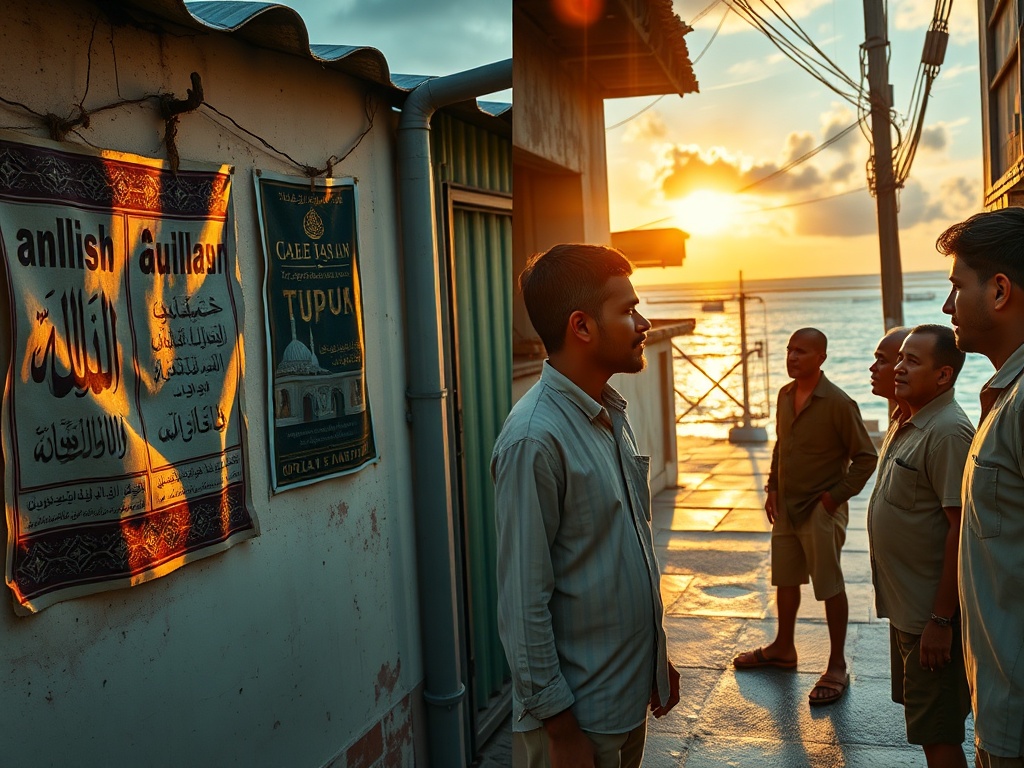
When Faith Becomes a Campaign Slogan
In the heated political climate of the Maldives, a persistent question echoes through social media platforms and coffee shop conversations: when does religious rhetoric serve genuine faith, and when does it merely cloak political ambition? The debate reveals deep public skepticism about the intersection of Islam and governance.
Critics argue that religious language has been co-opted as a political tool rather than a spiritual guide. The accusation that certain groups exploit religious sentiment to gain political advantage reflects broader concerns about authenticity in public life. This skepticism isn't merely theoretical—it touches on real questions about whether political alliances formed under religious banners serve the people or the politicians.
The conversation reveals a nation wrestling with political disillusionment. The cycle of regret following elections has become a familiar pattern, with voters expressing frustration about supporting candidates who fail to deliver meaningful change. This pattern suggests a deeper structural issue within the political system, where campaign promises consistently outpace governance realities.
Yet beneath the surface of this criticism lies a more complex reality. Some observers note that political discourse often defaults to emotional venting rather than substantive policy critique. The challenge becomes distinguishing between genuine concern for national direction and partisan frustration disguised as principled opposition.
The political landscape appears caught between competing impulses: the desire for positive change versus the reality of continued chaos, the hope for authentic leadership versus the persistence of opportunistic politics. This tension manifests in public debates where accusations of hypocrisy meet defenses of political pragmatism.
What emerges is a portrait of a politically engaged but deeply skeptical citizenry. The discussions reflect not just disappointment with specific leaders but concern about systemic problems that transcend any single administration. The question remains whether political discourse can evolve beyond personal attacks and toward constructive engagement with the substantive issues facing the nation.
As one political observer noted, the regret cycle will likely continue until someone demonstrates the capacity to implement positive changes without the accompanying turmoil. This suggests that the public craving isn't merely for different leadership, but for a different kind of politics altogether—one where principles align with practice, and rhetoric matches reality.
— Source fragments: Exploiting religion for political advantage, voter regret cycles, emotional versus substantive political criticism, skepticism about political authenticity