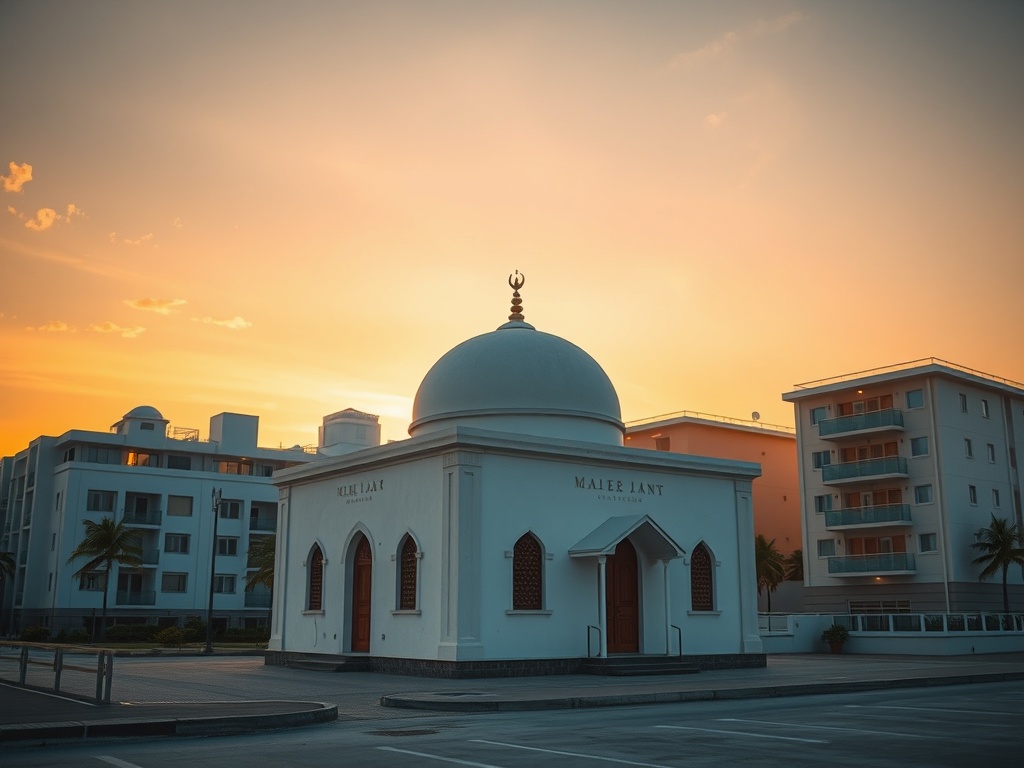
When Faith Gets Retweeted in the Maldives
In the digital squares of Maldivian discourse, a familiar refrain echoes: that true justice remains elusive, that religious principles have been corrupted by political interests, and that the system offers little recourse for the ordinary citizen. This sentiment, while expressed with varying degrees of anger and despair, points to a deeper crisis of faith—not necessarily in God, but in the institutions that claim to represent Him.
The rhetoric often extends beyond domestic grievances, drawing connections to global conflicts and conspiracy theories. Accusations fly, with terms like 'Jewish lies' and 'LGBT agenda' serving as shorthand for a perceived external assault on Islamic values. This framing positions the Maldives as a besieged nation, its moral fortifications crumbling under foreign influence. The underlying fear is one of cultural erosion, a sense that the unique Maldivian Islamic identity is under threat from globalized ideologies.
Yet, this defensive posture often obscures more immediate concerns. Critics argue that religious condemnation is sometimes deployed as a political tool—a convenient way to sideline opponents or distract from pressing domestic failures. When corruption scandals drain public coffers, when youth face unemployment and drug addiction, and when the housing crisis pushes families to the brink, the focus on external moral threats can feel like a deliberate diversion. The question then becomes: Is religion being used to unite and guide, or to divide and control?
This is not to say the religious concerns are insincere. For many, the protection of Islamic principles is paramount. The tension lies in the interpretation of what that protection entails. Does it require the policing of global social movements, or does it demand a more rigorous application of justice and compassion at home? The debate reveals a society grappling with its place in a connected world, trying to reconcile its deeply held faith with the complex realities of modern governance and global interaction.
The conversation, however fragmented and heated, ultimately circles back to a search for authenticity. Beneath the anger is a longing for a faith that delivers on its promises of justice and community, a religion that serves as a foundation for a better society rather than a cudgel in political battles. The path forward requires disentangling spiritual devotion from political maneuvering, ensuring that faith remains a source of solace and guidance, not just another currency in the marketplace of power.
— Source fragments: Islam dheen does not believe justice; Islam is a corrupted political religion; No one can get their rights; Supporting someone who promotes LGBT agenda disrespects our religion; Maybe Maldivians have always been too greedy to follow a religion