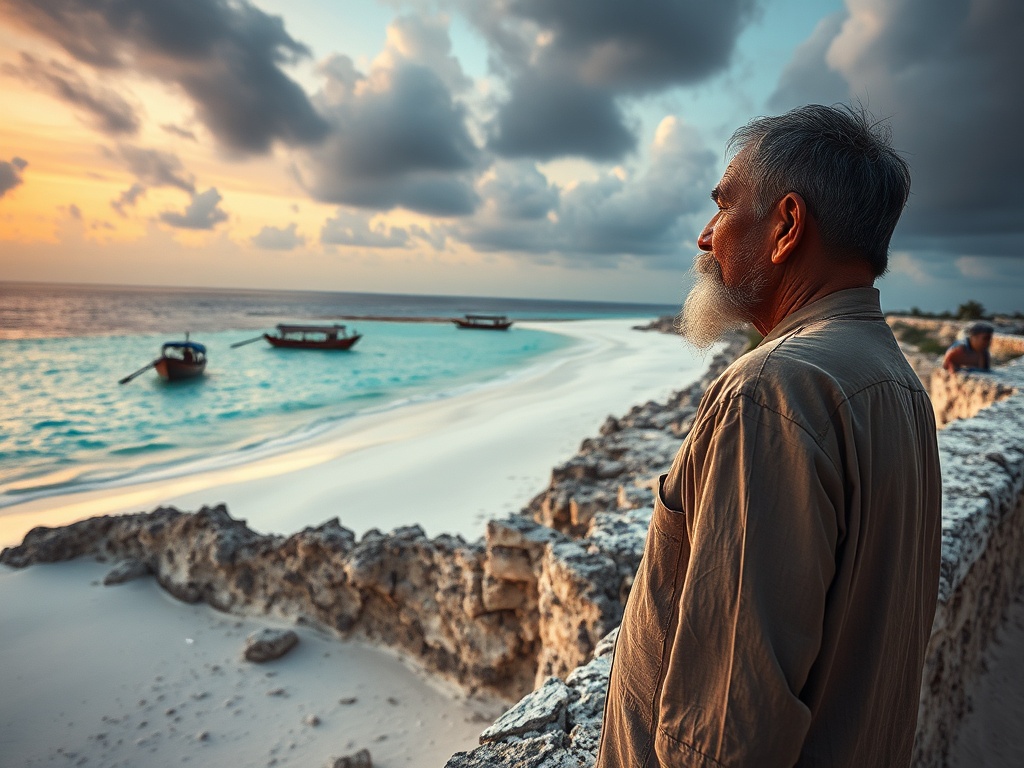
When Foreigners Ask If the Maldives Is Sinking, We Say 'I Agree'
When foreigners ask if the Maldives is really sinking, the answer comes with a heavy heart. "I agree," says one local voice, echoing a sentiment shared by many. "That's the exact same sentiment I have shared with foreigners who ask me if my country is really sinking."
The reality, however, is far more complex than a simple yes or no. The Maldivian archipelago, a string of pearls scattered across the Indian Ocean, faces an existential threat that transcends political cycles and immediate economic concerns. At just 1.5 meters above sea level on average, these islands stand on the frontline of climate change—a fact every Maldivian lives with daily.
Yet there's a growing disconnect between the urgency felt by citizens and the perceived response from leadership. "Unfortunately I don't foresee any government take the upcoming climate catastrophe seriously," the observation continues, capturing a frustration that runs deep in the national conversation. This isn't just pessimism—it's a sober assessment born from watching political priorities shift while the ocean continues its relentless advance.
The picture might seem bleak, but it's grounded in tangible reality. Coral reefs, the natural barriers that have protected these islands for millennia, are bleaching at alarming rates. Freshwater lenses beneath the islands are becoming contaminated by saltwater intrusion. Beach erosion has moved from theoretical concern to visible fact in many communities.
What makes this particularly poignant is that Maldivians understand the science better than most. Living with climate change isn't abstract—it's watching your childhood playground disappear, seeing fishing grounds change, and wondering if your grandchildren will have the same homeland you inherited.
"We as Maldivians need to take this very real existential problem seriously," the voice insists, highlighting a crucial point: climate action cannot wait for perfect political conditions or ideal leadership. The responsibility falls on every citizen, every community, every business to recognize that "it really is going to be very very very bad" if action isn't taken now.
This isn't about assigning blame but about acknowledging a gap in response. While the government pursues infrastructure projects and economic development—important goals in their own right—many citizens feel the climate emergency isn't receiving the urgent, sustained attention it demands. The very existence of the nation is at stake, yet political debates often center on more immediate, tangible issues.
The Maldivian relationship with the environment has always been intimate. For generations, islanders have understood the sea's moods, the wind's patterns, the delicate balance that sustains life on these tiny landmasses. That traditional knowledge, combined with modern climate science, creates a powerful understanding of what's at stake.
Perhaps the most troubling aspect is the normalization of the threat. As years pass without catastrophic events, there's a danger of complacency setting in—both among leaders and the public. The climate crisis operates on a timescale that doesn't align neatly with political terms or economic cycles, making sustained action challenging.
Yet beneath the concern lies a resilient determination. Maldivians have survived centuries of environmental challenges, adapting to changing conditions with remarkable ingenuity. That same spirit now faces its greatest test—not just adapting to change, but preventing the ultimate change that could erase their homeland from the map.
The conversation needs to shift from whether the Maldives is sinking to how Maldivians are rising to meet this challenge, with or without perfect government support. Community-led conservation efforts, private sector innovation, and individual responsibility all play crucial roles in a comprehensive response.
As one voice puts it plainly: "We need to take this seriously." That simple statement carries the weight of a nation's future—a future that depends on recognizing the urgency of now, before the waves close in for good.
— Source fragments: I agree. that's the exact same sentiment i have shared with foreigners who ask me if my country is really sinking. unfortunately i don't forsee any government take the upcoming climate catastrophe(s) seriously. It may seem like the picture I paint is bleak. We as Maldivians need to take this very real existential problem seriously. It really is going to be very very very bad.