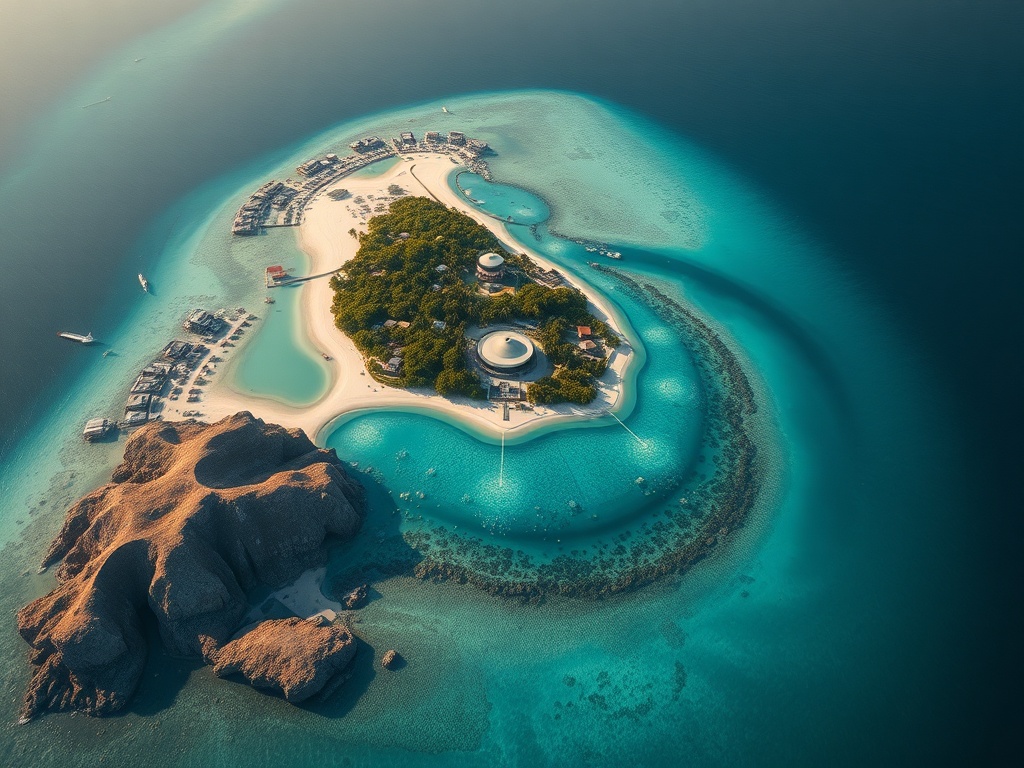
When Fuvahmulah's Freshwater Turns Salty
The conversation around development in the Maldives has shifted from celebration to caution. What was once embraced as progress now prompts difficult questions about what we're sacrificing in its name.
On Fuvahmulah, the concern isn't abstract—it's buried deep in the ground. The island's natural freshwater layer represents more than just a resource; it's a geological inheritance, carefully maintained by generations. Yet the very act of tapping this groundwater now carries the risk of contamination, threatening the delicate balance that has sustained island life for centuries. This isn't merely an environmental issue—it's about the foundation of community survival.
The memory of islands like Gulhi serves as a poignant reminder of what's at stake. Once celebrated for their natural beauty, these islands now represent a before-and-after story in the nation's development narrative. The transformation from pristine environments to developed landscapes raises fundamental questions about whether modernization must inevitably mean compromise.
This tension extends beyond environmental concerns to how policies are formulated and communicated. The debate around shark fishing illustrates the broader pattern: citizens aren't necessarily opposed to change, but they demand transparency about the rationale behind decisions. When the government announces policies without clear explanation, it creates a vacuum filled by speculation and distrust.
The concept of self-reliance has become particularly poignant in this context. Islands that once managed their own water resources through careful preservation now face contamination and dependence. The disappearance of household water tanks symbolizes a larger shift—from community-level resource management to centralized systems that sometimes fail to deliver.
What emerges is a national conversation about the quality, not just the quantity, of development. It's about recognizing that true progress preserves what makes island communities unique while addressing genuine needs. The challenge lies in finding a path forward that honors both our environmental heritage and our aspirations for modern living—a balance that requires more thoughtful planning and more transparent dialogue than we've seen thus far.
— Source fragments: Self-reliance? Where did you go? We had islands that stored drinking water and preserved their freshwater tables. Then came 'development,' and here we are. Groundwater is contaminated, and we don't even have household water tanks. Tapping ground water is what worries me the most. Cos the natural fresh water layer is crucial to Fuvahmulah. Gulhi WAS such a beautiful island. my issue with this issue is not knowing the rationale of govt.