When Fuvahmulah's Water Cure Left Chemical Burns
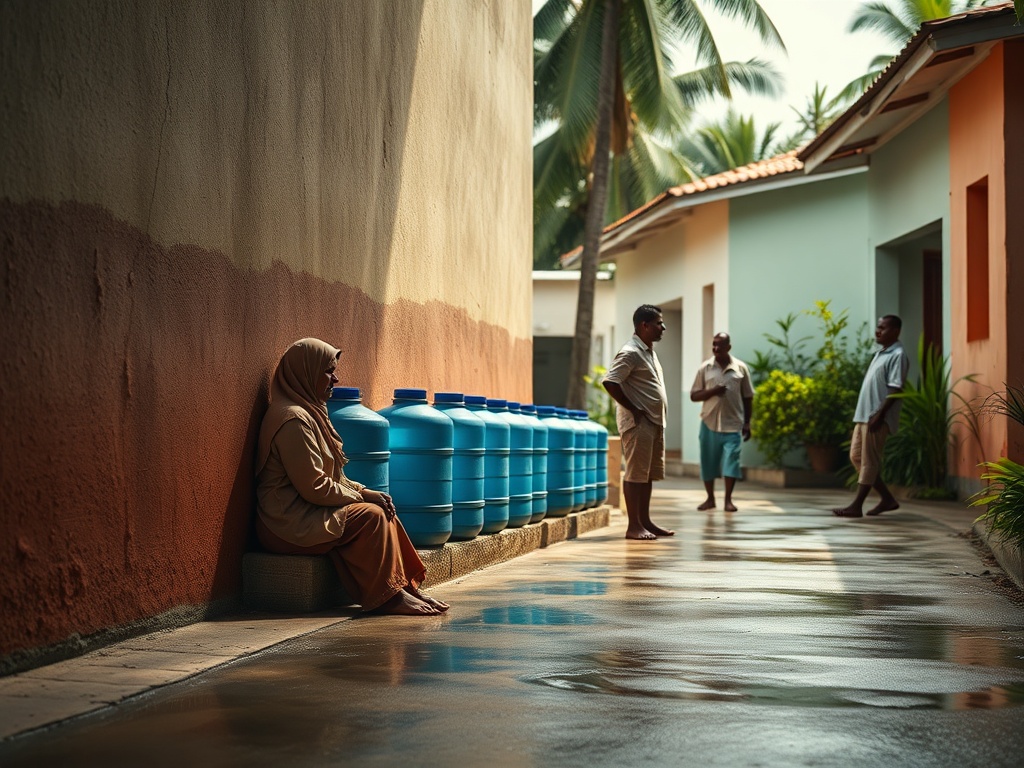
The taps ran dry first. Then came the chemical burn. In Fuvahmulah City, what began as a water shortage has escalated into a full-blown public health crisis, with residents now facing medical complications from the very solution meant to safeguard their water supply.
FENAKA Corporation, the state-owned utility provider, poured substantial quantities of chlorine into the municipal water network in response to the scarcity. The intent was purification, but the outcome has been suffering. Across the island, families report skin irritations, respiratory distress, and gastrointestinal issues directly linked to the heavily chlorinated water.
This emergency exposes the fragile state of water infrastructure in the atoll nation. While Fuvahmulah's crisis is particularly acute, it reflects a broader pattern of systemic challenges facing Maldivian public services. The delicate balance between addressing immediate needs and ensuring long-term safety has been disrupted, leaving communities vulnerable to both scarcity and chemical exposure.
Water security has always been a critical concern across the archipelago, where freshwater resources are limited and desalination plants serve as lifelines. When these systems falter, the consequences ripple through every aspect of daily life. The current situation in Fuvahmulah demonstrates how technical solutions, when applied without adequate monitoring or community consultation, can create secondary crises.
The response to such emergencies often reveals the tension between immediate action and sustainable planning. While chlorination serves as a necessary protective measure against waterborne diseases, its application requires precise calibration and continuous monitoring—resources that may be stretched thin during system-wide failures.
As residents navigate between having no water and having unsafe water, the crisis raises fundamental questions about infrastructure resilience. The solution cannot be limited to emergency measures alone but must address the underlying vulnerabilities that leave communities perpetually at risk. What Fuvahmulah experiences today could become another island's reality tomorrow unless systemic improvements are prioritized.
The human cost of infrastructure failure extends beyond physical discomfort. It erodes trust in public institutions, disrupts economic activity, and creates anxiety that lingers long after the immediate crisis passes. For Fuvahmulah's residents, the memory of this dual crisis—scarcity followed by chemical exposure—will likely shape their relationship with essential services for years to come.
— Source fragments: Fuvahmulah City is facing a water crisis. There is no water available, not even drinking water. FENAKA has poured large amounts of chlorine into the network, and many people are experiencing medical issues as a result.