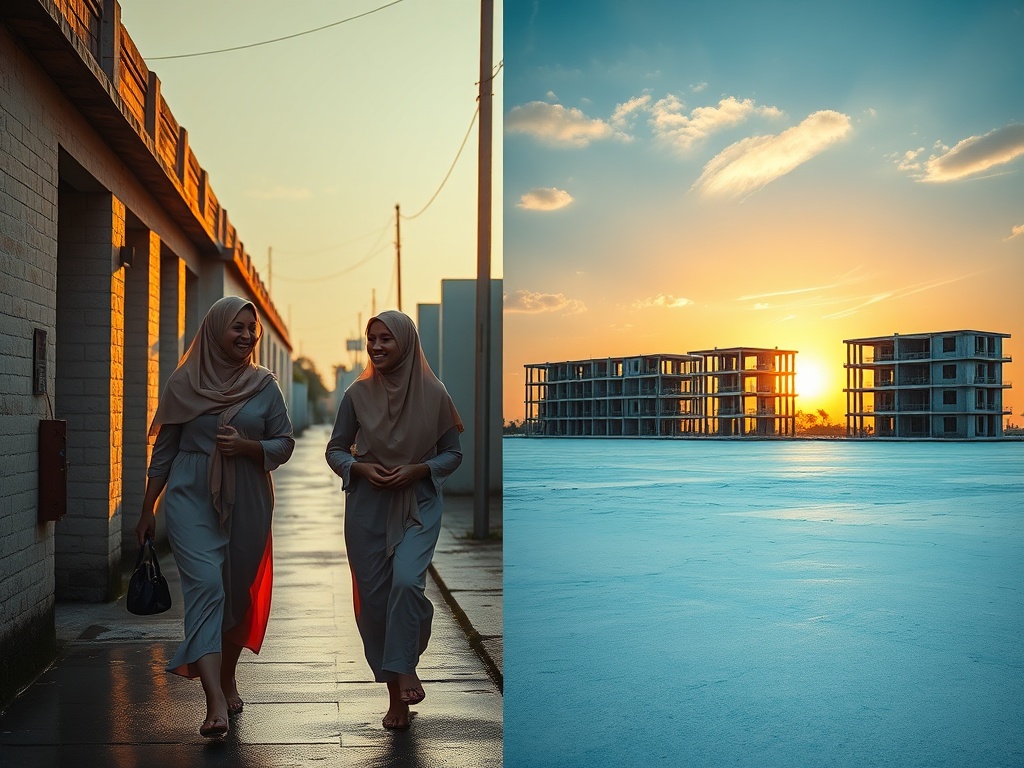
When Hijab Debates Drown Out Questions About Empty Housing Projects
In the Maldives, where Islam is the state religion, a contentious debate has emerged around religious enforcement and social priorities. Critics point to what they describe as religious blackmail tactics, where some scholars allegedly use fear-based rhetoric about hijab enforcement threatening one's afterlife. Yet these same voices often remain conspicuously quiet on matters that the Quran explicitly identifies as crimes rather than mere sins.
The disconnect reveals a troubling paradox in contemporary Maldivian discourse. While women's clothing choices become subjects of intense public scrutiny, systemic corruption—which affects everything from government housing projects to national healthcare—receives comparatively little religious condemnation. This selective enforcement of Islamic principles has left many questioning the priorities of certain religious voices.
As one observer noted, when the conversation shifts to corruption and theft—actual crimes under Islamic law—the volume decreases dramatically. The energy spent debating buruga enforcement seems disproportionate when compared to the silence on high-profile corruption cases that have plagued Maldivian politics for years. From the MPRC scandal to allegations of electoral bribery through land distribution, these issues directly impact the nation's economic stability and social fabric.
Meanwhile, the Maldives faces pressing socioeconomic challenges that affect daily life. The high cost of living driven by government money printing, foreign currency shortages despite tourism revenues, and youth unemployment create real hardships for Maldivian families. The housing crisis in Malé, where government-subsidized flats are sometimes subleased for profit by absentee leaseholders, represents another area where Islamic principles of justice and fairness could meaningfully apply.
The question becomes: why does religious discourse fixate on personal piety markers while largely ignoring systemic injustice? Some suggest it's easier to police individual behavior than to challenge powerful interests benefiting from corruption. Others note that focusing on women's clothing creates visible moral boundaries without threatening existing power structures.
This selective application of religious principles risks undermining the credibility of religious discourse itself. When the same voices that loudly condemn buruga-less women as 'fitna' (temptation) remain muted on corruption that devastates entire communities, it creates what critics call a 'departure from the rules in Islam.' The Quran's explicit condemnation of theft and corruption receives far less airtime than debates about female modesty.
As the Maldives navigates complex challenges from economic instability to governance issues, many hope for a more balanced religious discourse—one that addresses both personal piety and social justice, recognizing that Islam provides comprehensive guidance for both individual conduct and societal structure. The current imbalance not only distorts religious teachings but also diverts attention from issues that fundamentally affect the nation's well-being.
— Source fragments: Religious blackmail claims about hijab enforcement, criticism of disproportionate focus on women's clothing versus corruption, questioning of priorities when corruption is explicitly criminal in Islam, observation that energy is wasted on wrong issues