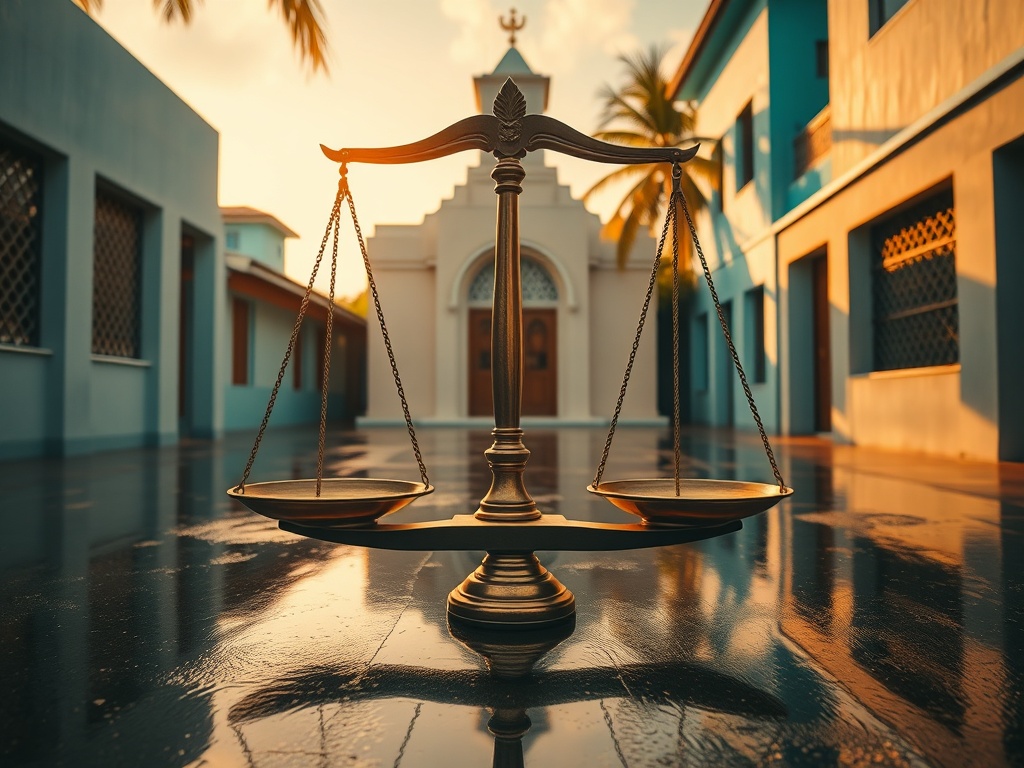
When Human Rights Meet the Attorney General's Islam Test
The Attorney General's recent statement that human rights in the Maldives will be protected only in ways that don't contradict Islam represents more than just legal positioning—it captures the fundamental tension at the heart of the nation's governance. In a country that is 100% Muslim, this declaration might appear straightforward. But for those who have experienced the justice system firsthand, it raises troubling questions about whose interpretation of Islam prevails, and whose rights ultimately matter.
This tension between religious principles and universal rights manifests most starkly within the nation's prisons. Former political prisoners recall the era when the MDP government was in power, remembering not just the torture they endured but the broader system that enabled it. They were young people caught in a system where live rounds were fired during protests, where brutal killings in custody occurred with disturbing regularity. The case of Monowara Majlis, who fell ill in prison and was initially denied medical care, represents a pattern rather than an exception—a pattern that transcends which political party holds power.
What becomes clear in listening to these accounts is that the problem isn't merely about which party governs, but about systemic issues that persist across administrations. When political prisoners from the MDP era note the irony of current narratives about torture, they're pointing to a continuity of practice that suggests deeper structural problems. The justice system appears to serve different masters at different times, but the outcomes for those caught within it remain similarly dire.
The religious framing of human rights protection creates a convenient ambiguity. It allows authorities to claim moral authority while leaving room for interpretation that can exclude certain groups or individuals from full protection. This isn't unique to the Maldives—many Muslim-majority nations grapple with similar tensions—but in the Maldivian context, it intersects with political polarization, economic pressures, and a justice system that many view as politicized.
As the nation continues to navigate complex foreign relations, economic challenges, and domestic governance issues, the question of how to reconcile Islamic principles with universal human rights standards remains unresolved. The Attorney General's statement doesn't create this tension so much as acknowledge it openly. For ordinary Maldivians, the practical concern is whether this framework will protect them when they most need protection, or whether it will become another tool for exclusion in a system already struggling with transparency and accountability.
— Source fragments: Attorney general says country will protect human rights, but only in a way that does not contradict Islam; We were youth in those prisons; brutal killing in police custody; initially deprived of medical care