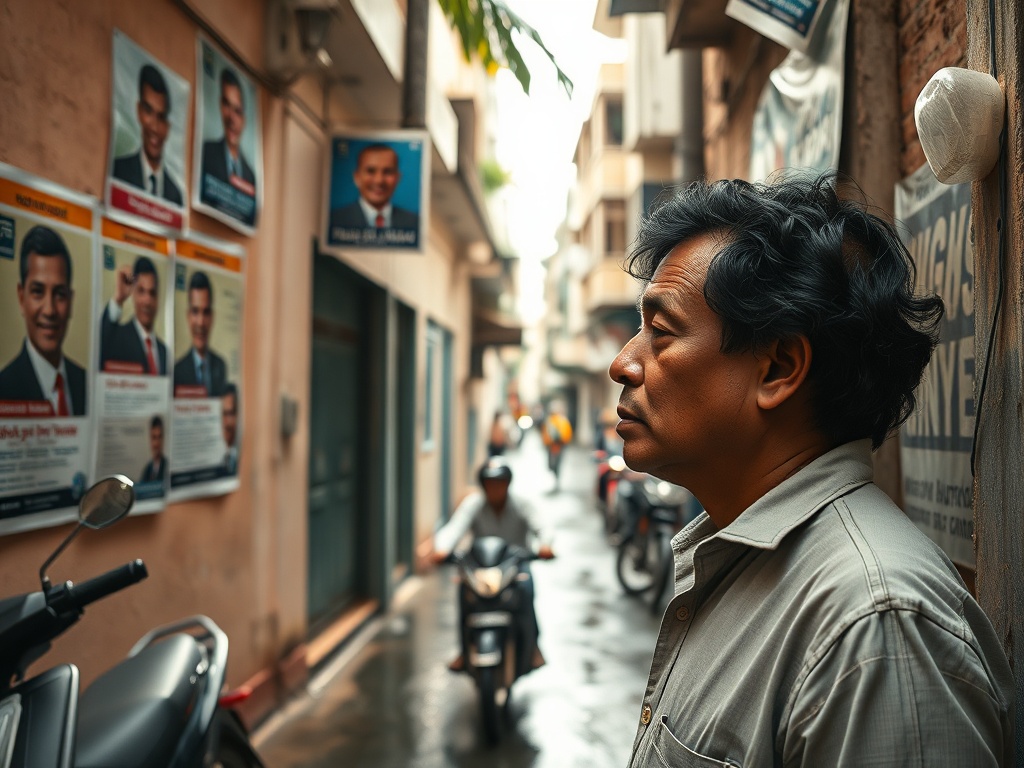
When Independent Candidates Wear Party Colors in Malé
In the crowded political landscape of Malé, where over 150,000 people reside but only 50,000 hold voting rights, a quiet disillusionment has taken root. The conversation among voters has shifted from hopeful optimism to weary skepticism when it comes to independent candidates. Recent electoral history reveals a troubling pattern: politicians who campaign as independents frequently join established parties once elected, leaving their constituents questioning the authenticity of their representation.
The last parliamentary election serves as a stark case study. Numerous candidates who presented themselves as political outsiders ultimately aligned with the ruling Progressive National Congress, undermining the very independence they promised. This phenomenon has created a credibility gap that extends beyond individual politicians to challenge the system itself. When campaign trail promises of independence dissolve into party-line voting, the public's trust in the democratic process erodes.
At the heart of this disillusionment lies a deeper structural problem. The current political framework makes it nearly impossible for genuine independents to secure victory in high-stakes races like the Malé mayorship, where party machinery and established networks dominate. This reality forces a difficult choice upon would-be reformers: remain pure but powerless, or compromise principles for political relevance.
Some observers suggest that the solution lies not in rejecting independent candidates outright, but in developing more robust mechanisms to ensure their accountability. The notion that competence and integrity are better judged by the electorate than by wealthy power brokers resonates in a society where political dynasties and business interests often overshadow public will.
The challenge extends beyond candidate selection to encompass fundamental questions about representation. With significant portions of Malé's population excluded from the electoral process due to residency requirements or other barriers, the democratic deficit becomes increasingly apparent. The system as it stands appears designed to maintain the status quo rather than facilitate genuine political renewal.
As Maldives continues to navigate its complex political evolution, the conversation around independent candidates reflects broader anxieties about governance, representation, and the possibility of meaningful change within existing structures. Until the system itself undergoes significant reform, the cycle of hopeful candidacies followed by establishment assimilation seems likely to continue, leaving voters to wonder whether true political independence remains an achievable ideal or merely a campaign slogan.
— Source fragments: Always be wary of 'independent' candidates. The majority of them signed to PNC last Majilis election; An independent candidate can try, but its impossible to win the Male' Mayorship; Well the problem is the independent candidates tend to join the establishment like last parliament election where nearly all joined pnc; 150k+ Maldivianas resides in Male'. But only 50k have voting rights; Competence and integrity can be better judged by the crowd rather than an unelected bunch of billionaires