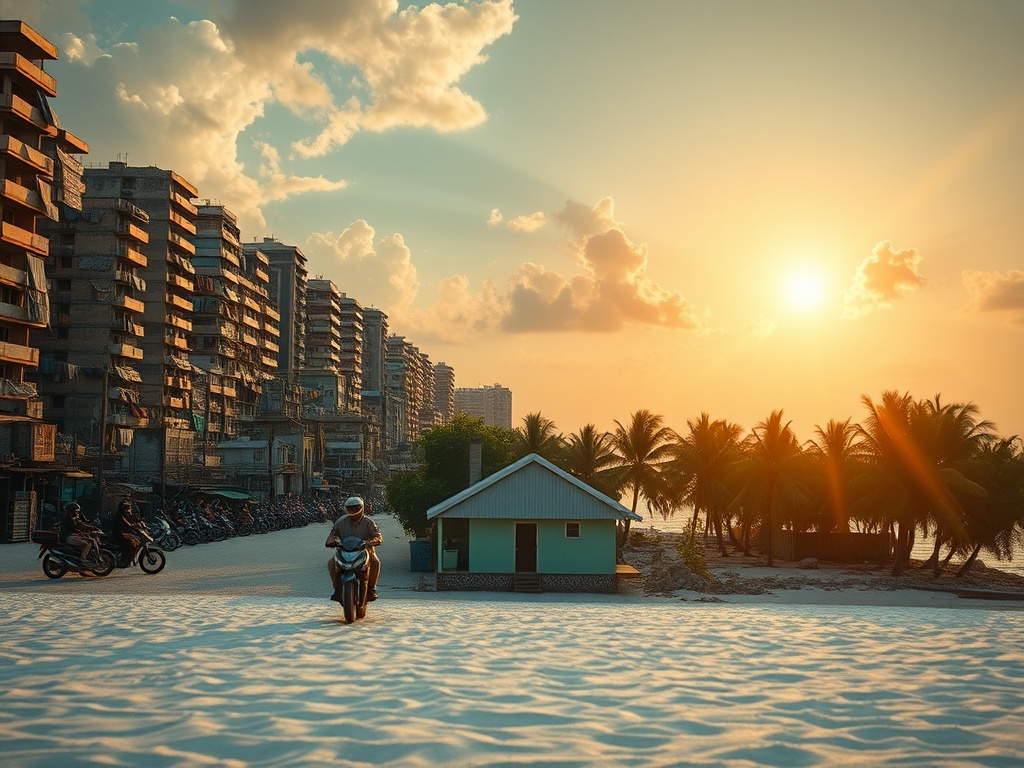
When Land Allocation Becomes a Measure of Maldivian Belonging
The conversation around Binveriyaa land allocation has become a mirror reflecting Maldives' deepest social fractures. What began as a housing policy discussion has evolved into a raw examination of privilege, exclusion, and the very definition of fairness in a nation where land represents not just shelter, but legacy.
Across social media platforms, a palpable frustration emerges from those who see themselves locked out of the system. "Maybe I'm just not savvy enough or from a privileged enough background," one voice laments, capturing the sentiment of many who feel the game is rigged before it even begins. The specter of land distribution becoming either a "national lottery" or a "highest bidder" auction reveals the fundamental anxiety: that housing solutions might merely replicate existing hierarchies rather than dismantle them.
The tension between Malé residents and island communities reveals particularly raw nerves. Defensive assertions that "Male' = Elites" mask complex realities of multi-generational families sharing single floors in the congested capital. The insistence that land ownership differs fundamentally from housing provision cuts to the heart of the matter: will this policy create more landlords or more homeowners?
Comparisons to Singapore's public housing success highlight alternative paths not taken. Where other nations built systems serving 80% of their populations, Maldives faces accusations of creating policies that benefit the politically connected. The revelation that 4,000 flats went to "people who didn't deserve them" fuels cynicism about the entire housing ecosystem.
Meanwhile, parliamentary silence speaks volumes. The absence of MPs articulating clear visions for Binveriyaa's future suggests either political calculation or fundamental disagreement about what constitutes justice in land distribution. This vacuum of leadership leaves citizens debating among themselves while the mechanisms of exclusion continue uninterrupted.
The fundamental question remains unresolved: how does a nation balance historical claims with contemporary needs? As one observer notes, the issue isn't whether Malé natives deserve housing, but whether solutions should come at the exclusion of other residents. The fear isn't just about who gets land today, but about creating "another generation of rent payers" locked in perpetual dependency.
In this heated exchange, what emerges most clearly is that housing policy has become inseparable from identity politics. The land in question represents more than physical space—it embodies dreams of stability, fears of perpetual renting, and the painful recognition that in Maldives, where you're from still determines where you can go.
— Source fragments: Privilege and capability concerns regarding Binveriyaa plots; debate over distribution methods (lottery vs auction); multi-generational housing realities in Malé; comparisons to Singapore's housing model; political accountability questions; equity versus historical claims tension