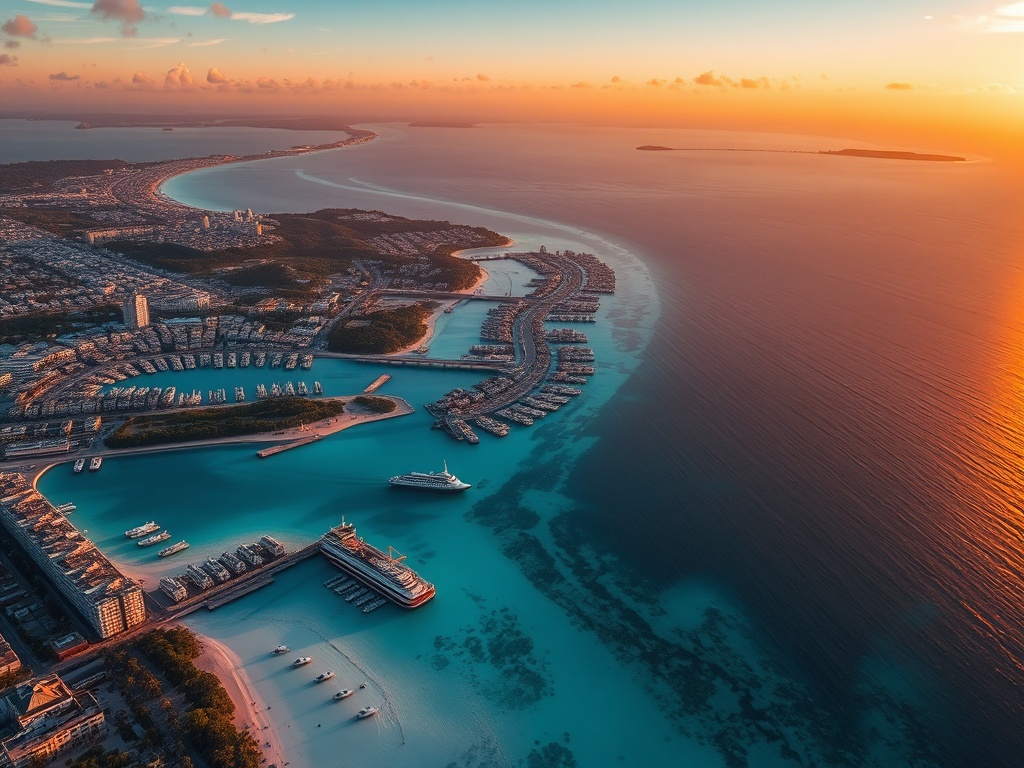
When Land Distribution Becomes a Question of National Destiny
The conversation about land in the Maldives has moved beyond the physical metrics of sand, cement, and reclamation costs. What began as a technical discussion about land distribution has evolved into a profound debate about social justice, economic equity, and the future of a nation constrained by geography.
The core tension lies in the fundamental inequality of land value across the archipelago. As one observer noted, "It's not the same sand or the same cost." Land in the Greater Malé Region carries a premium that transforms it from mere real estate into what many describe as "worth gold." This disparity challenges the notion of uniform distribution policies, raising questions about whether equal treatment can ever account for vastly unequal circumstances.
Amid this complexity, several innovative policy solutions are emerging. The concept of Land Value Tax (LVT) has gained traction as a mechanism to ensure that land serves its intended purpose. Under this approach, landowners who actually reside on their property would be exempt from tax burdens, while those using land primarily for rental income would contribute accordingly. This system would naturally discourage speculative holding and encourage productive use of scarce resources.
The debate also touches on intergenerational responsibility. Some argue for forms of ownership like life tenure, ensuring that land can be fairly apportioned for future generations rather than becoming permanently locked in private hands. Others suggest that if land cannot be equally distributed, fiscal decentralization might offer an alternative path to equity—allowing atolls to retain significant portions of their generated tax revenue for local development.
Critics of the current free land policy question its sustainability, noting that with population projections approaching one million by 2050, there simply won't be enough land for every Maldivian under current distribution models. The solution may lie not in endless reclamation but in smarter utilization of existing land through mechanisms that prioritize residency and discourage absentee ownership.
What's clear is that engineers can no longer view land distribution purely through the lens of BOQs, sand, and cement. The social and economic impacts demand equal consideration. The conversation has shifted from technical feasibility to philosophical foundation—what does it mean to own land in a nation where geography is both identity and limitation? The answer will shape not just housing policy but the very character of Maldivian society for generations to come.
— Source fragments: Land value disparities, Land Value Tax proposals, intergenerational ownership concerns, fiscal decentralization suggestions, population growth projections, criticism of free land policies