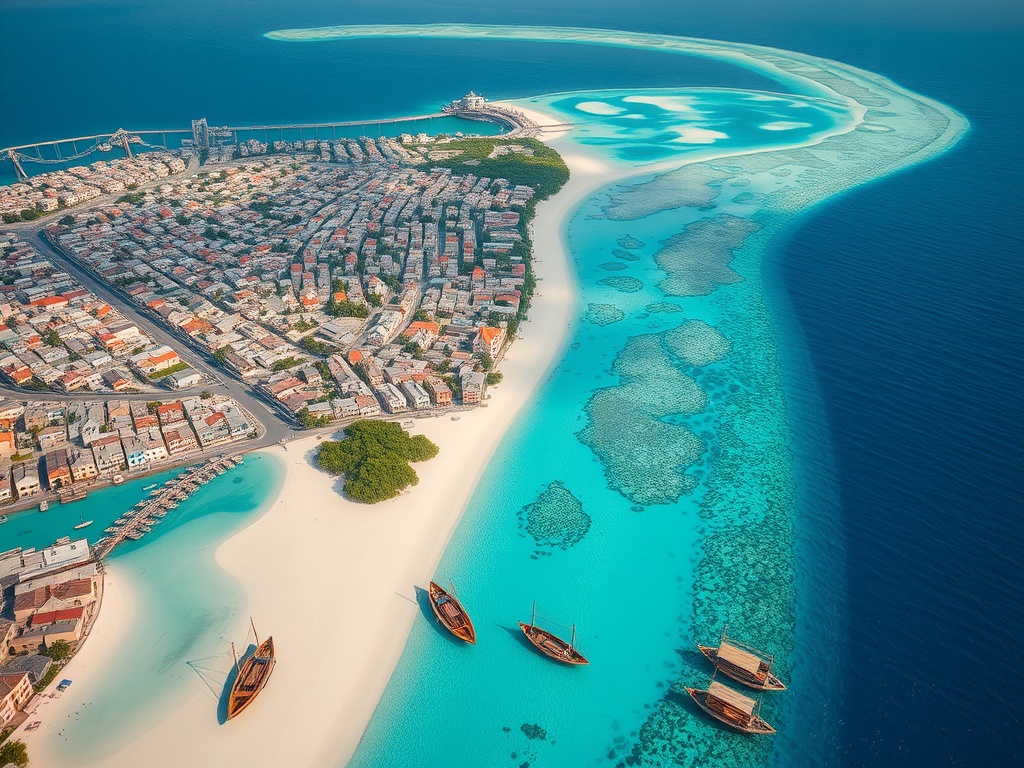
When Land Is Both Wealth and Family Memory
The debate over land in the Maldives has moved beyond simple allocation to confront fundamental questions about freedom, equity, and national identity. At its core lies a tension between land as wealth and land as heritage — between economic value and the intangible worth of family memories, childhood spaces, and generational continuity.
The current system creates what critics describe as modern-day servitude: monthly rent payments that chain residents to endless work, while ownership remains elusive for many. This has fueled demands that access to land should be a basic right, particularly when starting a family, with options ranging from plots to flats depending on individual circumstances.
Recent government initiatives like the Binveriya scheme, which awarded land to eligible applicants, represent steps toward addressing the crisis. Yet the conversation has evolved to question whether the standard 30'x40' plots are sufficient. Proposals for larger 75'x75' allocations in the islands aim not only to provide adequate living space but to create incentives for decongesting Malé. The logic is compelling — by offering more generous plots alongside lower Land Value Taxes in the islands, we might finally achieve some equilibrium in population distribution.
The financial mechanics of land reform are equally contentious. A radical proposal suggests taxing all land — from 10-story buildings to unused patches of dirt — with the revenue funding construction until every Maldivian becomes a homeowner. This approach challenges the traditional Malé-versus-islander dynamic that has long characterized our housing debates.
Transparency emerges as a critical precondition for any meaningful reform. Publishing a complete national land registry would not only provide accurate inventory but expose corruption that has plagued previous allocation systems. As properties change hands under new tax regimes, public oversight becomes essential to ensuring fairness.
Beyond the numbers and policy details lies a deeper truth: land represents more than monetary value. It embodies family history, childhood memories, and the space where generations connect under the same sun. This emotional dimension reminds us that while economic calculations are necessary, they cannot capture the full meaning of what it means to belong to a place.
The path forward requires balancing practical economics with cultural preservation. Larger island plots could indeed reverse urban migration, but success depends on parallel development of infrastructure, healthcare, and economic opportunities outside the capital. The goal isn't merely to distribute land but to rebuild sustainable communities across our archipelago.
As this conversation continues, we're collectively reimagining what it means to be Maldivian in the 21st century — and how the land beneath our feet might once again become the foundation for genuine freedom rather than financial burden.
— Source fragments: Land as wealth vs freedom from rent slavery; fair and equal land rights; land value taxation proposals; Binveriya scheme outcomes; debate over plot sizes (30x40 vs 75x75); incentives for island repopulation; transparency through land registry publication; emotional/cultural value of land beyond economics; land as basic right for families