When 'Landlord' Echoes 'Master' in Modern Malé
The words we choose often reveal more about our society than we intend. In the Maldives, where modernization races against tradition, even seemingly mundane terms carry the weight of complex social dynamics. The word 'landlord'—with its feudal connotations of 'lord' and 'master'—feels increasingly anachronistic in a nation grappling with housing crises and economic inequality. This linguistic discomfort mirrors broader tensions about power structures and social hierarchies that persist despite democratic reforms.
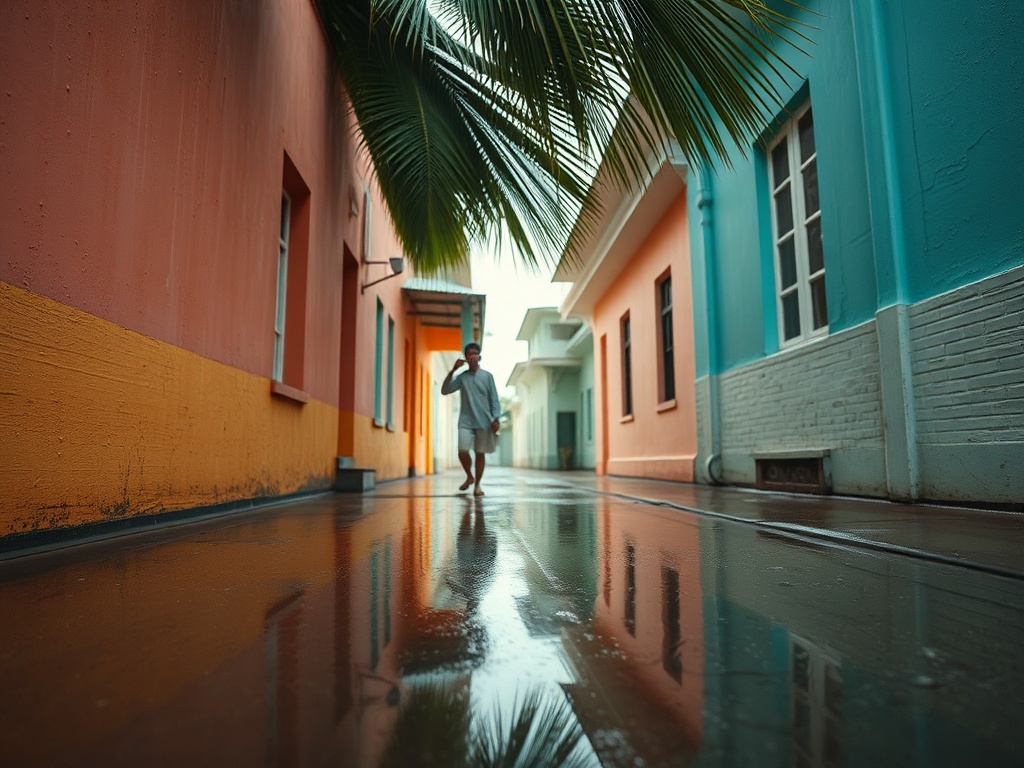
Meanwhile, practical realities intrude on daily life in ways both trivial and profound. The simple choice of footwear becomes a weather-dependent practicality in Malé's challenging climate, where seasonal downpours can transform streets into waterways. These small decisions reflect the constant negotiation between personal preference and environmental constraints that characterizes island living.
Beneath these surface observations lie deeper questions about national potential and human capital. While international metrics attempt to quantify intelligence and capability, they often fail to capture the complex reality of Maldivian society. The nation's challenges—from educational access to economic opportunity—cannot be reduced to simplified rankings that ignore context, history, and systemic barriers.
The conversation around gender and leadership similarly reflects this complexity. Reducing national challenges to simplistic gender binaries ignores the nuanced reality of governance, where institutional structures and systemic issues transcend individual leadership. The Maldives' political landscape demonstrates that problems like corruption and governance challenges are not gender-specific but systemic in nature.
What emerges is a portrait of a society in transition, where language, opportunity, and identity intersect. The uphill battle for progress isn't about innate limitations but about creating systems that unlock potential. It's about building an economy where opportunity matches ambition, governance that serves rather than commands, and a society where progress means lifting all boats rather than just a fortunate few.
The real measure of a nation's strength lies not in isolated metrics but in its ability to confront complexity with nuance, to recognize that development requires addressing both the practical realities of daily life and the deeper structures that shape opportunity. In the Maldives, this means creating pathways that honor tradition while embracing progress, that acknowledge challenges without being defined by them.
— Source fragments: Only a psychopath will wear white sneakers in Male' during this weather; Landlord really is such an intense word for something that is otherwise an extremely mundane non-job; I do hope so, but that's quite the uphill battle; Maldivians has an average IQ of 81.31... can't show a nation's real human-capital strength