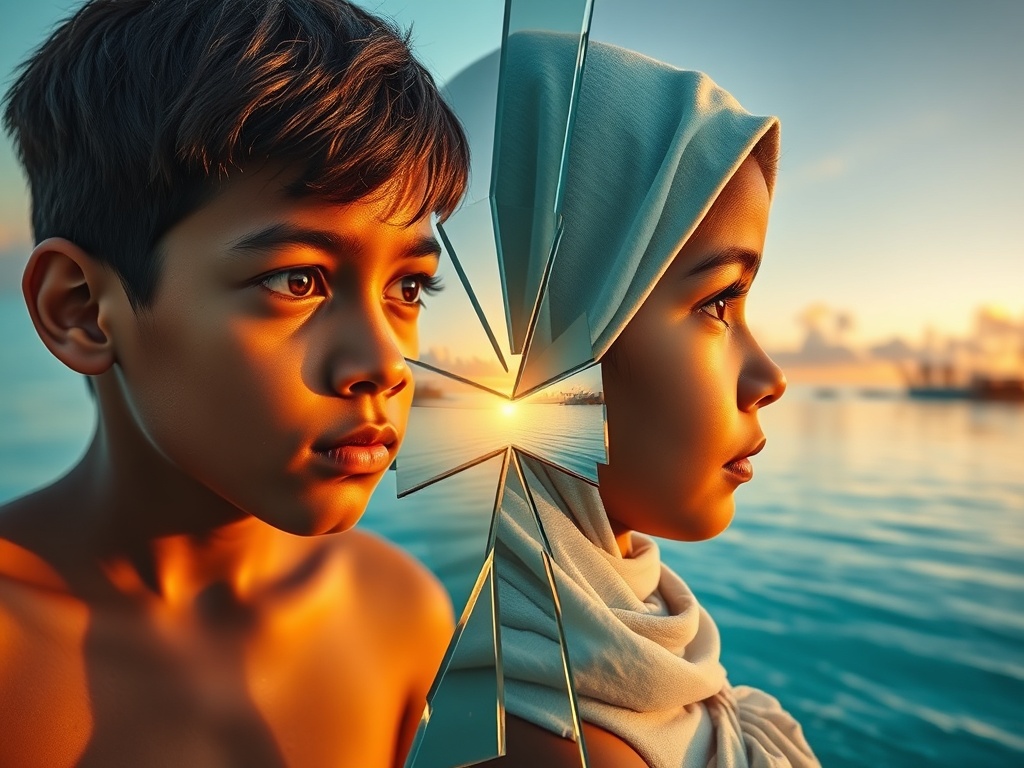
When Maldivian Eyes Look But Don't See Each Other
In the scattered atolls of the Maldives, a troubling pattern emerges in our public discourse—the inability to truly see through another's eyes. This empathy deficit manifests in political debates, social conversations, and even within families, creating a society where understanding feels increasingly scarce.
The complexity of human experience demands nuance, yet we often retreat to binary positions. When someone suggests considering multiple perspectives, they're immediately accused of taking sides rather than seeking understanding. This reflexive polarization prevents genuine dialogue about the real challenges facing our communities.
What's particularly striking is how this mirrors authoritarian parenting dynamics—the state, like an overbearing parent, refuses to acknowledge that its citizens have matured. There's a persistent refusal to recognize that society has evolved, that people have developed their own perspectives and experiences that deserve acknowledgment.
This pattern extends to how we analyze social change. Rather than recognizing the complex interplay of multiple social conditionings that have shaped modern Maldivian society, we tend to blame singular phenomena. The West's social evolution is dismissed entirely, while positive developments, particularly those benefiting women, become scapegoats for broader societal shifts.
The reality is that human vulnerability makes us susceptible to various influences—religious beliefs, economic pressures, cultural shifts, and ideological movements. Yet we pretend these complex forces can be reduced to simple causes and straightforward solutions.
In Raaje therey islands and across our nation, this lack of empathy has tangible consequences. It means policies are crafted without considering their human impact, social programs are designed without understanding real needs, and community bonds fray because we've forgotten how to listen.
The solution isn't about finding who's right or wrong, but about rebuilding our capacity for genuine understanding. It requires acknowledging that multiple truths can coexist, that lived experiences vary dramatically across our islands, and that progress comes from embracing complexity rather than denying it.
Until we learn to truly see from perspectives other than our own, we'll continue repeating the same cycles of misunderstanding and conflict that prevent the collective happiness that should be within our reach.
— Source fragments: Wow if it was not so complicated, we all would be living happily; looking at both sides; can't put ourselves in others' shoes; Empathy does not exist in our country; The state acts like an asian parent who refuses to acknowledge their children have grown; ignoring every negative social conditioning; blaming it all on the positive thing; society that went through many many social conditionings; Human beings are always vulnerable