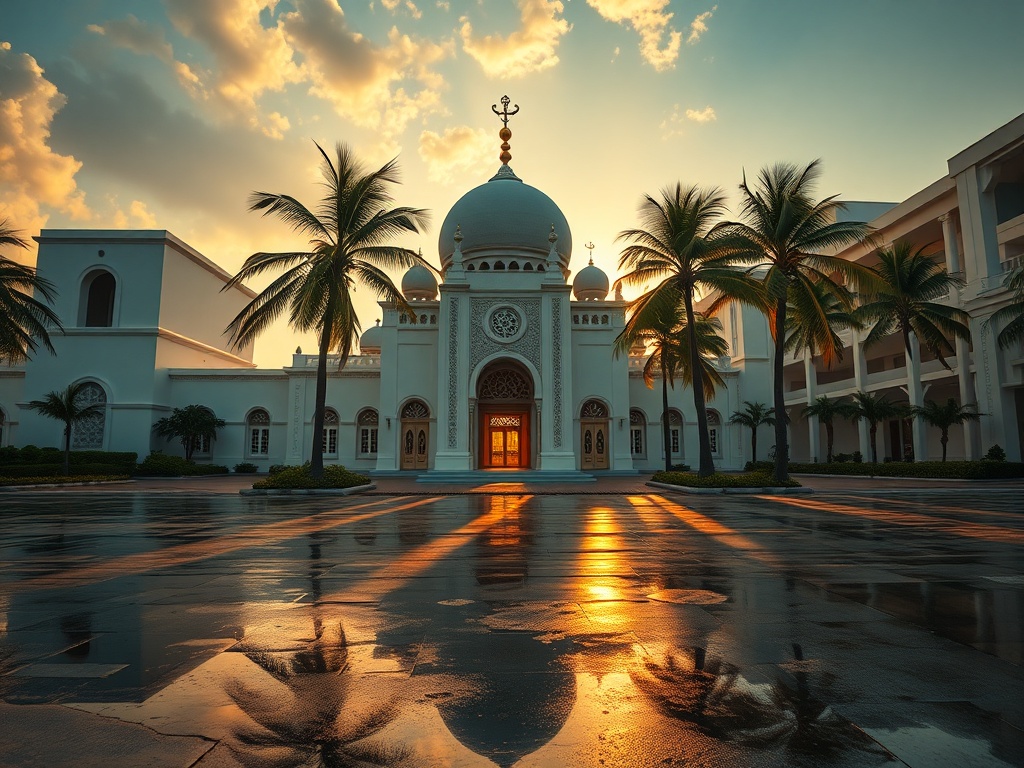
When Maldivian Mosques Meet Modern Government Buildings
In the archipelago nation of Maldives, where Islam forms the bedrock of national identity, a quiet transformation is underway. The traditional integration of religious principles with governance faces new challenges as the country modernizes and engages with global economic systems. This evolution raises fundamental questions about how Islamic economic principles can coexist with contemporary state structures.
Islamic economic philosophy has historically emphasized market intervention for public welfare, a concept that predates modern left-wing economic policies by centuries. The mandatory zakat—the 2.5% wealth tax—represents one of Islam's most distinctive economic instruments, designed to redistribute wealth and support the needy. Yet in today's Maldives, as the government develops systems that increasingly resemble Western models of governance, questions arise about how such religious obligations fit within state frameworks.
The separation of religious and political spheres presents particular challenges for a nation that has always defined itself through Islam. Some observers note that if Maldives continues toward a system where religion and state operate in distinct domains, traditional mechanisms like zakat collection might remain confined to religious institutions rather than contributing to broader government expenditures. This potential division reflects a global tension faced by Muslim-majority nations balancing religious tradition with modern statecraft.
Meanwhile, discussions about Sharia law's application reveal deeper societal conversations about justice and governance. While some emphasize Sharia's prescribed punishments for serious crimes, others focus on its comprehensive approach to social welfare and economic justice. The debate extends beyond legal penalties to encompass broader questions about how Islamic principles should inform national policy in areas ranging from economic management to social services.
As Maldives confronts economic pressures including high living costs, foreign currency shortages, and youth unemployment, the relevance of Islamic economic principles becomes increasingly significant. The challenge lies in adapting centuries-old religious guidance to address contemporary problems while maintaining the nation's Islamic character. This balancing act requires careful consideration of both religious tradition and practical governance needs in a rapidly changing global landscape.
The Maldivian experience reflects a broader Muslim world conversation about modernization and religious identity. How the nation navigates these waters will likely influence not only its domestic policies but also its position within the international community of Muslim-majority states facing similar dilemmas.
— Source fragments: islam has always been left leaning. only recently it has become right wing. islam always intervened in the markets to make it better for the ppl; Feel like Maldives is going toward a western system where politics (government) and religion is separate. So if it were like that the 2.5% zakat would just sit with zakat house instead of contributing to government expenses like normal tax; do you know what sharia law actually means and what it entails