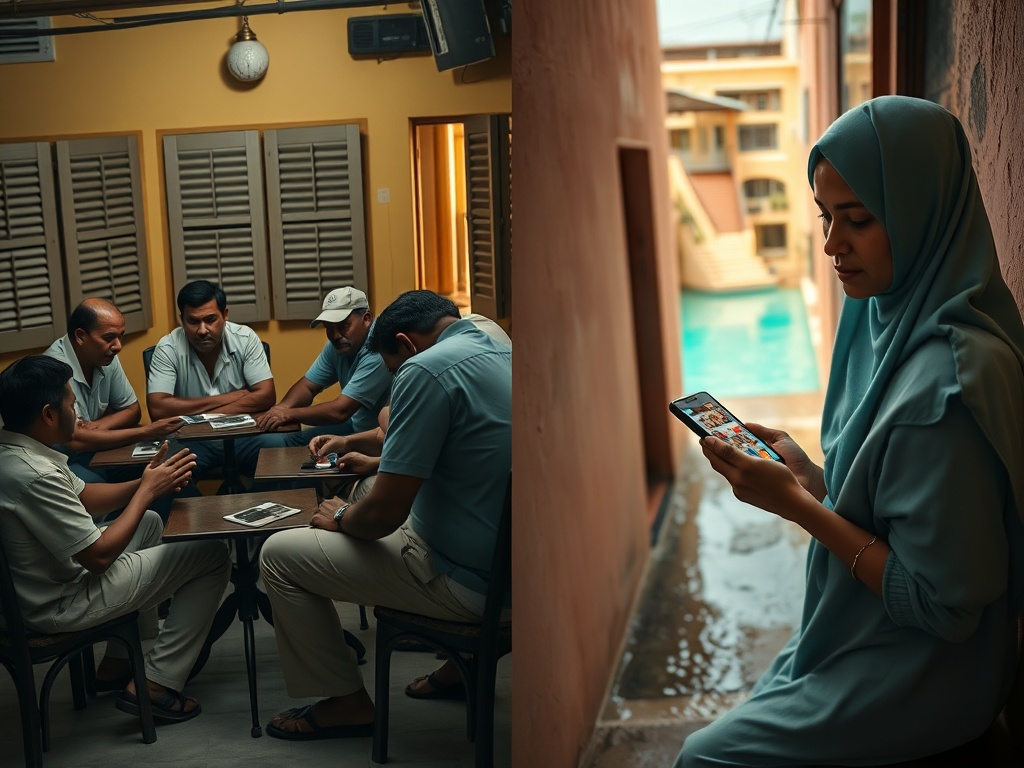
When Maldivian Politics Became a Meme War
There's a moment in every digital era when political discourse crosses a threshold—when the gravity of national issues collides with the weightlessness of online banter, leaving substance floating somewhere in between. Across Maldivian social media platforms, this transition is playing out in real time, with serious conversations about governance, policy, and national direction increasingly drowned out by memes, inside jokes, and performative absurdity.
The phenomenon isn't unique to the Maldives, but it manifests with particular intensity here, where political tensions run high and digital spaces serve as both town square and escape valve. When someone observes that "we are about to lose twitter to rt vs mle in a few mins," they're not just commenting on platform dynamics—they're acknowledging how tribal political loyalties can reduce complex debates to simplistic team sports. The reference to political party acronyms becoming the main event speaks volumes about how substance gets sidelined.
This digital carnivalization serves multiple purposes. For some, it's coping mechanism—a way to process the frustration of watching serious issues like corruption, housing crises, and economic pressures get bogged down in political gamesmanship. The laughter at "AI making fun of stupid Europe" reflects this defensive humor, a way to reclaim agency when global narratives feel distant from local realities.
Yet beneath the surface, there's an undercurrent of concern. The casual mention of rearranging letters to form party acronyms—"If only I could rearrange those letters to PNC"—hints at how political identities have become both ubiquitous and somewhat arbitrary. In a nation where party affiliations can determine everything from housing opportunities to career advancement, the line between serious political alignment and performative affiliation blurs dangerously.
The real cost of this digital theater becomes apparent when we consider what gets lost in translation. While users debate whether "a cigarette can be weak" or trade inside jokes about "stopping my bestie," substantive discussions about the country's foreign currency shortages, the housing crisis in Malé, or the politicization of public institutions struggle to find oxygen. The very platforms designed to facilitate public discourse instead become stages for performance politics.
This isn't to dismiss the value of humor or community-building in digital spaces. But when the carnival becomes the main event, we risk normalizing the absurd at the expense of the essential. The challenge for Maldivian digital citizens isn't to eliminate humor from political discourse, but to ensure that the laughter doesn't drown out the voices asking the hard questions about where the country is headed—and who's actually steering the ship.
— Source fragments: I ve a feeling we are about to lose twitter to rt vs mle in a few mins, If only I could rearrange those letters to PNC, I had to laugh. AI is making fun of stupid Europe, How can a cigarette be weak?