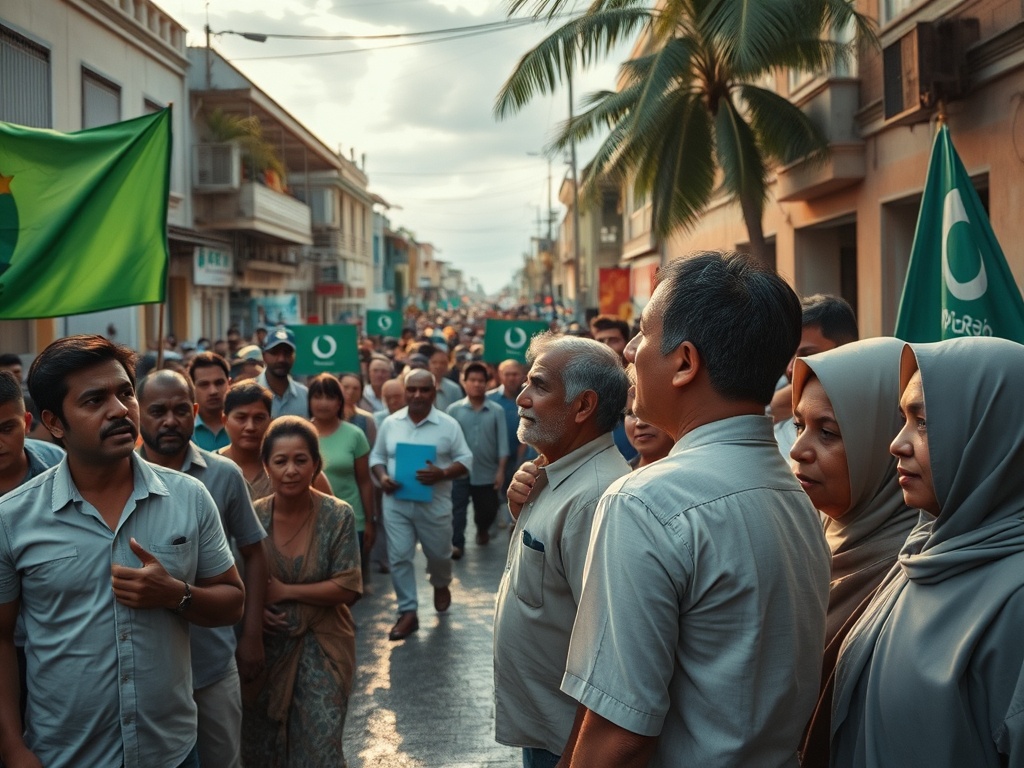
When Maldivians Debate Who Is 'Genuinely Extremely Dangerous'
In the heated political climate of contemporary Maldives, conversations increasingly veer toward dangerous extremes. The question of how to deal with individuals deemed "genuinely extremely dangerous" reflects a broader societal anxiety about security, justice, and the limits of political discourse.
The call to "End Vaanuvaa Completely" represents more than just policy disagreement—it signals a fundamental breakdown in dialogue. When political campaigns shift from reforming systems to eliminating them entirely, they risk pushing society toward polarization rather than progress. This absolutist approach leaves little room for the nuanced governance required in a nation grappling with complex challenges from economic instability to youth unemployment.
Psychological impacts of political rhetoric often ripple through families and communities, creating invisible casualties in ideological battles. The dismissive laughter about numbers—"5500 you are talking about?"—reveals how easily human suffering can become abstract in political calculus. When statistics overshadow individual experiences, we risk losing sight of governance's ultimate purpose: improving lives.
The personalization of political conflict—references to demanding relationships and competitive one-upmanship—mirrors the tribal nature of Maldivian politics. This framing transforms policy debates into personal vendettas, where victory matters more than solutions. In a nation where political appointments often prioritize loyalty over competence, this mindset perpetuates governance challenges.
What emerges is a society wrestling with how to maintain stability while addressing genuine threats. The answer lies not in elimination but in strengthening institutions—ensuring independent judiciaries, transparent governance, and robust civic education. When political discourse becomes dominated by questions of how to handle "dangerous" elements rather than how to build resilient systems, we've already lost the foundation for sustainable progress.
The Maldives stands at a crossroads where the tone of political conversation will determine the quality of its democracy. Moving beyond absolutist rhetoric toward constructive engagement represents the only path forward for a nation too beautiful to be consumed by political animosity.
— Source fragments: I am asking WHAT SHOULD WE DO TO PEOPLE WHO ARE GENUINELY EXTREMELY DANGEROUS; Your campaign isn't against the way they are decided; the campaign is to 'End Vaanuvaa Completely'; It's mainly your mother that got most psychologically impacted; 5500 you are talking about?; never even if i lose they never one upping me