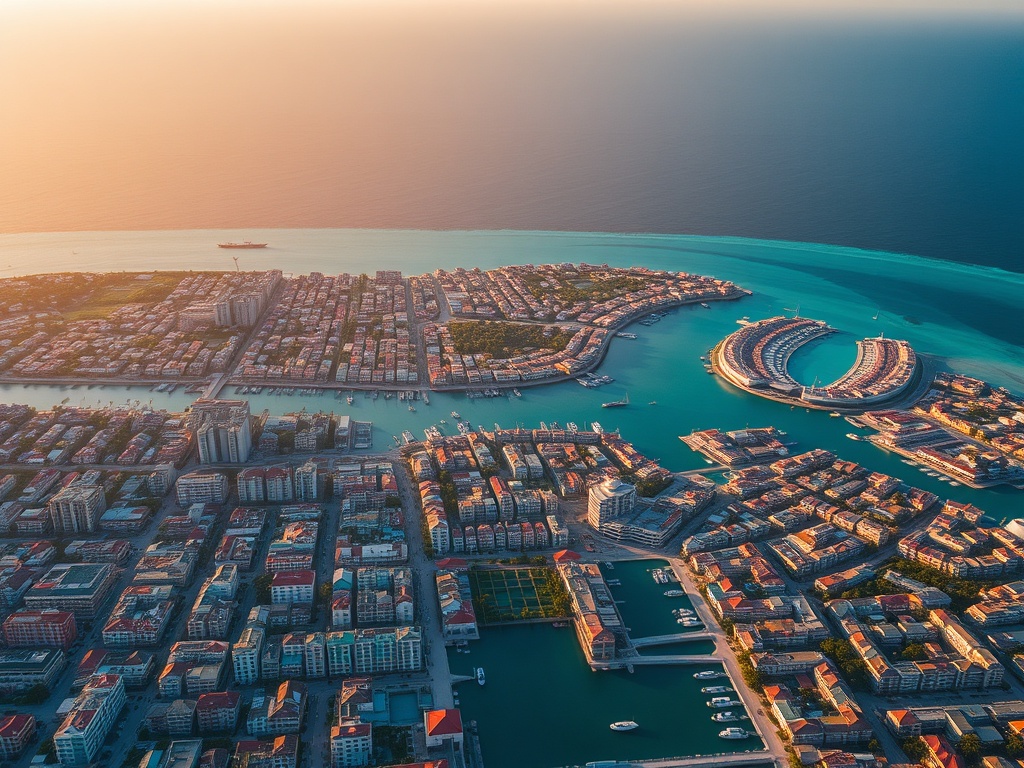
When Malé's Administrative Lines Redraw Your Family Tree
In the crowded lanes of Malé, where the sea breeze carries the scent of salt and diesel, a fundamental question echoes through political discourse and family conversations alike: what truly defines belonging? As the city swells beyond its physical boundaries, administrative categories increasingly clash with the reality of Maldivian identity.
The term 'Male' meeha'—literally 'Malé person'—has evolved from a simple geographical descriptor into a contested social category. For generations, being from Malé carried cultural weight, representing connection to the nation's political, economic, and social center. But as administrative regions expand and eligibility criteria tighten, the definition has become increasingly bureaucratic rather than cultural.
Consider the paradox facing many Maldivian families: a mother who has spent her entire life in the greater Malé region, whose memories are woven into the fabric of the city's evolution, may find herself excluded from programs or benefits available to those meeting narrower residency requirements. Meanwhile, someone with more recent administrative connections might qualify based on technical criteria that ignore decades of lived experience.
This tension reflects broader questions about fairness in resource allocation and representation. When eligibility hinges on precise geographical boundaries rather than cultural connection or family history, we risk creating arbitrary divisions within communities that have historically identified as unified.
The debate extends beyond individual cases to touch upon fundamental questions of justice and recognition. Should a lifetime of contribution to a community count for less than meeting specific bureaucratic markers? Does administrative efficiency justify excluding those whose identities are deeply rooted in place, even if their paperwork doesn't perfectly align?
As Malé continues to grow both physically and administratively, these questions become increasingly urgent. The gap between legal definitions and lived reality creates friction in everything from housing allocation to political representation. The challenge lies in developing systems that honor both the practical needs of governance and the complex realities of Maldivian identity.
What emerges is not just a question of who qualifies, but of how we define community itself. In a nation where family connections often span multiple atolls and generations, rigid geographical categories frequently fail to capture the fluid nature of Maldivian belonging. The conversation about eligibility ultimately forces us to examine what we value in our definitions of community and fairness.
— Source fragments: How are u more eligible than someone who lived here entire life? Who is a Male' meeha? Is it fair that your beloved mother who lived the entire life in Male' region is not eligible?