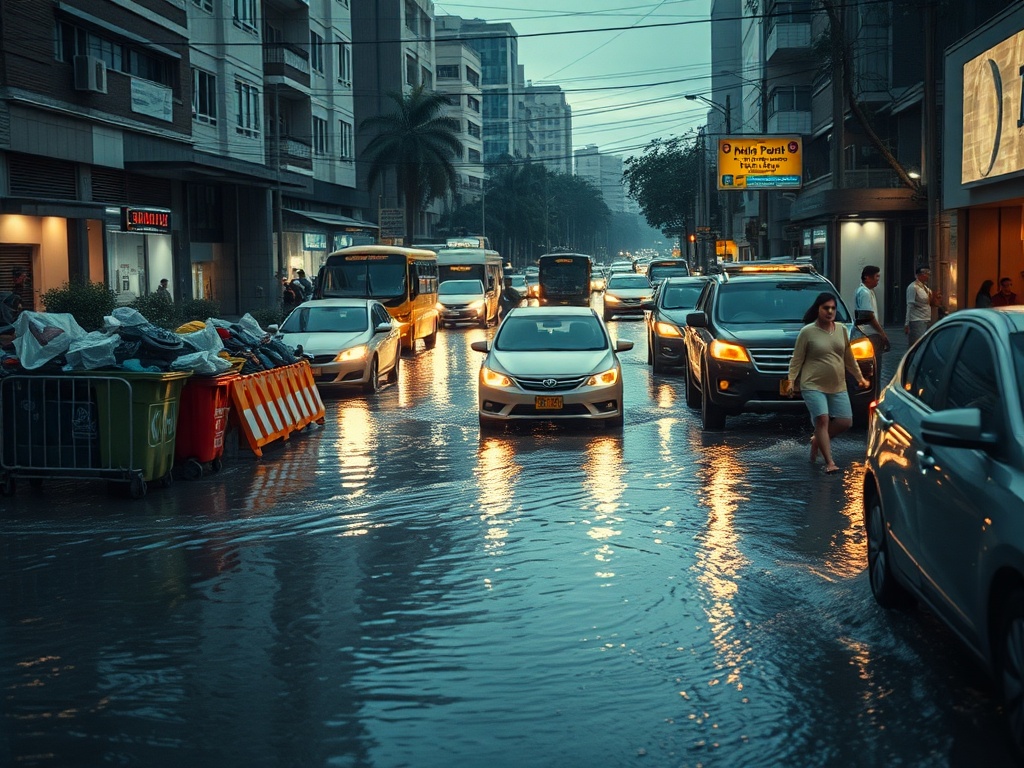
When Malé's Bins Can't Hold More Than a Drink Can
The small frustrations of urban living in Malé accumulate like the trash overflowing from inadequate bins. When a simple act like disposing of waste becomes a challenge—when bins are designed so poorly they can barely accommodate anything larger than a drink can—it speaks to a broader disregard for functional design in public spaces. This disregard extends to the very roads we travel daily, particularly the embarrassing state of the thoroughfare fronting IGMH hospital, a road that demands complete reconstruction rather than temporary patches.
Infrastructure failures in Malé are the great equalizer. Whether you're a lifelong resident or a recent arrival, when roads flood during seasonal rains, when traffic grinds to a standstill, when construction vehicles block pedestrian pathways, the inconvenience touches everyone equally. The city's driving conditions have become a daily test of endurance, with roads that feel more like rollercoaster tracks than properly maintained thoroughfares. The congestion has reached a point where walking or cycling becomes impractical, and during school hours, the entire city seems to freeze in gridlock.
The solution requires more than just temporary fixes. It demands strategic planning, like relocating some educational institutions to Hulhumalé where space permits proper development. Yet planning alone proves insufficient without execution—as evidenced by the deteriorating quality of public works. The brick-laying that once produced enduring pathways, like the still-perfect road section in Fuvahmulah laid in the early 2000s, has been replaced by shoddy, overpriced work that fails to stand the test of time.
This infrastructure decay extends to behavioral norms on the roads, where the basic courtesy of using turn signals has largely disappeared, and illegal parking has become commonplace. Such deterioration in public conduct often follows deterioration in public infrastructure—when the environment shows neglect, residents may internalize that neglect in their own behavior. The cycle continues until accountability systems, through clear signage and consistent enforcement, reestablish standards.
Ultimately, the state of Malé's infrastructure represents more than just physical decay—it reflects a failure to capitalize on opportunities for improvement and a disconnect between planning and execution. When basic elements like trash disposal and road maintenance become daily struggles, they diminish the quality of urban life for all who call this crowded capital home.
— Source fragments: change the trash bins, hard to put anything inside current one except a can or smtn. Also we need to be emberassed at the state of the road infront of IGMH, that road needs to be full thaaru. anyone who lives in male' is a male' meehaa. when the road floods, when the traffic jams, when the saikalu kaaru block the walkway, it hinders you the same as it does me. Driving in Malé feels like a rollercoaster — when were these roads last fixed? And the congestion is insane. You can’t walk or ride a bike, and during school hours the city just stops. Move some schools to Hulhumalé, there’s plenty of space. The brick laying works has always been done poorly and overpriced. I still admire the old brick road portion in Fuvahmulah between the end of the old asphalt road to police station. Work of art done in the early 2000s. 15 plus years and not a dent or misaligned line. Only way that msg would reach ignorant drivers would be if there were signages & posters about it, & being held accountable. More than half of the people on the streets is not bothered to use turn signal light anymore. It's become a norm. Just like parking wherever they please.