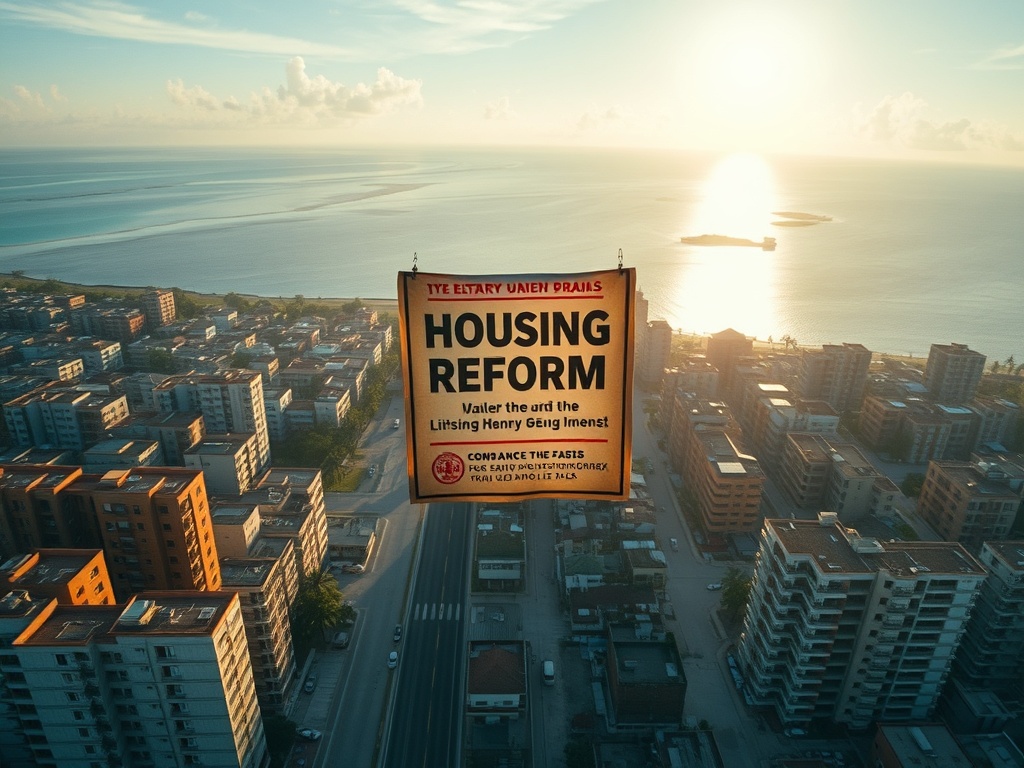
When Malé's Crowded Streets Campaign in Scattered Atolls
The conversation across Maldivian social media reveals a political landscape fractured along geographic lines, with housing policy emerging as the most potent symbol of this divide. The bitterness isn't merely about concrete and land allocation—it's about belonging, identity, and the perceived betrayal of political promises.
At the heart of the discontent lies the Binveriya scheme, a housing initiative that critics argue institutionalized discrimination between Malé residents and those from the atolls. What was intended as a solution to the capital's chronic overcrowding instead became a political flashpoint, with many viewing it as evidence that some citizens are more equal than others. The policy generated more public outrage than perhaps any other recent government initiative, tapping into deep-seated anxieties about fairness and representation.
The opposition MDP finds itself trapped by this legacy. Their platform claims to prioritize listening to the people, yet they proceeded with a scheme that ignored the grievances of thousands. This contradiction has left them vulnerable to accusations of double standards and elitism. The party's recent weak opposition events reflect this crisis of credibility—when they centralized their housing voice for Malé alone, they alienated the very constituents who once formed their base.
Across the political spectrum, parties appear trapped by short-term electoral calculations. The fear of losing votes creates visionless leadership, with housing promises serving as campaign tools rather than genuine solutions. The result is a system where subsidized flats often become investment properties for those living abroad, while genuine need goes unaddressed. The politicization of basic shelter has created a cycle where every election brings new promises but little substantive progress.
The housing debate mirrors broader societal fractures. Just as American politics pits Democrat against Republican, Maldivian political discourse often herds citizens into opposing camps—Malé versus the atolls, establishment versus opposition—distracting from systemic issues that affect all Maldivians. The real tragedy is that while politicians weaponize these divisions, the rising seas threaten to make geographical distinctions meaningless for everyone.
What emerges from this public conversation is a demand for accountability that transcends party lines. The call isn't merely for different policies but for a different kind of politics—one where leaders take responsibility for failures, where geographic origin doesn't determine citizenship value, and where housing solutions address national needs rather than electoral mathematics. Until that shift occurs, the waves of discontent will continue to rise alongside the literal ones threatening the islands.
— Source fragments: Discriminative housing policy was one of the main reasons Ibu lost the last election; MDP centralized their housing voice for Male' not for the housing problem of the Maldives; Binveriya scheme undermined progress; parties scared of losing votes; MDP platform riddled with double standards; demand for accountability