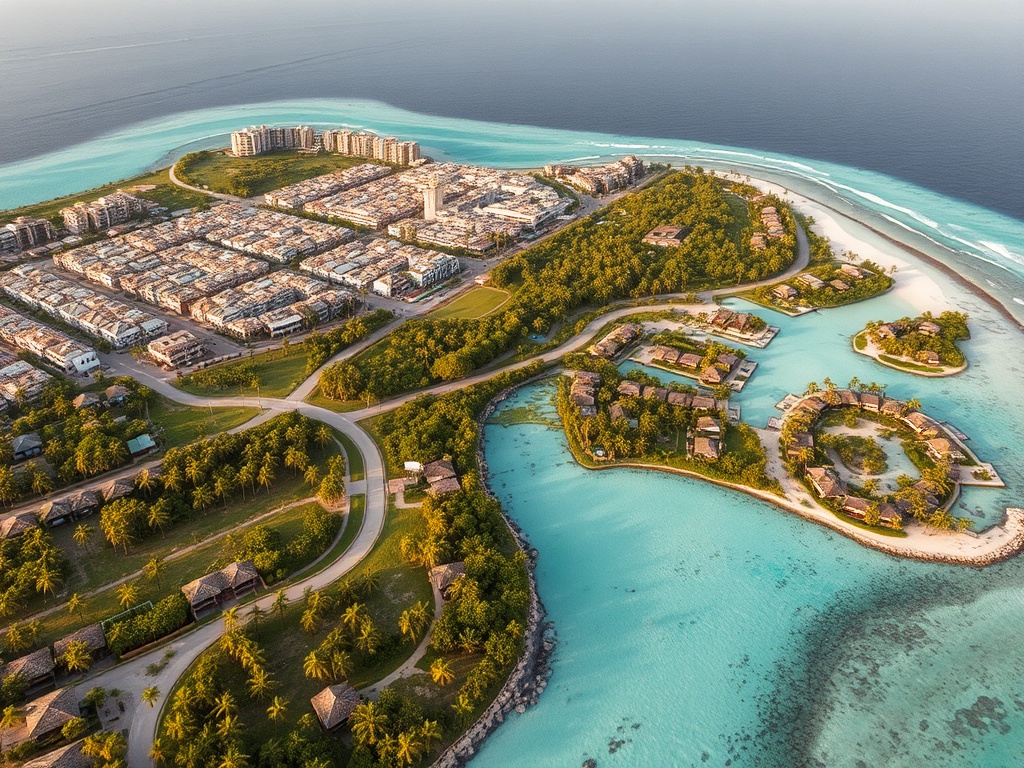
When Malé's Crowded Streets Meet Kulhudhuhfushi's Green Spaces
The statistics tell a stark story: Malé stands as the world's most densely populated city, a distinction born from decades of centralized development and urban migration patterns. Yet beneath these numbers lies an emerging consensus that the solution may not lie in further concentrating resources in the capital, but in strategically dispersing them across the archipelago.
The conversation around urban decentralization gained momentum during the YAG administration's proposal for Gulheefalhu—a vision of clean, modern high-rise development designed to alleviate pressure on the capital. While that specific plan generated debate, the underlying principle of creating alternative urban centers continues to resonate with urban planners and residents alike.
What makes this approach particularly compelling is the organic growth already occurring in cities like Kulhudhuhfushi and Naifaru. These regional hubs have developed significant migrant populations with minimal government intervention, suggesting that with targeted incentives and infrastructure investment, they could become genuine alternatives to Malé-centric living.
The Malé City Council's efforts to reduce population density represent one pathway toward urban reform, but the broader solution likely requires a multi-pronged approach. As one perspective notes, achieving meaningful change is possible based on current efficiencies, though specific terms and conditions would need careful consideration.
Envisioning these future cities sparks imagination—broad, tranquil avenues lined with trees connecting parks and public spaces, creating circular oases around car-free urban cores. In such environments, the dominant sounds shift from traffic noise to conversation and birdsong, offering a fundamentally different quality of life than what's available in today's congested capital.
The benefits extend beyond mere livability. Decentralization could address multiple systemic issues simultaneously: reducing pressure on Malé's overwhelmed infrastructure, creating economic opportunities across different atolls, and potentially making housing more accessible and affordable. The vision of a Malé without the chronic congestion of Maafannu represents not just urban planning improvement, but a redefinition of what Maldivian urban life can be.
This urban reimagining comes at a critical juncture. With the nation facing housing crises, infrastructure strain, and economic challenges, the strategic development of regional urban centers offers a pragmatic path forward. It acknowledges that while Malé will always remain the political and economic heart of the Maldives, the nation's urban future need not be monolithic. The emerging consensus suggests that our archipelagic nature, often seen as a developmental challenge, might actually be our greatest urban planning advantage.
— Source fragments: Incentivising migration to existing cities; Kulhudhuhfushi and Naifaru migrant populations; Malé as most densely populated city; Gulheefalhu high-rise city concept; vision of car-free urban spaces with parks and trees