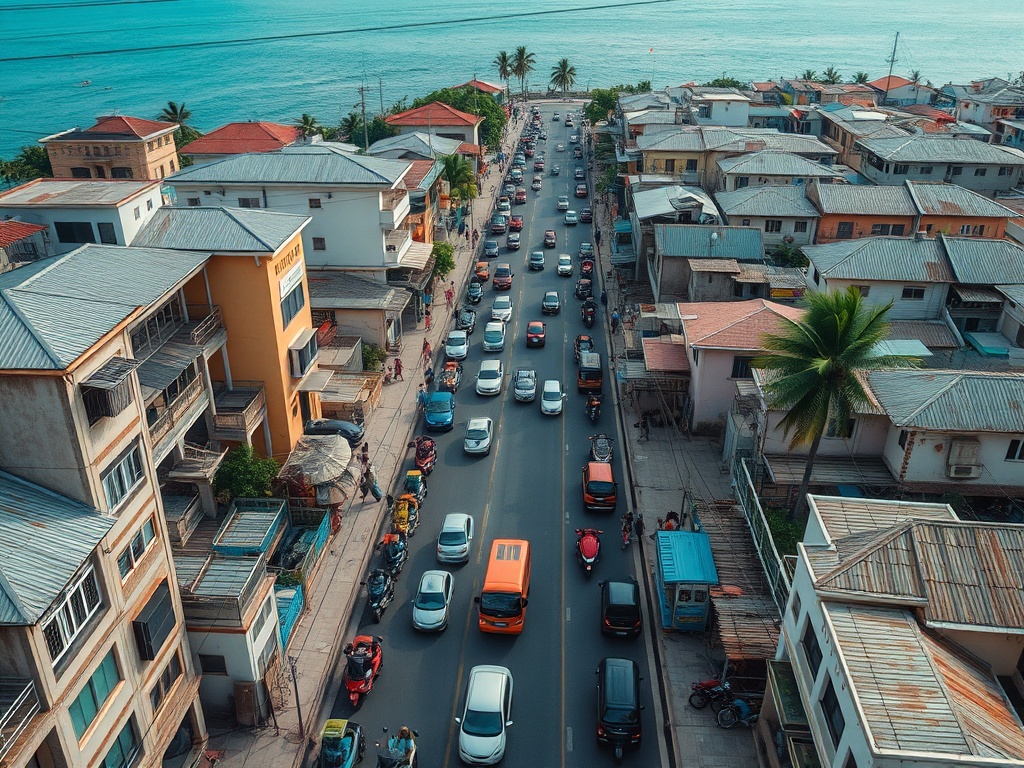
When Malé's Streets Have More Parked Cars Than Parking Spaces
The four traditional wards of Malé—Henveiru, Galolhu, Machchangolhi, and Maafannu—once defined the social and administrative fabric of the capital. Today, these historical boundaries feel increasingly irrelevant to the daily lives of residents navigating one of the world's most densely populated cities. When asked to map these wards, most would struggle to trace their precise contours, suggesting that administrative legacy has given way to more practical geographical understandings of the city as Malé, Villimale', Hulhule', and the expanding phases of Hulhumale'.
The real challenge lies not in preserving outdated administrative maps but in addressing the concrete reality of Malé's transportation crisis. The city's limited land area has become a sprawling parking lot, with vehicles occupying every available inch of roadway. The situation reflects a broader tension between idealistic urban planning and the practical necessities of daily life.
This disconnect became starkly apparent during public consultation sessions where suggestions about bicycle infrastructure were met with dismissive laughter from officials. The response—'this is not 1960s'—reveals a fundamental misunderstanding of modern urban mobility solutions. Cities worldwide are rediscovering cycling as a viable transportation mode, implementing dedicated lanes and bike-sharing programs that reduce congestion and pollution while improving public health.
The parking fee debate further illustrates this tension. While some argue that higher charges for vehicle owners might discourage car dependency, this approach alone cannot solve the underlying infrastructure problem. Malé's road network, though developed, cannot accommodate the current volume of vehicles, creating a permanent state of gridlock that affects emergency services, commerce, and quality of life.
The fear of replicating Malé's congestion patterns in newly developed areas like Hulhumale' Phase 2 drives much of the current discourse. Residents recognize that simply building more roads leads to more cars—a cycle that ultimately defeats the purpose of urban expansion. The solution requires integrated thinking that combines parking management with genuine alternatives: reliable public transport, pedestrian-friendly pathways, and yes, bicycle infrastructure suitable for a tropical climate.
What emerges from these conversations is not nostalgia for the ward system of old, but a pragmatic demand for solutions that acknowledge Malé's unique constraints while embracing innovative approaches to urban mobility. The city's future depends on transcending both geographical and mental boundaries to create a transportation ecosystem that serves residents' actual needs rather than administrative convenience.
— Source fragments: Ward system outdated, bicycle suggestion dismissed as outdated, parking congestion concerns, fear of replicating Malé's problems in new developments