When Malé's Streets Turn to Rivers
When the skies darken over Malé, the anxiety begins not with the first drops of rain but with the memory of previous floods. The capital's stormwater system, a relic from a different era, now functions as a barometer for the city's broader infrastructure challenges. The reality is stark: the only current solution involves reactive cleaning when blockages occur, while comprehensive upgrades remain a distant promise.
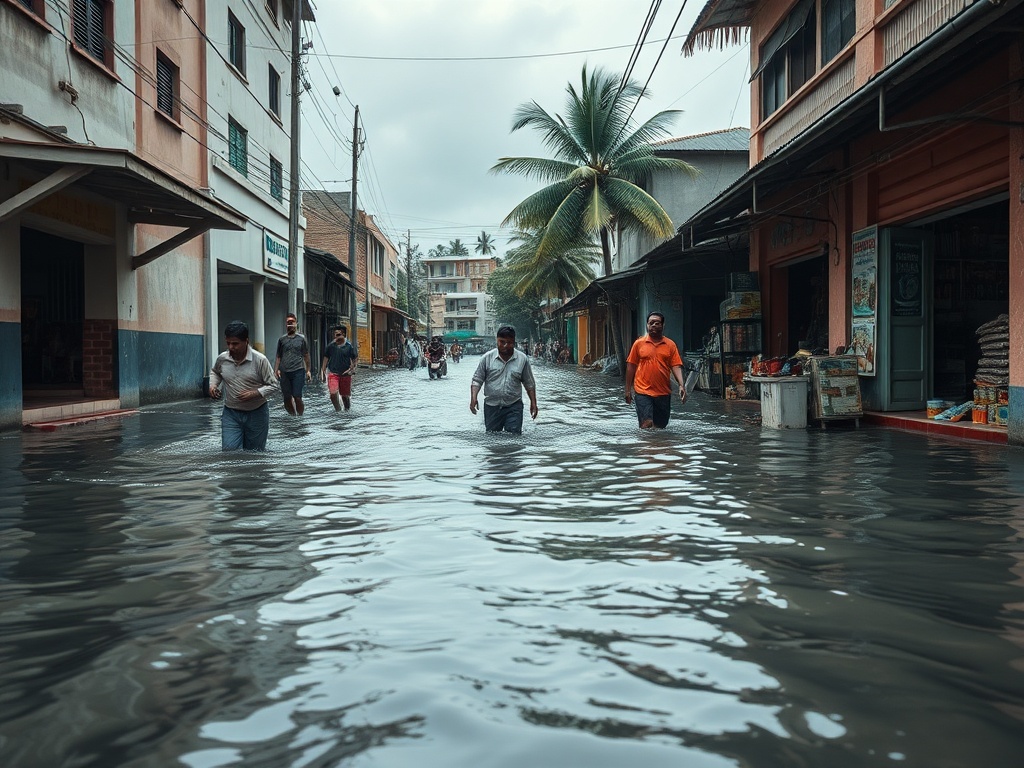
The limitations of this approach become apparent during even moderate rainfall. Streets transform into shallow rivers, businesses deploy sandbags as makeshift levees, and residents navigate flooded neighborhoods with resigned familiarity. This isn't merely an inconvenience—it's a symptom of infrastructure planning that has failed to keep pace with both urban density and climate realities.
Malé's unique geography compounds the problem. Built on reclaimed land and surrounded by sea, the city has limited natural drainage capacity. Every square meter of paved surface represents lost absorption potential, forcing rainwater through an increasingly inadequate network of pipes and channels. The system's design capacity, conceived for a smaller population and less intense weather events, now operates at its breaking point during routine storms.
The conversation around stormwater management reflects a larger pattern in Maldivian infrastructure development: reactive maintenance trumping proactive investment. While political cycles favor visible, short-term projects, the underground networks that sustain urban life receive attention only when they fail. This approach creates a perpetual cycle of emergency response rather than sustainable solutions.
Engineering assessments consistently point to the need for integrated water management strategies. These would combine upgraded drainage infrastructure with green spaces that absorb runoff, permeable surfaces that reduce flow volumes, and storage systems that capture rainwater for non-potable uses. Yet such comprehensive approaches require coordinated planning across multiple government agencies and sustained investment beyond electoral timelines.
As climate models predict more intense rainfall events for the region, the cost of inaction grows exponentially. Each flooding incident damages property, disrupts commerce, and strains emergency services. More fundamentally, it erodes public confidence in the city's ability to provide basic protection from the elements.
The challenge extends beyond technical solutions to governance structures capable of implementing long-term resilience strategies. Until stormwater management receives the same priority as other infrastructure projects, Malé will continue to operate with a system that treats symptoms rather than addressing underlying vulnerabilities. The question isn't whether major upgrades are needed, but when the political will and resources will align to make them possible.
— Source fragments: It would result in slower removal of storm water, and yes the only way right now would be to clean them when blockages occur. We would need major upgrades to our storm water system to think about other solutions.