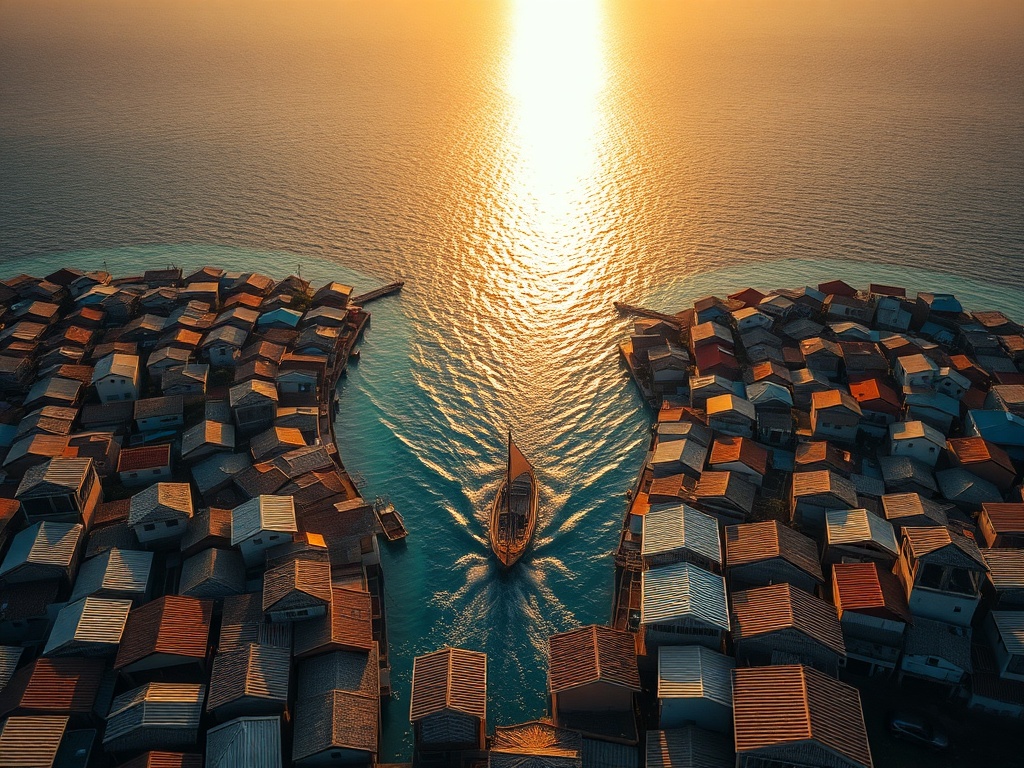
When Malé's Walls Meet the Shifting Sea
The sea has always been our first teacher. It shows us how boundaries shift with the tide, how nothing remains fixed forever. Yet we build our lives seeking permanence—walls against the water, land beneath our feet.
They say Malé is full. Eyes see the concrete pressing against the shoreline, the narrow streets breathing with too many dreams. But what people are really saying, beneath the demand for money or recognition, is something simpler: I am here. I exist. See me.
This isn't about being Male' meeha or Raajetherey meeha—these divisions we carve between ourselves. Any Dhivehin who wishes to settle should be able to find ground to stand on, wherever the current takes them. To buy, to obtain, to move when the heart calls elsewhere. The policy should be fair, blind to birthplace or profession.
When demand far outstrips supply, simple solutions often create darker currents beneath the surface. Price ceilings become illusions, creating shadow markets where the desperate pay more. Regulation requires careful balance—not outright prohibition, but measured limits that acknowledge reality.
Housing is not the same as land, yet they're woven together in our consciousness. If you cannot use land for anything else, what is it but potential waiting? The debate about free allocation versus regulated rent reflects deeper questions about what we owe each other in this archipelago we share.
The best policies solve real problems at lower cost, but implementation matters more than intention. When schemes are obviously biased or unconstitutional, the trust erodes like shoreline during monsoon storms. Standardization, surveys, national plans—these are the compasses that might guide us toward fairness.
At low tide, you can see the coral heads that remain hidden when the water is high. Perhaps our housing debates are like this—revealing the solid structures of what really matters when the surface arguments recede. Not who gets what, but how we ensure everyone has shelter from the same sun, the same rain, in this nation of a thousand islands.
People can say whatever they want, but policies must be fair. This is the anchor that holds amidst the changing tides.
— Source fragments: Male' is full... people are demanding money... policies has to be fair; How do we set limitation for free island allocation; scheme solves a problem... implemented in unconstitutional and biased way; When demand far exceeds supply... setting price ceiling below market rate rarely effective; don't discriminate among residents... against free land for anyone; standardise housing schemes... National Development Plan; Housing is not the same as land; not to differentiate between Male' meeha or Raajetherey meeha