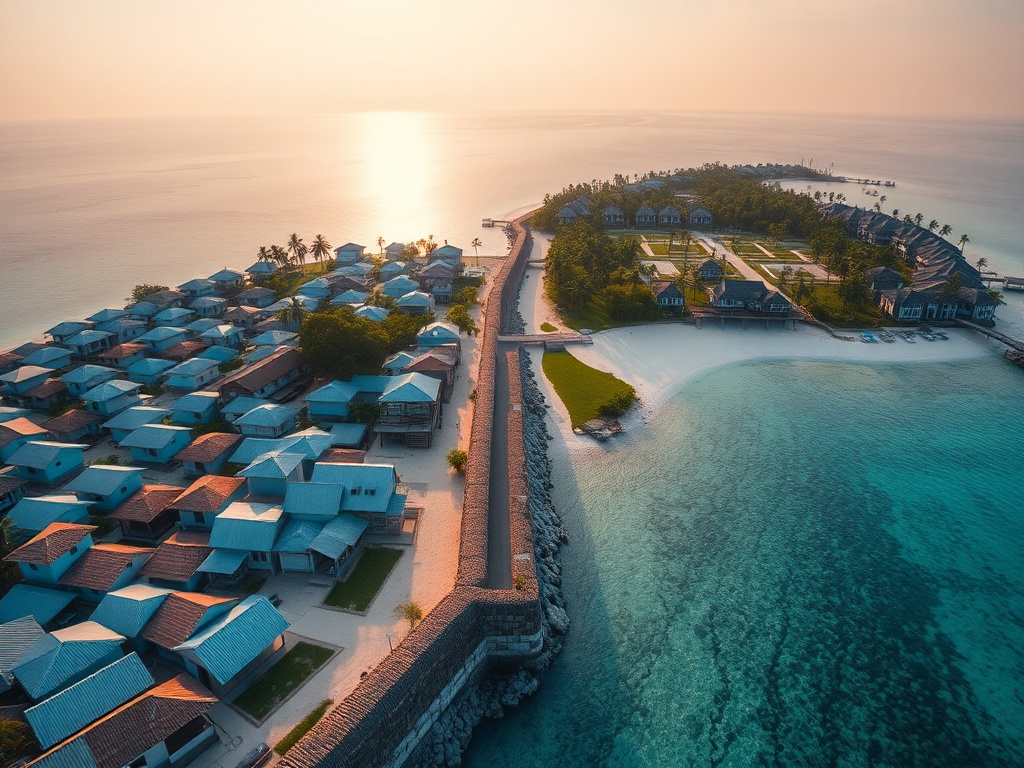
When Paradise Gets a Fence: The Islands Divided by Tourism
Across the Maldivian archipelago, a quiet tension simmers beneath the glossy surface of tourism brochures. The transformation of inhabited islands into luxury resorts, once celebrated as economic progress, now faces increasing scrutiny from those who question the true cost of this development model.
The fundamental concern isn't about money flowing in or out of communities—it's about something more profound. When an island that has nurtured generations of families, traditions, and social networks becomes a gated luxury property, something irreplaceable is lost. The very soul of a community, built over centuries of shared history and interdependence, cannot be replicated or repurchased with tourism revenue.
This perspective challenges the dominant narrative that equates development with resort conversion. For many Maldivians, their island represents more than real estate—it's their identity, their heritage, and their sense of belonging. The social fabric woven through daily interactions at the local café, children playing on familiar beaches, and elders sharing stories in the shade of ancestral trees represents a form of wealth that doesn't appear on balance sheets.
The debate reflects a broader questioning of development priorities in the Maldives. As tourism continues to drive the economy, crucial conversations are emerging about sustainable models that preserve community integrity while generating economic benefits. The challenge lies in finding approaches that don't force communities to choose between economic survival and cultural continuity.
What's becoming increasingly clear is that development cannot be measured solely in dollars or resort beds. The true measure of progress must include the preservation of social cohesion, the protection of community identity, and the recognition that some forms of wealth are too precious to sacrifice at the altar of tourism expansion. The question remains whether development models can evolve to honor both economic needs and the intangible bonds that make island communities thrive.
— Source fragments: Yes. There was absolutely no need for inhabited islands to have been turned into resorts unless the intention was to destroy the social fabric. I don't care even a single dollar not enter my island, but I don't want that in my island.