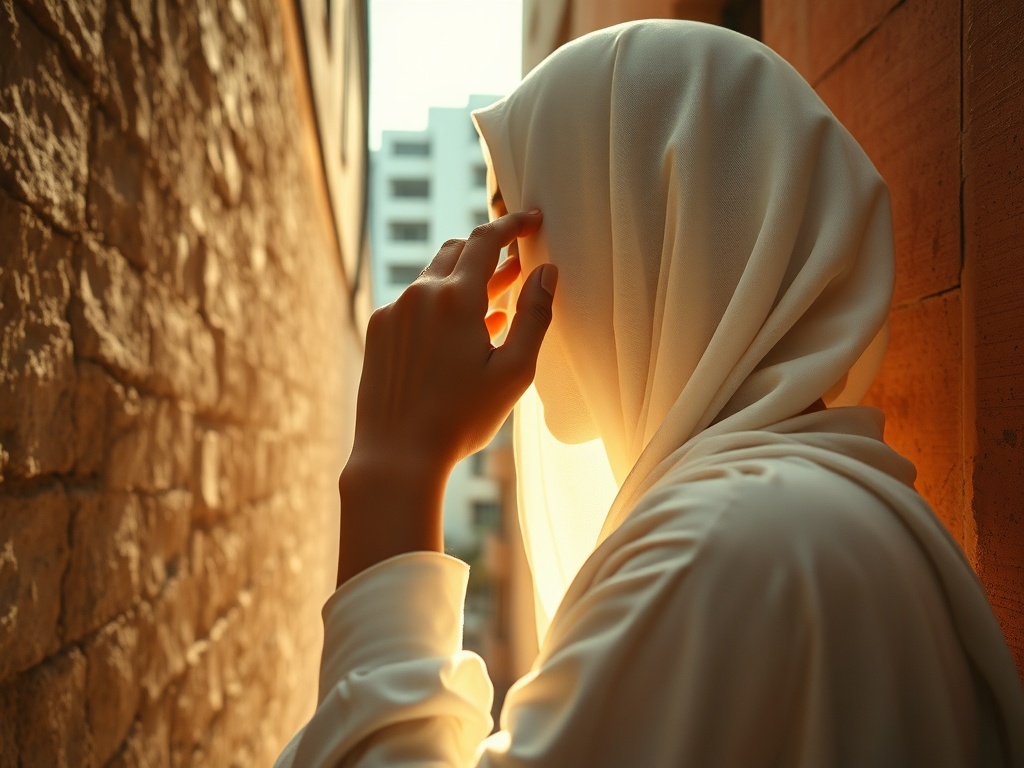
When Personal Faith Meets the State's Hijab Mandate
In the quiet spaces between personal devotion and public expectation, a fundamental question persists: where does individual religious obligation end and state enforcement begin? This debate, particularly surrounding the hijab, reveals deep tensions within modern Muslim societies about the nature of faith, freedom, and responsibility.
At the heart of the matter lies the principle that religious duties, including modesty in dress, are fundamentally individual obligations. As one observer articulated, these practices must come from the heart, with sincere intention—not through coercion. The relationship between a believer and their creator is direct and personal, unmediated by priests or religious intermediaries. This direct accountability forms the bedrock of Islamic theology, where each individual stands alone before God on judgment day.
The domestic sphere presents its own complexities. Many Muslim men see their role as cultivating haya—modesty and consciousness of God—within their families through love and guidance rather than force. They view this as part of their religious responsibility to protect and nurture those in their care, drawing parallels between spiritual leadership and family protection. Yet this domestic guidance exists in stark contrast to the idea of state enforcement, where religious obligations become matters of criminal law.
Legal scholars note that while Islamic law clearly defines right and wrong, the mechanisms of enforcement remain contested. The absence of specific criminal penalties for not wearing hijab in classical Islamic jurisprudence suggests a deliberate space for personal choice and spiritual development. Good Muslims, after all, are judged by both outward acts and internal intentions—a balance that state enforcement might disrupt.
The political dimension adds another layer. When religious obligations become state mandates, they enter the realm of public policy alongside other religious prohibitions like alcohol and pork. This raises practical questions about the role of government in spiritual matters and the boundaries between personal faith and public order.
Ultimately, the debate reflects broader tensions in Muslim societies navigating modernity. The challenge lies in honoring religious traditions while respecting individual conscience, in cultivating community standards without compromising personal freedom. As these discussions continue, they reveal not just differing interpretations of texts, but fundamentally different visions of how faith should manifest in both private lives and public spaces.
What emerges is a portrait of faith that is both deeply personal and communally significant—a balance between individual responsibility and collective values that continues to evolve in Muslim communities worldwide.
— Source fragments: Covering your hair is a debatable issue amongst scholars; It is an individual obligation- not something to be enforced; Religious obligations must come from the heart, with intention; We are accountable for our own actions; Where in Islam does it criminalise non buruga?; Good Muslims are based on their deeds; We cultivate hayaa and discipline with love and care; Not with whips and chains