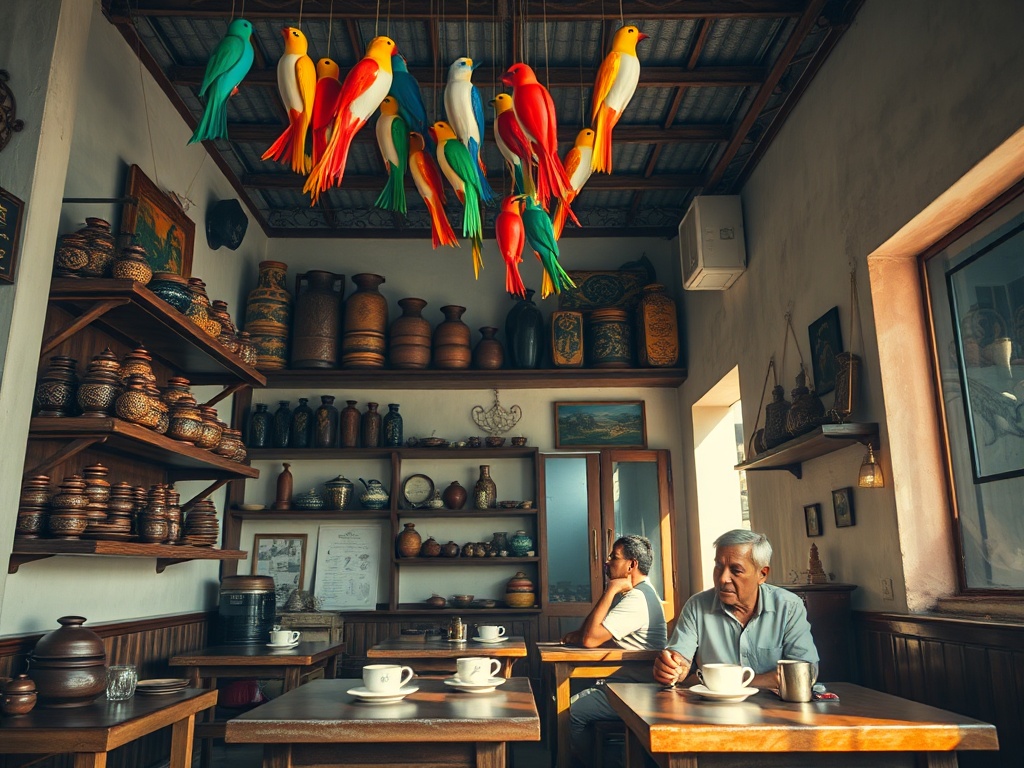
When Plastic Birds Become Omens
The plastic birds hung there for months, colorful little things suspended from the ceiling of that small café near the harbor. Tourists would smile at them, locals barely noticed them—they were just part of the scenery, like the faded photographs of dhoni boats on the walls. Then one afternoon, a man walked in and saw something different. He saw cursed objects, spiritual contamination, a violation of something sacred.
In a city where concrete towers now scrape the same sky that once knew only coconut palms and seagulls, these collisions happen constantly. The old ways bump against the new, tradition meets globalization in narrow alleyways where the salt air still carries whispers of different times. That man wasn't seeing plastic—he was seeing symbols, and in his world, symbols carry weight.
There's something profoundly human in this moment. Not the extremism, but the need to make meaning from the mundane. On an island where every breeze carries the scent of the sea, where the call to prayer still cuts through the noise of scooters and construction, we're all navigating what to keep and what to release. The plastic birds weren't harming anyone, but to that man, they represented something slipping away—a purity, a certainty that feels increasingly rare in our crowded capital.
I watched from my table as the restaurant owner patiently explained they were just decorations. The man eventually left, shaking his head. The birds still hang there today, but now I see them differently. They're not just plastic anymore—they're a reminder that in this rapidly changing atoll nation, we're all trying to read signs in a world where the old maps no longer match the terrain.
— Source fragments: Sheikhs are so extreme here. I saw someone trying to take some plastic birds out of a restaurant decor because they were claiming 'the restaurant is cursed. kaa thanehgga soora huregen nuvaaneyow'