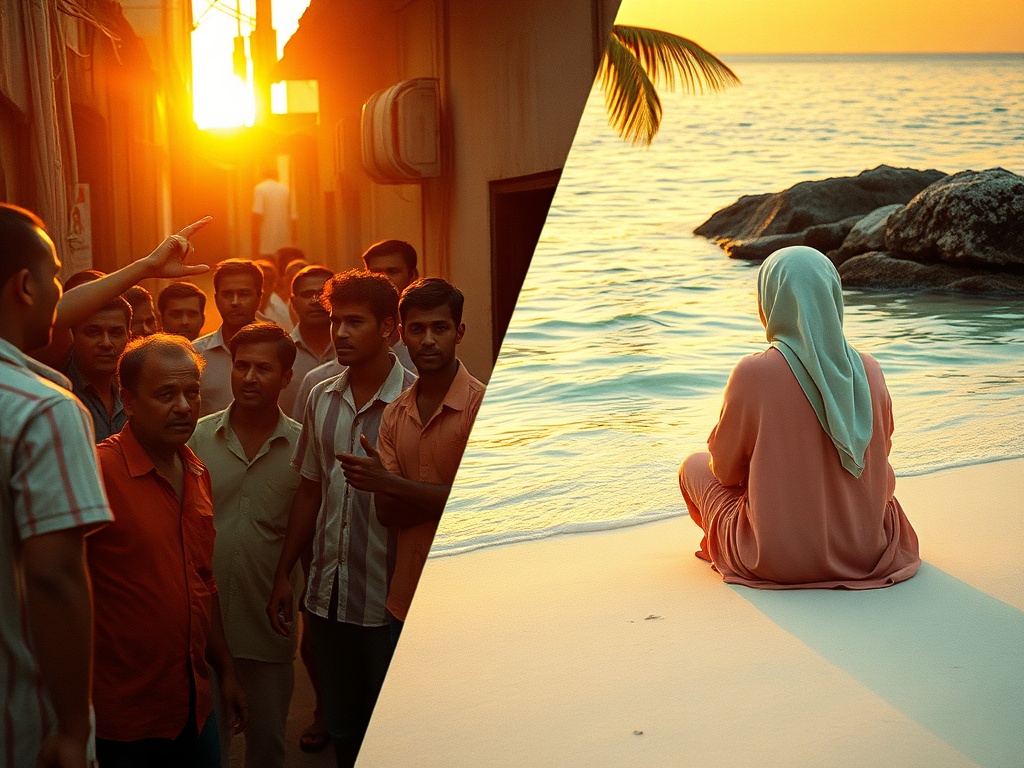
When Policy Debate Turns Personal in Maldivian Politics
In the heated political climate of the Maldives, what begins as policy disagreement often devolves into something far more personal and damaging. The transformation of political discourse from substantive debate to character assassination reveals troubling trends in how Maldivians engage with their leaders and each other.
The pattern is familiar: a critical observation about a politician's campaign office or policy position quickly escalates into accusations of mental instability, religious hypocrisy, or even terrorist sympathies. This rhetorical escalation mirrors the broader polarization affecting Maldivian society, where political allegiance increasingly defines social relationships and public identity.
Recent years have seen political discourse become weaponized, with social media serving as both platform and amplifier. The anonymity of digital spaces emboldens users to make accusations they might never voice in person—from questioning someone's mental fitness for office to suggesting they sympathize with extremist elements. These attacks often follow a predictable trajectory, beginning with legitimate criticism before spiraling into ad hominem assaults that undermine the possibility of constructive dialogue.
The religious dimension adds another layer of complexity in this predominantly Muslim nation. Accusations of "flexing religious cards" or insinuations about religious hypocrisy reflect how faith has become politicized, used both as shield and weapon in public debates. This manipulation of religious identity for political scoring further erodes the social fabric, creating divisions where unity should prevail.
Behind these personal attacks lies a deeper frustration with governance challenges that affect ordinary Maldivians—from the housing crisis in Malé to economic pressures and concerns about foreign influence. Yet instead of channeling this frustration into substantive policy discussions, public discourse often defaults to the personal, the emotional, the accusatory.
The normalization of such rhetoric has consequences beyond political debate. It affects how communities function, how neighbors interact, and how the next generation learns to engage in civic life. When political disagreement becomes an excuse for personal destruction, the very foundations of democratic discourse are threatened.
As the Maldives navigates complex domestic and international challenges, the quality of public conversation matters more than ever. Restoring civility to political discourse requires recognizing that disagreement need not mean disrespect, and that robust debate can coexist with mutual dignity—a balance essential for any healthy democracy.
— Source fragments: Political criticism escalating to personal attacks, religious card accusations, mental fitness questioning, terrorist sympathizer allegations