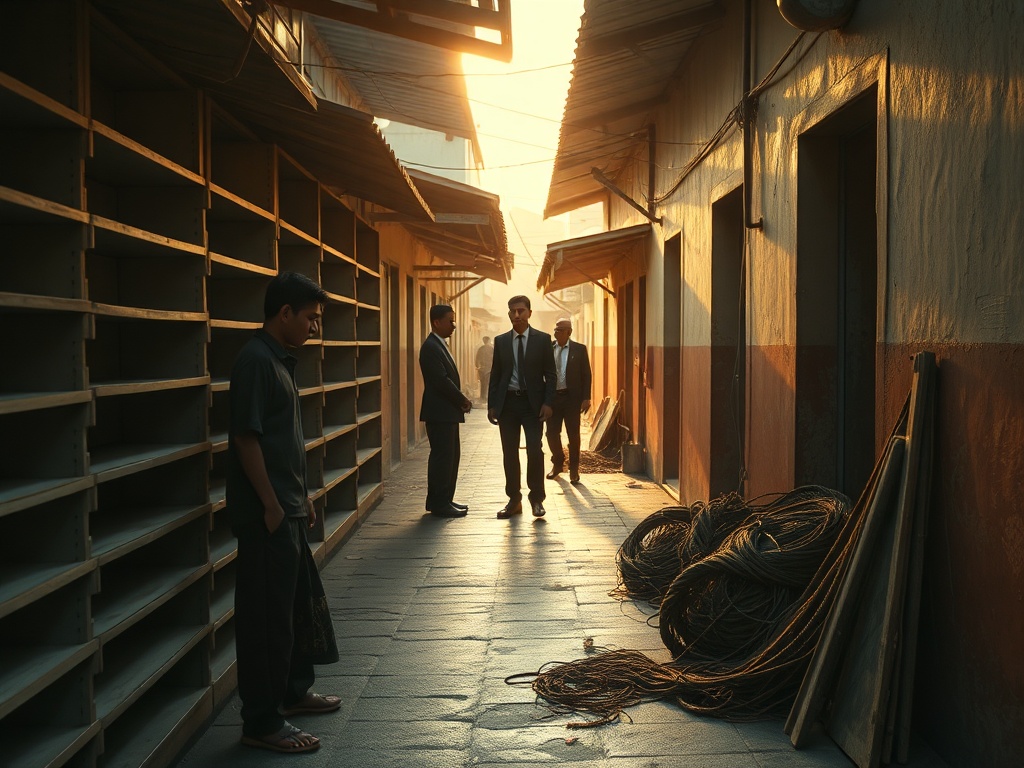
When Political Connections Empty a Shop in Malé
In the complex ecosystem of Maldivian commerce and governance, a disturbing pattern has emerged where political connections appear to facilitate business practices that leave destruction in their wake. The allegations paint a picture of a system where power protects predation, and ordinary entrepreneurs become collateral damage.
Recent accounts describe individuals who leverage political influence to infiltrate small businesses, only to dismantle them once financial control is established. The pattern is consistent: initial involvement followed by systematic destruction of operational integrity, culminating in financial extraction and abandonment. Victims report helplessness as legal recourse proves ineffective, with law enforcement unable to reach those protected by the shadow of political affiliation.
The scale of alleged corruption extends beyond individual enterprises. Critics point to state-owned enterprises and their private subsidiaries as potential vehicles for political campaign financing. Each new infrastructure project, rather than serving public interest, becomes viewed as another opportunity for personal enrichment. The public perception has shifted from cautious optimism to cynical expectation—where ribbon-cutting ceremonies signal not progress, but profit-taking.
Meanwhile, parallel economies thrive in plain sight. The drug trade continues to operate at staggering scales, with enforcement seemingly selective and ineffective against well-connected networks. This dual reality—where legitimate businesses struggle while illicit operations flourish—creates a corrosive environment that undermines both economic development and social cohesion.
The consequences extend beyond financial loss. When entrepreneurs see their life's work destroyed by individuals who operate above the law, it erodes the foundational trust necessary for economic growth. Small businesses, traditionally the backbone of Maldivian communities, become vulnerable to predation by those who treat commercial ventures as temporary opportunities for extraction rather than long-term partnerships.
This ecosystem of impunity affects every aspect of Maldivian society. The high cost of living, foreign currency shortages, and youth unemployment all connect to a system where resources flow toward connected individuals rather than productive enterprises. As one business owner's experience demonstrates, the pattern repeats because the incentives remain unchanged—and the protections remain inadequate.
The challenge for Maldives lies not just in addressing individual cases of corruption, but in dismantling the systems that enable them. Until political power ceases to provide immunity from accountability, and until business practices align with legal and ethical standards, the cycle of destruction will continue, leaving broken enterprises and shattered trust in its wake.
— Source fragments: This is incompetence of AEH. Shah is an extremely corrupt person; Honestly I won't be surprised if the private companies under SOEs is a means to generate money for PNC's LCE campaign; This guy gets into small businesses and ruin them by showing power. Once he get to put his hand on the money and profit he leaves the business and dump the owners. He failed my whole business and not even maldives police could reach him after filing several cases