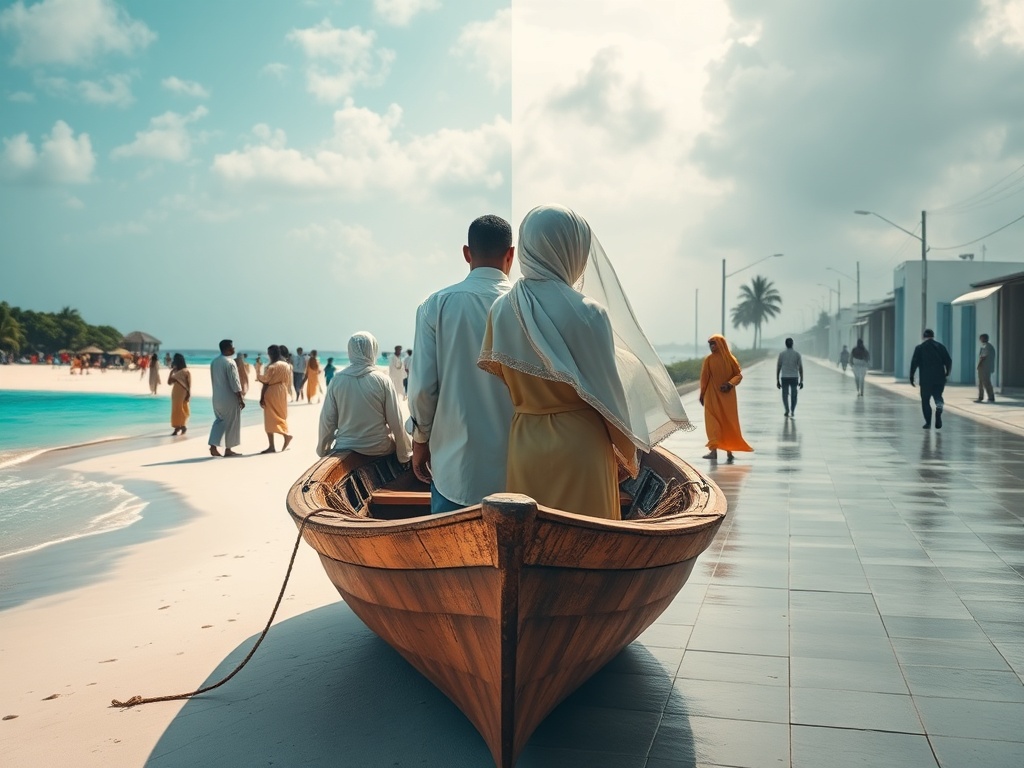
When Political Disagreements Became Accusations of Racism
Across the scattered islands of the Maldives, a disturbing conversation is unfolding—one that challenges the long-held notion of a unified nation. The rhetoric has turned increasingly bitter, with accusations of racism and tribalism poisoning public discourse. What began as political disagreements has evolved into something more fundamental: a crisis of belonging.
The language of division cuts deep. References to land rights echo historical grievances, while regional identities—whether from Malé, Raa Atoll, or other islands—are weaponized in arguments that question who truly belongs. The irony is stark: in a nation where Islam unifies 100 percent of the population, where shared language and culture should bind citizens together, we find ourselves fractured along lines that many assumed had faded with modernization.
This tribalism manifests in multiple dimensions. There's the urban-rural divide, where residents of the congested capital are pitted against those from outer islands. There's the economic tension, where limited resources and opportunities create zero-sum thinking about who deserves what. And increasingly, there's the dangerous rhetoric that questions the very humanity of fellow citizens based on their geographic origins.
The situation reveals a painful paradox. While political leaders speak of national unity, their actions often deepen divisions. The practice of distributing land and housing as political favors has created resentment among those left out. The bloated public sector, filled with political appointments, reinforces the perception that connection matters more than merit.
Meanwhile, the youth—facing unemployment and limited prospects—watch as these internal divisions consume energy that could be directed toward solving national problems. The drug epidemic, the housing crisis, the struggling healthcare system—all demand unified action, yet we remain trapped in circular arguments about who belongs where.
The most troubling aspect is how quickly these divisions escalate. What begins as political disagreement transforms into personal attacks, then into questioning fundamental rights to land and belonging. The language used—comparing situations to historical injustices elsewhere—shows how deeply these wounds run.
If the Maldives is to move forward, this racism and tribalism must be confronted directly. Not as political talking points, but as the national emergency it represents. The alternative is a future where our islands become increasingly isolated—not just from each other, but from the shared identity that has sustained us through centuries of challenges.
— Source fragments: racism accusations, land rights disputes, regional tensions (Male vs other atolls), tribalism concerns, unity rhetoric, calls to uproot racism