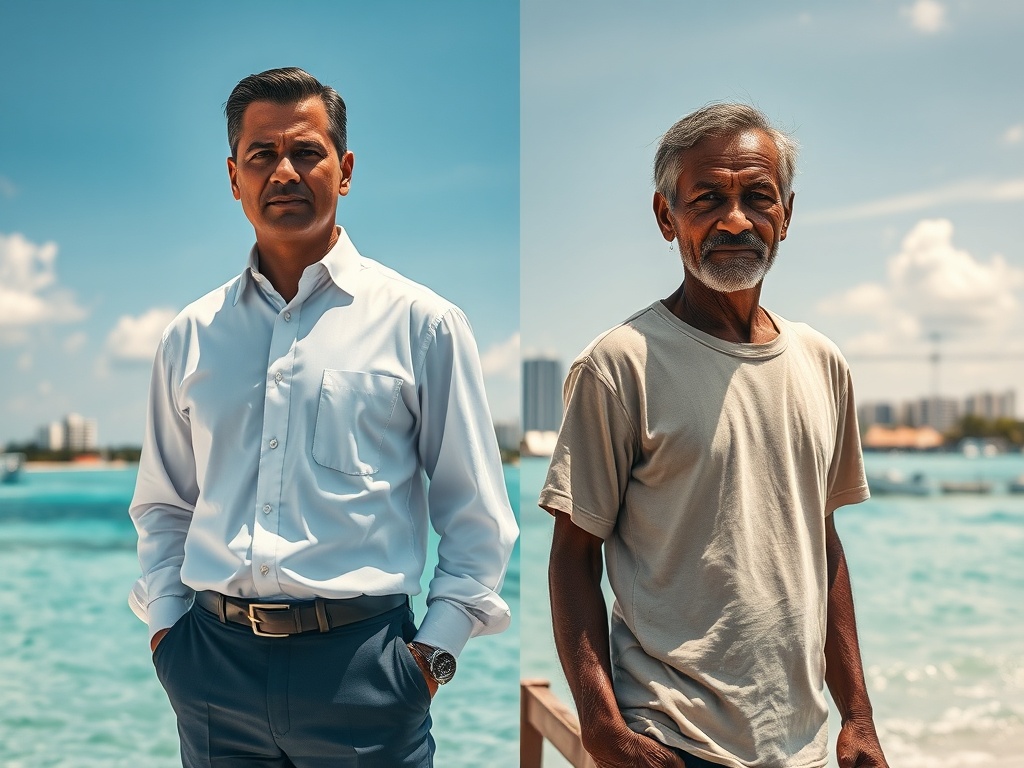
When Political Leaders Try to Speak Like Fishermen
In the heated theater of Maldivian politics, a curious contradiction plays out repeatedly: well-educated, well-connected leaders attempt to rebrand themselves as men of the people. The phenomenon isn't new, but it's become particularly pronounced in the current political climate, where accusations of elitism clash with attempts to project common appeal.
The criticism that certain politicians are trying to become 'bonafide beyfulhu'—the Maldivian equivalent of 'old money'—speaks to a deeper societal tension. When leaders who already occupy positions of privilege and education attempt to manufacture grassroots credibility, it creates a credibility gap that voters instinctively recognize. The attempt to bridge this gap often feels performative, especially when accompanied by campaign tactics that alienate rather than unite.
This political theater unfolds against a backdrop of genuine public frustration. The blocking of critics on social media platforms, the dismissal of legitimate concerns as 'propaganda,' and the personal attacks that dominate political discourse all contribute to a growing disillusionment with the political process. When citizens feel silenced or dismissed, it erodes the very foundation of democratic engagement.
The racial undertones in some political rhetoric represent another layer of this complex dynamic. In a nation grappling with economic pressures, housing shortages, and foreign labor concerns, identity politics can become a dangerous tool for division. The call to 'cancel' political figures for racist behavior reflects a growing awareness of these tactics and their corrosive effects on social cohesion.
What emerges from this cacophony is a political landscape where authenticity has become the rarest currency. The public can detect when leaders are speaking from conviction versus when they're merely reciting talking points. The frustration with hypocrisy isn't just about individual politicians—it's about a system that seems to reward performance over substance.
As Maldives confronts serious challenges—from economic pressures to governance issues—this disconnect between political rhetoric and genuine leadership becomes more than just political theater. It becomes a barrier to addressing the very real problems facing ordinary Maldivians. The question remains whether political figures will recognize that lasting influence comes not from manufactured populism, but from genuine connection with the people they seek to serve.
— Source fragments: He got 40 points for being an absolute hypocrite. Muizz is elitist. He already is an elite. But he wanna be bonafide beyfulhu. The equivalent of 'old money'. Hypocrites, the lot of them. Why the heck did Nefrofarou block me.