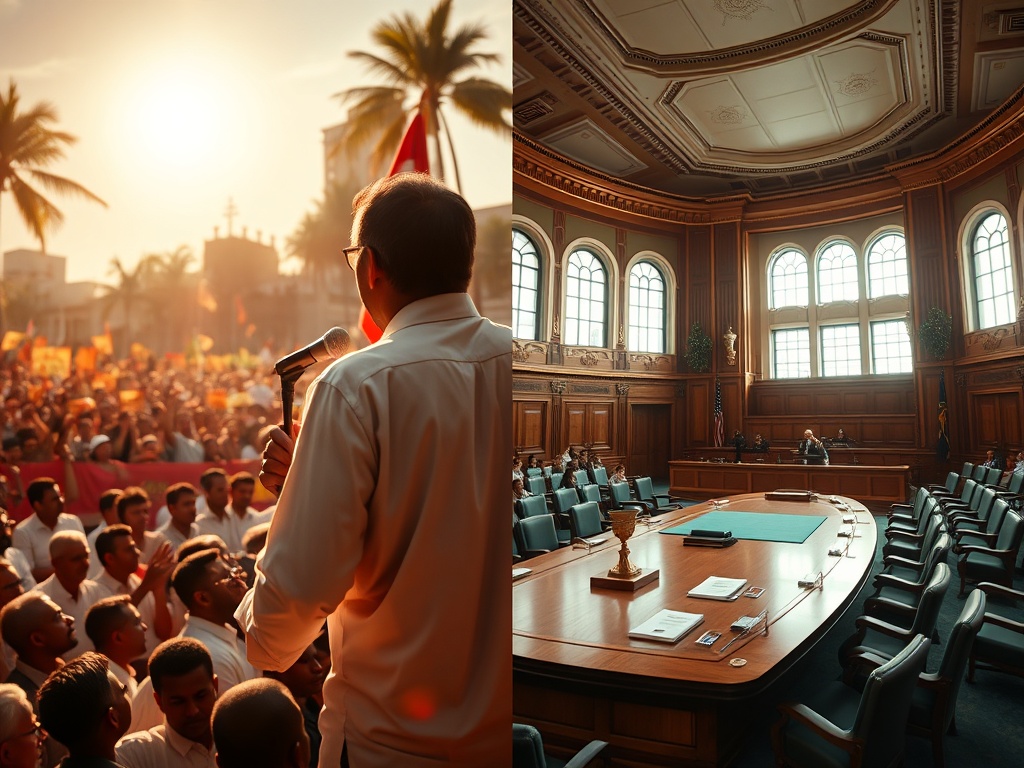
When Political Parties Become One Person's Shadow
In the shifting sands of Maldivian politics, a troubling pattern has emerged—one where political fortunes rise and fall with individual leaders rather than enduring principles. The current political landscape reveals a system where parties become extensions of personalities, leaving little room for substantive policy debate or institutional strength.
Recent discussions among observers highlight concerns that former President Mohamed Nasheed faces diminishing political prospects, while the current administration under President Mohamed Muizzu consolidates power. This isn't merely about electoral mathematics; it reflects a deeper structural problem where political movements become hostage to individual ambitions rather than guided by collective values.
The danger of this approach becomes starkly evident when examining the trajectory of governance. When parties revolve around specific leaders, they inevitably hit rock bottom—not just in electoral terms, but in their capacity to deliver meaningful solutions. The current political climate demonstrates how easily institutions can weaken when power concentrates in few hands, transforming what should be a proud republic into something resembling a kingdom.
This personality-driven politics creates a vacuum where substantive governance should exist. Citizens report never having seen concrete solutions from their leaders, only the familiar cycle of regime changes that fail to address fundamental issues. The pattern is clear: governments follow rather than lead, chasing popular demands for immediate benefits without addressing systemic challenges.
The consequences extend beyond political theater. When leadership becomes about individuals rather than institutions, it enables the weaponization of state resources, the erosion of democratic norms, and the prioritization of political survival over public service. The concentration of power in one administration after another has left Maldivian democracy fragile, with opposition voices increasingly marginalized.
The way forward requires a fundamental shift—from personality cults to principle-based politics. This means building parties around clear values and policy platforms that can withstand leadership changes. It demands strengthening institutions so they can check executive power regardless of who occupies the presidency. And it requires citizens to demand substance over symbolism, holding leaders accountable for solutions rather than rhetoric.
As the Maldives stands at this political crossroads, the choice is clear: continue down the familiar path of personality politics with its predictable disappointments, or build a political culture where principles outlive individuals and institutions transcend administrations.
— Source fragments: And chances are Nasheed will lose again; This is why we need to prioritize values and principles instead of a person. If we revolve the party around a certain leader it will hit rock bottom; Maldives at a Critical Crossroads The Maldives is sliding from democracy into a deliberate dictatorship. Day by day, our institutions weaken; Govs don't lead they follow; We've had enough regime changes to know: this is what the majority actually wants