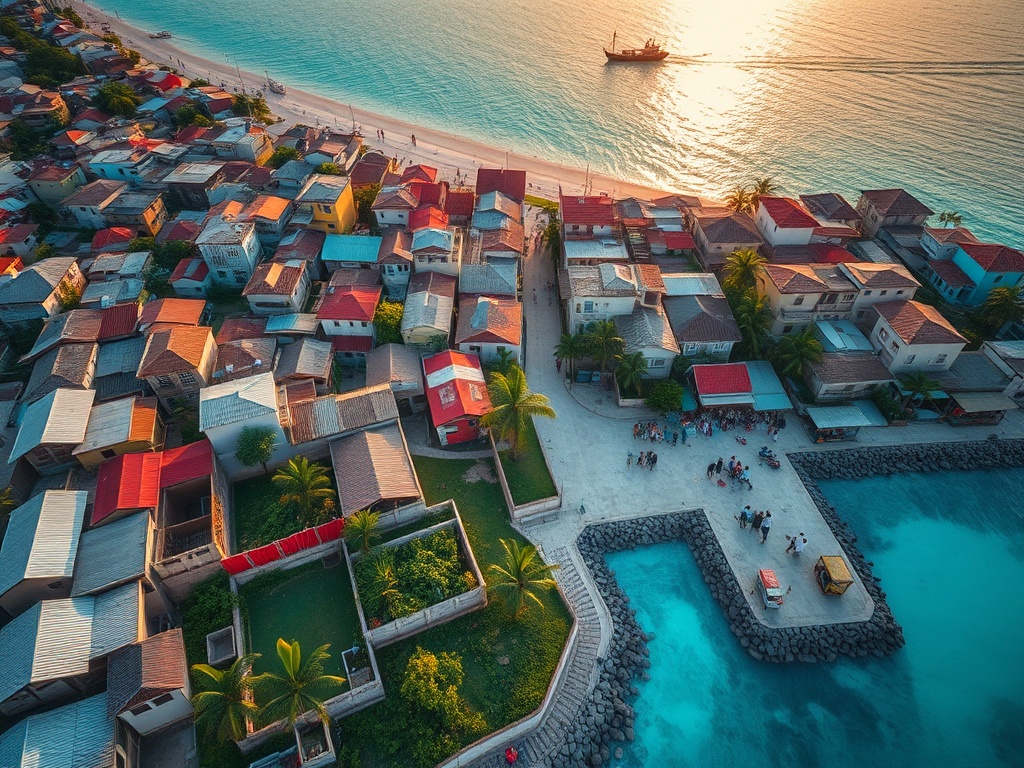
When Political Promises Meet Malé's Vanishing Green Space
The debate over land in the Maldives has reached a critical juncture. With limited territory scattered across 1,192 islands and a population increasingly concentrated in the congested capital, the traditional approach of distributing land as political patronage is proving unsustainable. The conversation has shifted from whether land should be given to who should control it and for what purpose.
Across social media and public discourse, a clear consensus emerges: land distribution to individuals is no longer feasible for this generation. The mathematics of scarcity simply doesn't add up. Instead, observers point to international models where governments facing similar constraints implement strategic land buyback programs. These approaches recognize land not as disposable political currency but as finite national capital that must be managed for long-term public benefit.
The emerging vision for Maldivian land use emphasizes three critical priorities that transcend political cycles. First, the urgent need for green spaces—parks, recreational areas, and natural preserves that provide psychological relief in increasingly dense urban environments. Second, agricultural land that could reduce the nation's staggering import dependency and build food security. Third, community spaces that foster social cohesion rather than individual accumulation.
This reimagining of land ownership challenges decades of political practice. The pattern of using land distribution as electoral incentive has created a system where valuable territory is allocated based on political loyalty rather than public need. The result is often underutilized plots held for speculation while genuine community requirements go unmet.
Community ownership models offer a compelling alternative. By placing land under collective stewardship rather than individual title, these approaches could ensure that development serves public interests first. Community land trusts, cooperative farming initiatives, and municipally managed green spaces represent practical alternatives to the current system.
The conversation reflects a broader maturation of public thinking about national resources. As one observer noted, the question is no longer about who gets what piece of land, but what kind of society we build with the land we have. The shift from individual entitlement to collective benefit represents a fundamental reorientation of values.
This emerging consensus crosses traditional political divides, suggesting that land reform could become a unifying national project rather than another partisan battlefield. The challenge now lies in translating this public conversation into policy that recognizes land as the foundation of national identity, environmental sustainability, and social equity—not just electoral advantage.
— Source fragments: Giving land is not feasible for this generation also. The government should be looking to buy back land as is the policy in countries facing land scarcity. More land should be allocated for green spaces, farming and community spaces. Land should be community owned.