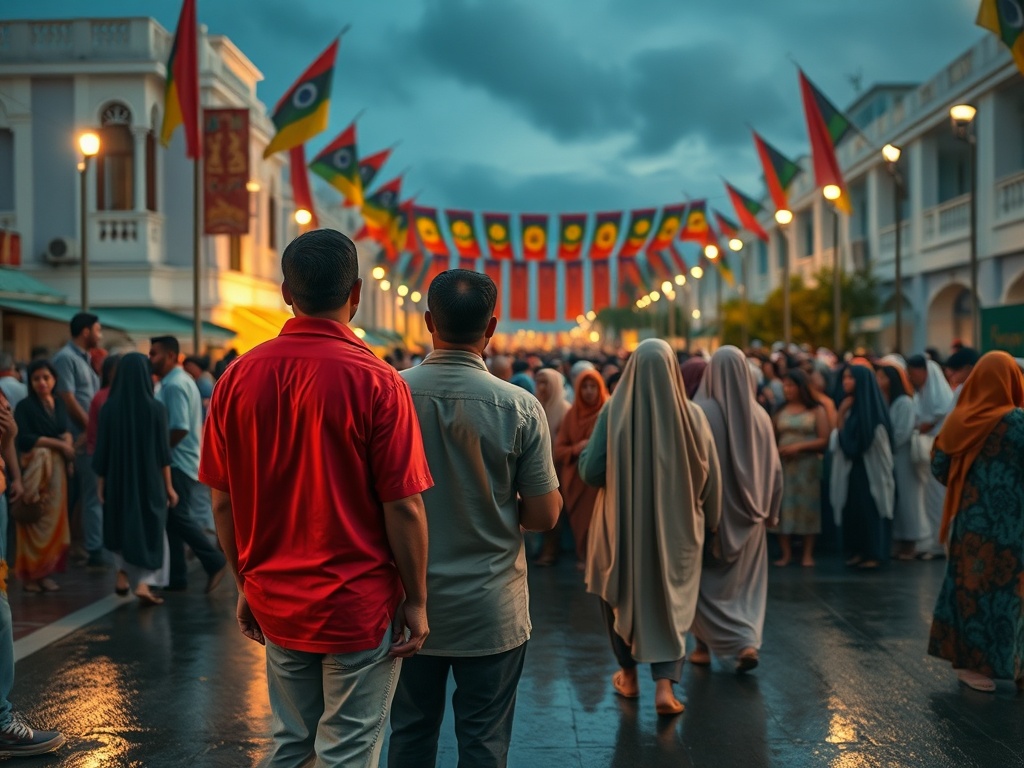
When Political Rallies Turn Toward Family Instead of the Crowd
In the intricate tapestry of Maldivian politics, a quiet disillusionment spreads through the electorate. The space between public pronouncements and private actions grows wider with each passing season, creating a chasm of distrust that threatens the very foundations of democratic engagement.
Recent political maneuvers have exposed a troubling reality: when tested, many politicians default to family over ideology. The pattern emerges clearly—candidates who boycott party colleagues after securing their own positions, revealing that blood ties often trump political allegiances. This nepotistic tendency echoes through government appointments and political strategizing, creating a system where meritocracy struggles against familial obligation.
Meanwhile, the political theater grows increasingly sophisticated. What some dismiss as 'carnival muzaahara'—elaborate public displays of support—others recognize as carefully choreographed performances designed to manipulate public sentiment. The concern isn't merely about political pageantry, but about the erosion of substantive debate in favor of emotional manipulation. When political discourse becomes spectacle, the electorate risks becoming spectators rather than participants in their own governance.
The disappointment cuts particularly deep among those who remember different political eras. Veterans of democratic protests watch with dismay as former comrades appear to abandon the principles that once defined their careers. This sense of betrayal isn't merely about policy disagreements, but about the perception that political expediency has replaced moral conviction.
At the heart of these concerns lies a fundamental question about political identity in the Maldives. When leaders present as democrats while practicing political exclusion, when public figures brush shoulders with controversial figures without clarifying their positions, they create a vacuum of accountability. This ambiguity allows citizens to project their hopes and fears onto political figures, only to face disillusionment when reality contradicts the image.
The challenge facing Maldivian democracy isn't merely about which party holds power, but about restoring faith in the political process itself. When citizens begin to view politics as a facade masking deeper dysfunctions, the social contract weakens. The solution requires not just new policies, but a renewed commitment to transparency, consistency, and principled leadership that transcends both family ties and political performance.
— Source fragments: Family > ideology; carnival muzaahara too performative to manipulate; sold your soul after building career with protests