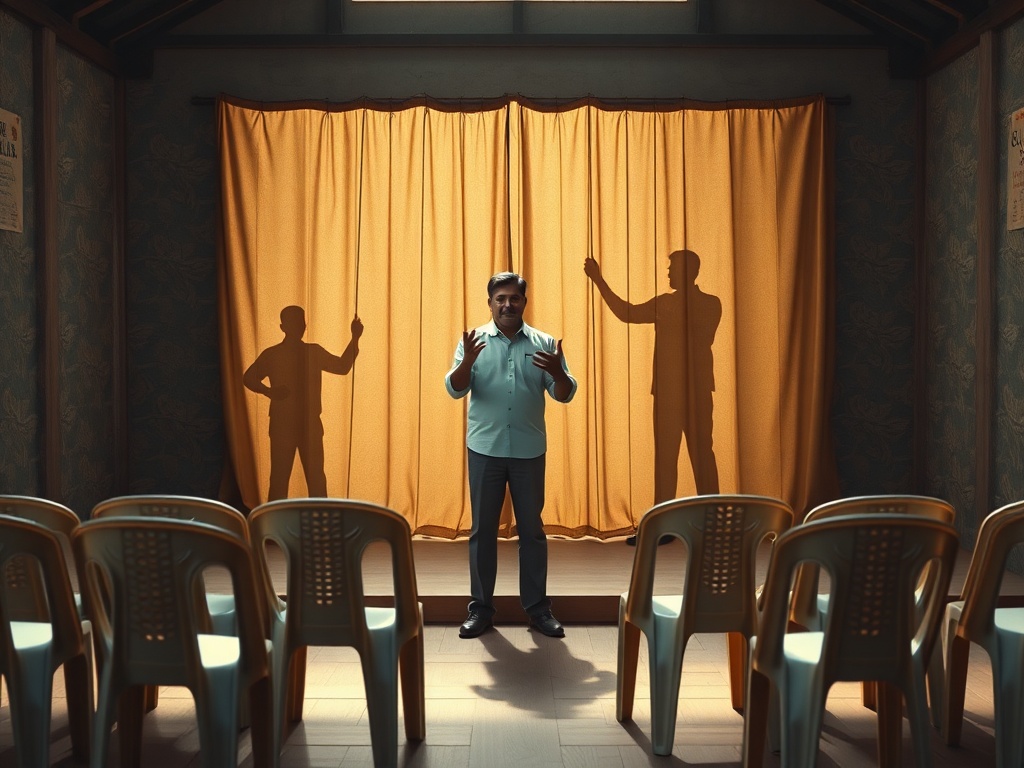
When Presidents Repeat Lines to Empty Seats
In the Maldives, the concept of democracy often feels like a carefully staged performance rather than a genuine exercise of people's power. The recent political landscape has become a theater where the same actors deliver the same lines to increasingly skeptical audiences.
When a president repeatedly reassures the same crowds, one must question whether this reflects genuine leadership or mere ego polishing. The constant need for validation through staged events and flashy self-praise suggests a government more concerned with appearance than substance. In this environment, truth becomes increasingly difficult to discern when the show consistently drowns out meaningful dialogue.
The transformation of criminal elements into political assets represents another troubling evolution. Gangs that once operated in the shadows now wear clean labels as they partner with political parties. This normalization of what was once considered criminal reflects a system where political expediency trumps moral clarity. The line between legitimate political organization and organized crime becomes dangerously blurred.
Meanwhile, the opposition's internal struggles have created a vacuum that benefits the ruling establishment. Infighting and distraction have torn apart what could have been a robust check on power. The question isn't what opportunities weren't given to opposition parties, but how they failed to capitalize on the democratic space they were afforded. Their fragmentation has left citizens with diminished choices and weakened accountability mechanisms.
Yet even in this climate of disillusionment, some citizens cling to cautious optimism. While acknowledging the systematic looting of national resources, they distinguish between different forms of political failure. There remains hope that even flawed leadership might demonstrate basic human decency in moments of crisis, though such expectations reflect how low the bar has fallen.
The fundamental promise of democracy—that every citizen enjoys equal rights regardless of wealth, family connections, or gender—remains unfulfilled. Instead, many Maldivians feel they're living under what might be described as an American-style democratic facade, where the structures of democracy exist but the substance of people's power remains elusive. The system continues to serve royal elites and wealthy interests rather than ordinary citizens.
As political assets are rebranded and opposition parties self-destruct, the democratic ideal becomes increasingly distant. The performance continues, but the audience grows weary of the same script, wondering when—or if—the curtain will ever rise on genuine representation.
— Source fragments: democracy does not depend on wealth or family connections, gangs partnering with political parties, president's repeated reassurances as ego polishing, opposition infighting and distraction