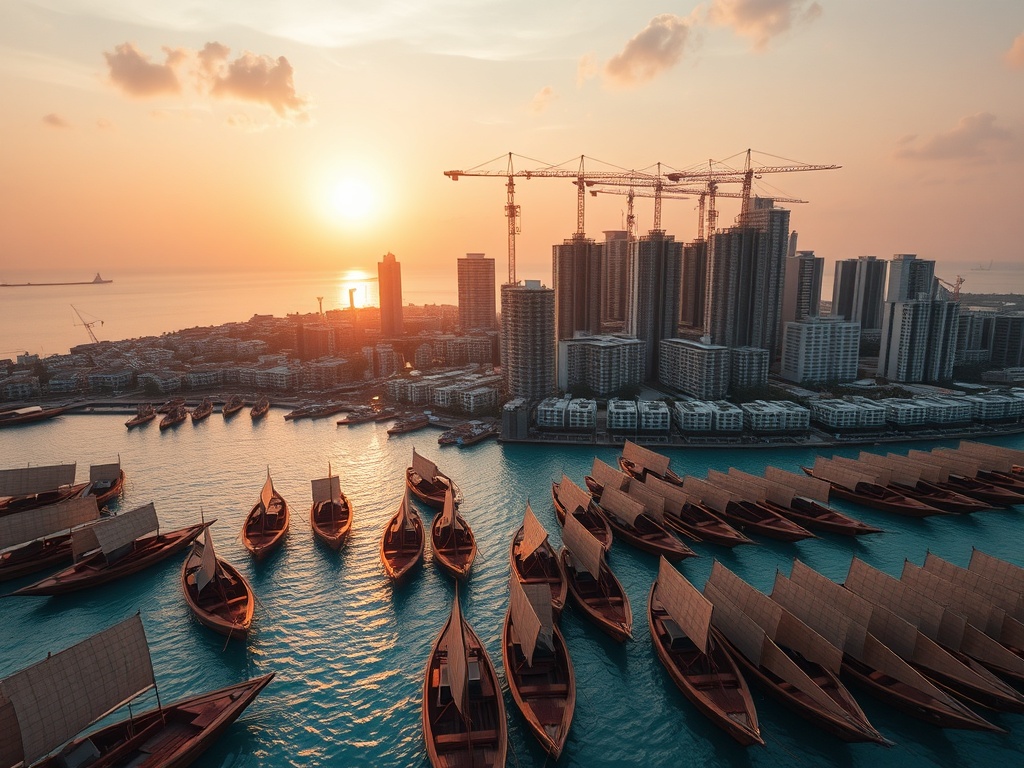
When Progress Casts Its Shadow: Whose Maldives Are We Building?
The cranes arrive first, casting long shadows over neighborhoods that once knew only the sun's gentle arc. Then comes the concrete, poured in relentless waves until what was familiar becomes unrecognizable. Thousands of new apartments rise where once there were open spaces, each window representing a promise of progress, a claim of improvement.
Yet amid this transformation, the fundamental mathematics of community life remains stubbornly unchanged. Prices climb upward like the buildings themselves, defying the logic that more supply should bring relief. The local shopkeeper still worries about making rent. The fisherman's daughter still calculates how many years of savings it will take to have a place of her own.
There's a peculiar tension in watching development unfold around you. The official approvals come quickly—decisions made a decade ago now materializing in steel and glass. The paperwork is complete, the permissions granted, the ribbon-cutting ceremonies planned. But the lived experience of those who call this place home tells a different story.
In island communities where space is precious and every square foot carries the weight of generations, development becomes more than construction—it becomes a test of what we value. Do we measure progress in square footage and economic indicators, or in the ability of a teacher to live near the school where she teaches? In the fisherman being able to afford staying in the neighborhood where his family has lived for generations?
The buildings will stand for decades, their stories written in their facades. But the true measure of their success won't be in their height or their number, but in whether they become homes that nurture community or merely investments that extract value. The real data isn't in the approval documents or the construction timelines—it's in the faces of those who walk these streets every day, wondering if they'll still be able to call this place home tomorrow.
— Source fragments: The discussion isn't about rents. Pagewood has had 3000 apartments built on a mega site. Both quick approval 10 years ago. The price of apartments have gone up in the area, they haven't decreased.