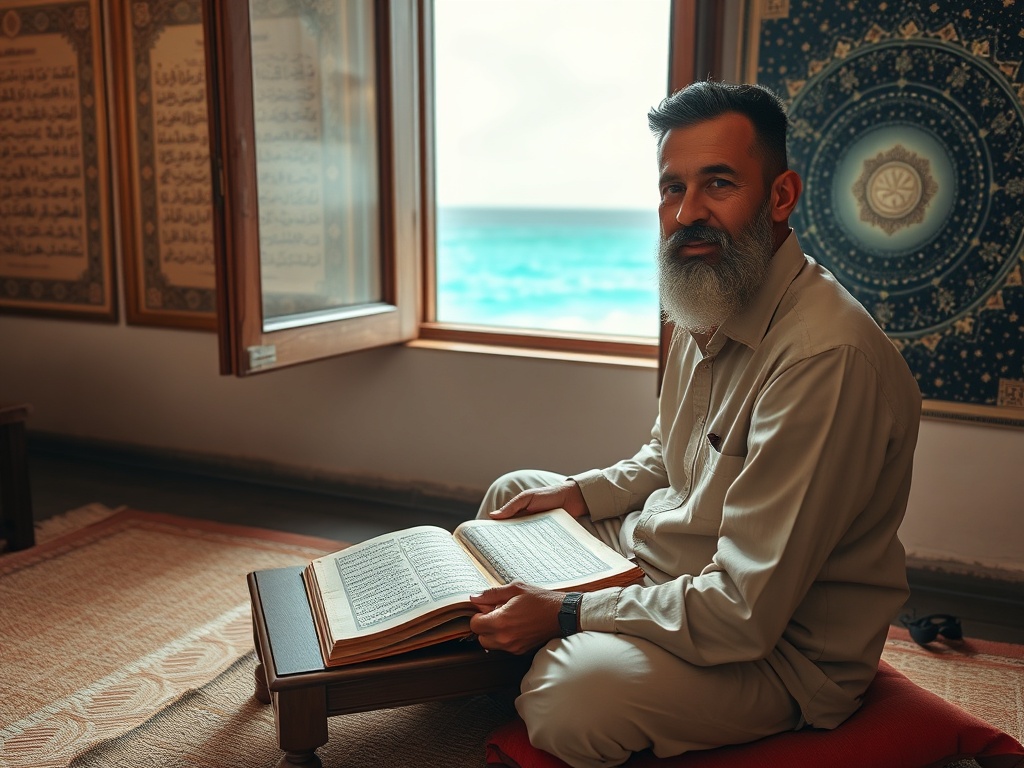
When Quran Verses Meet Big Bang Theories in Maldivian Inboxes
In the scattered atolls of the Maldives, where Islam forms the bedrock of national identity, a quiet intellectual struggle unfolds in digital spaces. It's a conversation that touches the very foundations of faith and knowledge, as Maldivians grapple with how their religious understanding intersects with modern scientific theories.
The debate centers on a fundamental question: Does the Quran need to validate scientific theories, or is it the ultimate standard against which all knowledge must be measured? This tension reflects broader conversations happening across the Muslim world, but here it carries unique weight in a nation where Islamic identity is constitutionally enshrined.
Some voices argue passionately that the Quran stands as absolute truth, requiring no alignment with human theories. 'Quran is the Standard,' one perspective insists, suggesting that scientific theories like the Big Bang must conform to Islamic revelation, not the other way around. This position sees stretching religious understanding to validate scientific theories as potentially compromising theological purity.
Yet other perspectives push back against what they see as oversimplification. They question the need for religious validation of scientific concepts that operate in different domains of knowledge. As one observer noted, seeking Quranic approval for every scientific theory might miss the point—these theories describe mechanisms, not ultimate causes.
The discussion reveals deeper concerns about intellectual integrity. Some warn against using religious arguments as 'cheap excuses' in debates, while others point to historical context, noting how earlier generations of Muslims might have viewed such theories differently. This historical consciousness adds nuance to what might otherwise appear as black-and-white positions.
What emerges is a community wrestling with how to maintain religious certainty while engaging with evolving human knowledge. The conversation isn't about rejecting science or faith, but about finding a coherent worldview that honors both. In a nation facing pressing practical challenges—from economic pressures to housing crises—these philosophical debates might seem abstract, but they reflect the ongoing negotiation of Maldivian identity in a rapidly changing world.
The Maldives' unique position as a 100% Muslim nation adds particular urgency to these discussions. How Maldivians navigate the relationship between scripture and science will inevitably shape the country's educational approaches, intellectual culture, and even its engagement with global knowledge systems. The conversation continues, not with shouting matches, but with the quiet persistence of people trying to reconcile centuries of religious tradition with the expanding frontiers of human understanding.
— Source fragments: Quran as absolute standard, Big Bang theory validation debates, questioning need for religious approval of scientific theories, historical perspective on Islamic interpretation