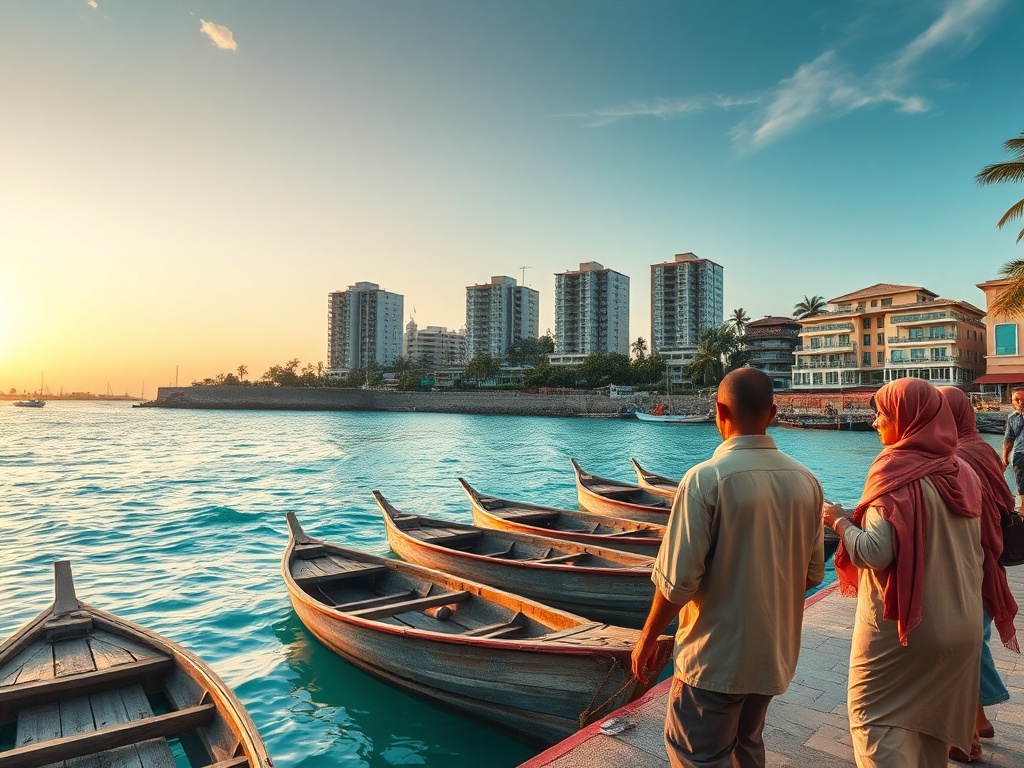
When 'Rashu Meeha' and 'Malé Meeha' Share the Same Pavement
In the scattered archipelago of the Maldives, where turquoise waters separate communities as much as they connect them, a quiet revolution of thought is taking shape. The old dichotomies that once defined social standing—between the "rashu meeha" of the outer atolls and the "Malé meeha" of the capital—are being challenged by a generation questioning why geography should determine destiny.
The sentiment echoes across social platforms and coffee shop conversations: being born in Malé doesn't make anyone superior. This isn't merely about geographic origins but about dismantling a mindset that has persisted long after the era of sultans and royal privilege. In the 21st century, where digital connectivity has made physical distance increasingly irrelevant, the persistence of such distinctions feels increasingly anachronistic.
The frustration underlying these divisions often stems from tangible inequalities—disparities in educational access, healthcare quality, and economic opportunity that have historically favored the capital. When basic services remain unevenly distributed, when political representation feels imbalanced, and when social mobility appears constrained by postal code, resentment naturally festers. Yet as one observer notes, our society is too homogeneous—sharing language, faith, and culture—to be fractured by such artificial separations.
This conversation extends beyond geographic prejudice to encompass how we treat our most vulnerable. The call to provide loving care for "special children" regardless of their challenges reflects a broader societal aspiration—to judge people by their humanity rather than their circumstances. It's a recognition that dignity isn't conditional on conformity or convenience.
The path forward requires conscious effort. It demands educational reforms that equalize opportunity across atolls, economic policies that distribute growth beyond the capital's confines, and cultural narratives that celebrate our shared Maldivian identity over our geographic origins. It calls for recognizing that the strength of a chain depends on its weakest link, and a nation divided by internal hierarchies cannot stand strong against external challenges.
As Maldives navigates complex foreign relations, economic pressures, and social transformations, this internal reconciliation may prove foundational. The vision isn't merely about tolerance but about active inclusion—creating a society where every Maldivian, regardless of their island of origin, can pursue a life of dignity and purpose. The alternative—allowing frustration to harden into permanent division—would mean failing our collective potential as a nation uniquely positioned between tradition and modernity.
— Source fragments: Yeah, our society is too homogeneous to have these petty differences and animosity. We should strive for a better tomorrow where the rashu meeha and Malé meeha can live equally dignified lives; Everyone knows that Zahid is a special boy, We must provide the best care and shower these special kids with love; Being born in Malé doesn't make anyone superior. This is the 21st century. Where you are born or who your family is should not define your worth