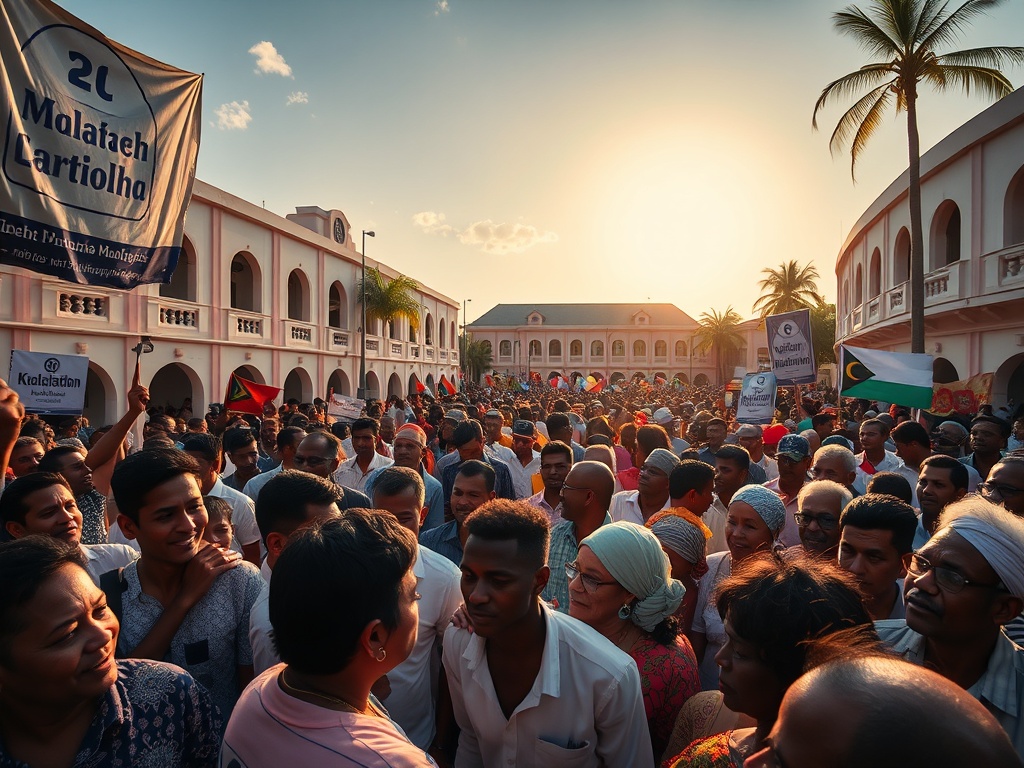
When Religious Banners Can't Hide Empty Government Promises
In the Maldives, where Islam forms the bedrock of national identity, political rhetoric often leans heavily on religious credentials. Recent public conversations reveal a growing skepticism toward leaders who position themselves as guardians of Islamic principles while their administrations fail to address pressing socioeconomic crises.
Critics argue that religious posturing has become a convenient shield, deflecting attention from governance failures that affect ordinary citizens. The dissonance between proclaimed values and observable reality fuels public frustration, particularly among younger generations facing unemployment and limited opportunities.
This tension reflects a broader regional pattern where religious identity becomes politicized, yet the practical application of ethical governance remains elusive. The conversation extends beyond theological debates to question why certain practices face scrutiny while others escape examination, suggesting selective application of moral standards.
Meanwhile, the country wrestles with inflation, housing shortages, and healthcare inadequacies that demand practical solutions rather than ideological positioning. The public's growing sophistication in distinguishing between genuine religious commitment and political theater signals a maturing political consciousness.
As economic pressures mount, citizens increasingly judge leadership by tangible outcomes rather than religious rhetoric. The gap between proclaimed values and governance reality threatens to undermine public trust in institutions, creating a vacuum where cynicism can flourish.
The challenge for Maldivian society lies in developing a political discourse that honors religious identity while demanding accountability, transparency, and effective governance. The true test of leadership may not be in religious posturing but in delivering solutions that improve citizens' daily lives while respecting the nation's Islamic foundations.
— Source fragments: gets 40 points for not being Secular laadheenee; Muizzu sells himself as a guardian of Islamic principles, but the reality unfolding is shameful, his party members are openly indulging in haraam on a grand scale