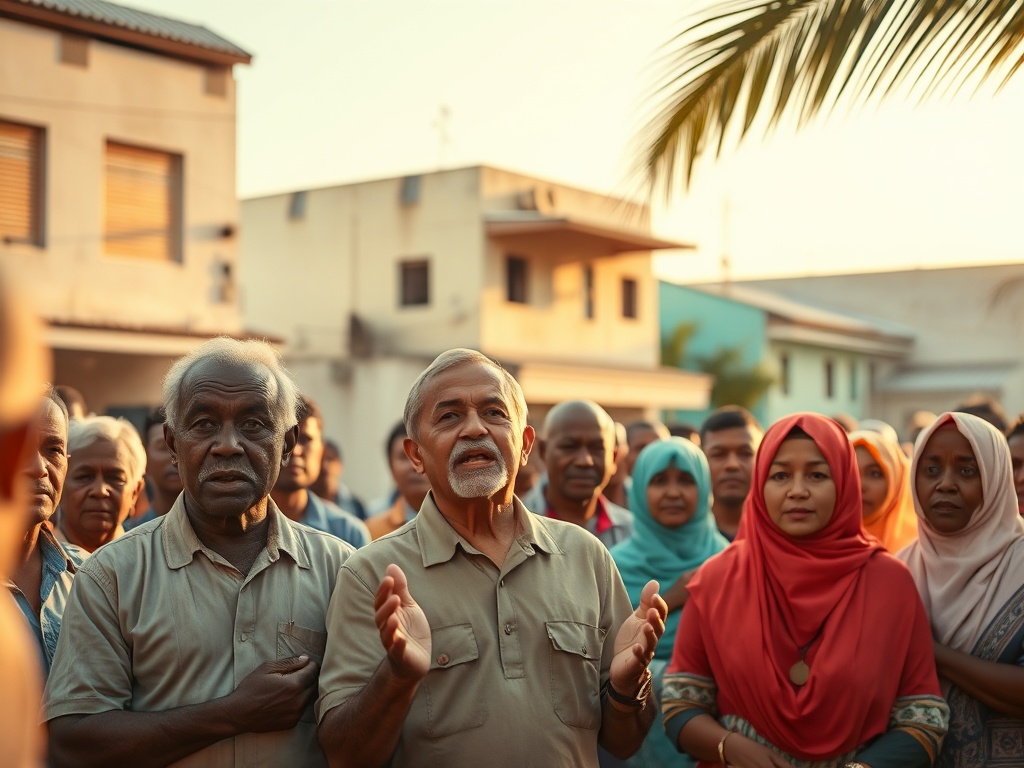
When Small Conversations Reshape Malé's Streets
The debate about how change happens in society often swings between two poles: the grand institutional overhaul and the quiet power of individual action. Yet increasingly, there's a growing recognition that transformation might emerge not from the top down, but from the cumulative effect of countless small contributions.
Across the Maldives, as in many nations, there's palpable frustration with established mechanisms for change. Non-governmental organizations, once seen as vehicles for progress, now face skepticism about their effectiveness. "They just make reports," as one perspective puts it—a sentiment echoing through communities that have watched studies gather dust while problems persist. This disillusionment with traditional pathways has created space for reimagining how citizens can influence their society.
What's emerging is a philosophy that values participation itself as a form of currency. The question isn't whether one agrees or disagrees with particular policies, but whether one contributes to the conversation at all. Every voice added to the debate, regardless of its position, enriches the collective understanding. This approach recognizes that democratic health depends not on unanimous agreement, but on robust engagement.
The mathematics of change might be simpler than we imagine. If each person contributes what they can—whether through civic participation, community support, or even simple acts of decency—the cumulative effect could transform society. The resistance often comes from questioning whether such small contributions matter. Yet history shows that movements often begin not with dramatic gestures, but with quiet consistencies.
There's profound wisdom in the story from Pakistan where a robber's heart was changed not by force or policy, but by a child's innocent offering of candy. This isn't just a charming anecdote—it's a metaphor for how human connection can disrupt even the most entrenched patterns. In the Maldives, where political divisions sometimes feel insurmountable, such stories remind us that change can come through unexpected channels.
Civil disobedience takes many forms, from public protest to quiet resistance. What matters is making one's voice heard in whatever shape feels authentic. The current moment calls for rethinking not just what we want to change, but how we go about changing it. The most substantive arguments aren't always the loudest or most academic; sometimes they're the ones that speak to our shared humanity.
As we navigate complex challenges from governance to economic pressures, the solution might lie in recognizing the power we each hold in small measures. The question isn't whether our individual contributions will fix everything, but whether we can afford not to make them. In the end, the movement that matters most might be the one that starts with each of us deciding that our voice—and our small acts—count.
— Source fragments: I think it would be awesome if everybody contributes to this debate; If we all contributed a small amount we can make everyone's life better; A movement is better; Make your voices heard; Civil disobedience comes in shapes and sizes; Don't think NGOs are effective; This is the most learned, educated, substance based argument I've ever seen