When Staying With Family Counts as Homeless
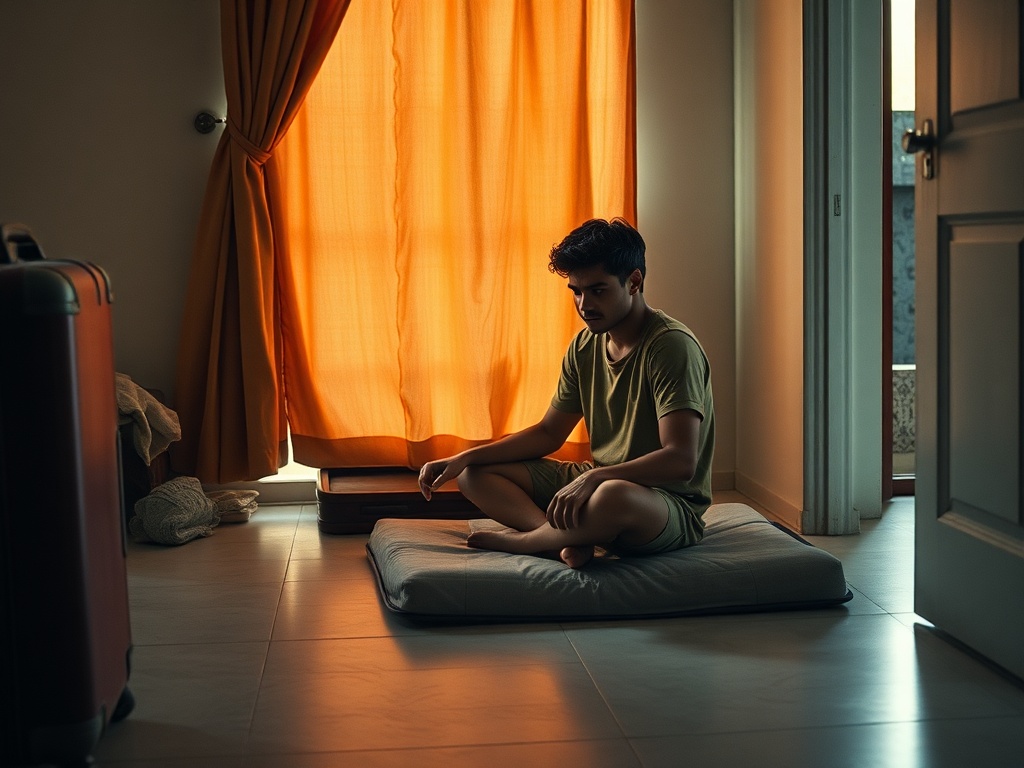
The conversation begins with a simple but revealing distinction: staying with family or friends is not stable housing if you have no legal claim to the space. It's temporary residence—a precarious limbo that thousands in the Maldives know intimately. Yet this reality rarely appears in official housing statistics, leaving policymakers and the public debating shadows rather than substance.
In Malé and across the islands, the absence of quantitative data on informal housing arrangements creates a vacuum where assumptions flourish. Critics question why those in need cannot rely on social networks during crises, suggesting family ties should provide natural safety nets. But this perspective overlooks how urbanization, economic pressure, and inter-island migration have stretched traditional support systems to their limits.
The housing discourse often circles back to the same fundamental gap: we lack the numbers to understand who exactly is affected, for how long, and under what conditions. Without this data, we cannot accurately measure the scale of displacement or design effective solutions. The result is policy-making based on anecdote rather than evidence, with social housing projects that sometimes miss their mark.
Meanwhile, the concept of housing itself needs reexamination. Is a childhood room that no longer exists relevant to someone displaced from their island? Does a holiday cottage owned by relatives constitute available shelter? These questions highlight how our definitions of housing security fail to match contemporary Maldivian realities.
What emerges is not just a debate about roofs and walls, but about belonging and stability in a nation where geographic and social mobility have transformed traditional support structures. The solution lies not in dismissing informal arrangements as inadequate, nor in relying on them as permanent fixes, but in developing housing concepts that acknowledge both the resilience of community networks and their limitations in the face of systemic challenges.
As the Maldives grapples with congestion in Malé and housing shortages across the archipelago, the conversation must move beyond anecdotal claims and counter-claims. Only with clear data and reimagined approaches to shelter can we address the reality that for many, 'temporary' has become a permanent state of housing insecurity.
— Source fragments: Staying with a friend or family is not stable housing if you have no legal claim over the place; Why doesn't the MM have an equivalent in Malé or in islands; Numbers bring clarity to the issue; Need to rethink housing concepts; Why doesn't the Malé meeha have friends or family they can stay with in a time of crisis