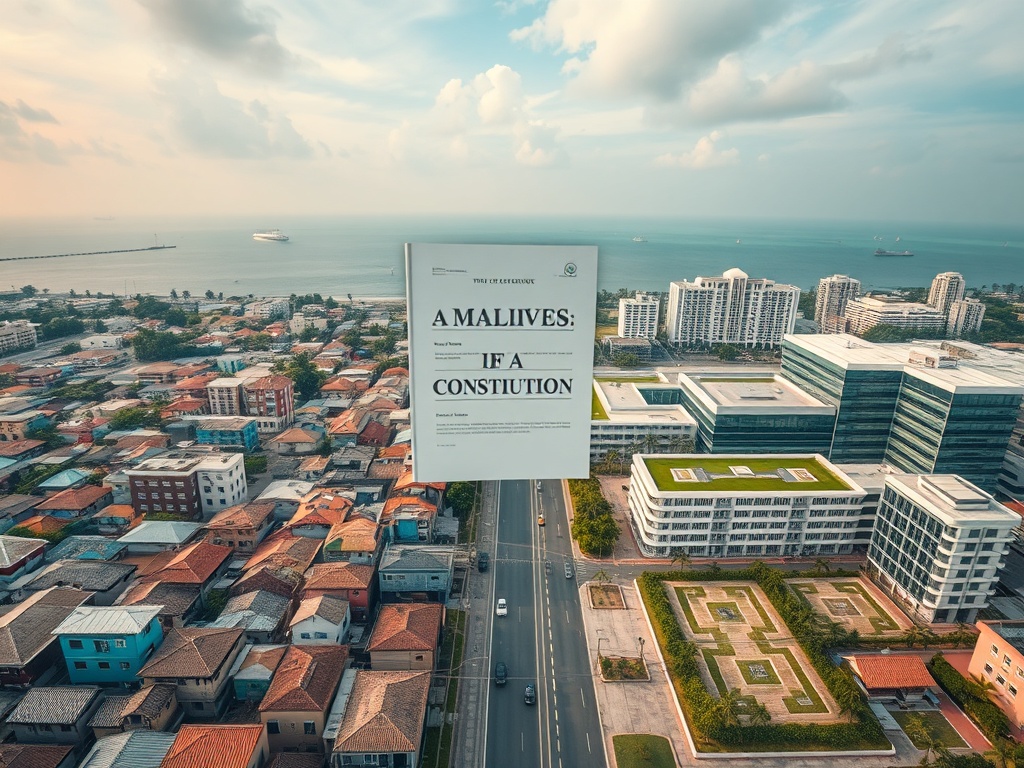
When the Constitution Says 'Move Freely' but Your Island Says 'Stay'
The Constitution of Maldives states it plainly: every citizen has the right to migrate to any inhabited island without restrictions. Yet this constitutional guarantee increasingly collides with a complex reality where residency rights feel conditional, tied to lineage, wealth, and political connection.
Across social media and public discourse, a consistent theme emerges—the perception of a two-tier citizenship. On one side stands the constitutional ideal of equal rights; on the other, the lived experience of barriers that make some citizens feel like second-class participants in their own nation. The debate has shifted from abstract legal principles to tangible frustrations about who gets to call which parts of the Maldives home.
This tension crystallizes around the capital, Malé. As one observer noted, the city was 'created for birds, corals and fish' before reclamation made it habitable. Billions were spent on infrastructure, funded by public money. Yet many who contributed through taxes find themselves questioning why equal access remains elusive. The fundamental issue, critics argue, isn't just about migration rights but about the distribution of development benefits.
The discussion has evolved beyond legal technicalities to confront deeper social fractures. Some point to what they describe as an unwritten hierarchy that privileges those with 'Male’ DNA'—a reference to historical connections to the capital—alongside economic elites. This perceived favoritism contradicts both constitutional principles and basic human rights standards, creating what amounts to internal borders within a nation that presents itself as unified.
Meanwhile, the housing crisis in Malé exacerbates these tensions. Government housing projects, intended to alleviate congestion, often become politicized assets rather than solutions. The result is a system where constitutional rights exist on paper but falter in practice, leaving many citizens wondering whether their belonging is conditional rather than inherent.
The police response to a citizen in need, mentioned in online discussions, becomes symbolic of broader institutional attitudes—where compassion sometimes yields to procedure, and human dignity becomes secondary to control. This reflects a policing philosophy that critics say prioritizes order over service, further alienating those already feeling marginalized.
As the conversation continues, it's clear the issue transcends simple policy debates. It touches on national identity, the meaning of development, and who truly benefits from the Maldives' progress. The constitutional right to migrate anywhere may remain unchanged, but until the practical barriers fall, many citizens will continue to question whether their citizenship carries the same weight regardless of which island they call home.
— Source fragments: Constitutional right to migrate, second-class citizenship perception, Male' DNA reference, housing and development benefits, police response symbolism, constitutional vs practical rights