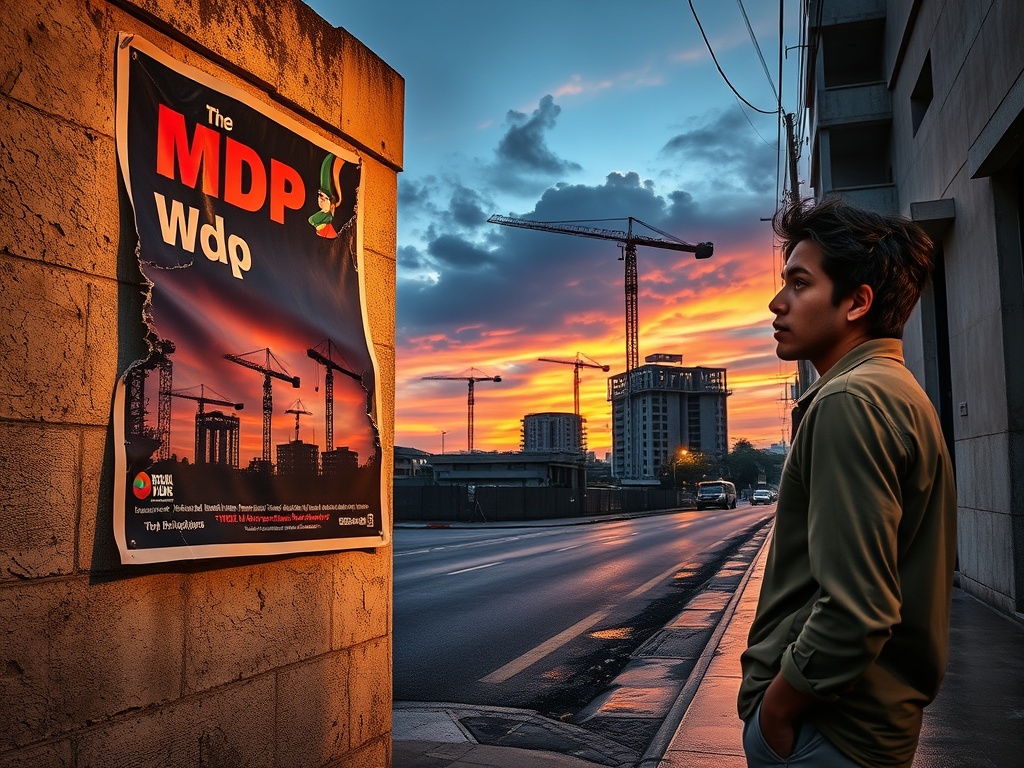
When the Housing List Tore Apart Family WhatsApp Groups
In the complex tapestry of Maldivian politics, where allegiances often run generations deep, the Binveriya Scheme has emerged as more than just another housing policy—it has become a watershed moment that severed bonds once thought unbreakable. Across kitchen tables and social media feeds, a quiet revolution is unfolding as lifelong supporters of the Maldivian Democratic Party confront what many describe as a profound betrayal of principle.
The discontent runs deeper than typical political disagreement. For citizens who campaigned door-to-door, attended countless rallies, and invested their youth in building what they believed was a movement for justice, the scheme represents something far more personal. It's the moment when the scales tipped, when party loyalty collided with moral conviction. The feeling isn't simply disappointment—it's the raw ache of watching foundational principles crumble beneath the weight of political expediency.
What makes this moment particularly potent is its staying power. Maldivians are often characterized as having short political memories, quickly moving from one controversy to the next. Yet conversations across the islands suggest this issue has taken root in the collective consciousness in ways previous scandals have not. The perception of discriminatory allocation, the creation of what critics call a new landlord class, and the sense that political connections rather than need determined outcomes—these elements have combined to create a wound that shows no signs of healing.
The political calculus appears straightforward to observers: just as previous administrations learned, housing policies can make or break electoral fortunes. Yet the current government seems either unaware of or indifferent to the gathering storm. The disconnect between the political elite and the lived reality of ordinary citizens has never felt more pronounced, with many feeling their concerns "fall on deaf ears in the upper echelons."
This isn't merely about land allocation—it's about the very soul of governance. The debate has shifted toward fundamental questions about what citizens should reasonably expect from their leaders. When basic needs like housing become politicized tools rather than public services, the social contract frays. The conversation now centers on whether any political party can be trusted to prioritize national interest over partisan advantage.
What emerges from this turmoil is a more politically mature electorate. The old patterns of blind party loyalty are giving way to issue-based evaluation. Citizens across the political spectrum are recognizing that resisting unjust policies matters more than maintaining party discipline. This awakening carries profound implications for Maldives' democratic development, suggesting that future elections may be decided not by traditional alliances but by concrete actions and ethical governance.
As the country navigates economic challenges including high living costs and foreign currency shortages, the Binveriya controversy serves as a stark reminder that political trust, once broken, is the hardest currency to restore. The lesson for all parties is clear: in an era of increasing voter discernment, policies perceived as unjust or discriminatory will inevitably shape political legacies, regardless of other accomplishments.
— Source fragments: Binveriya Scheme betrayal, lifelong MDP supporters switching sides, discriminatory scheme creating lasting voter anger, political elites being disconnected, need to resist unjust policies regardless of party