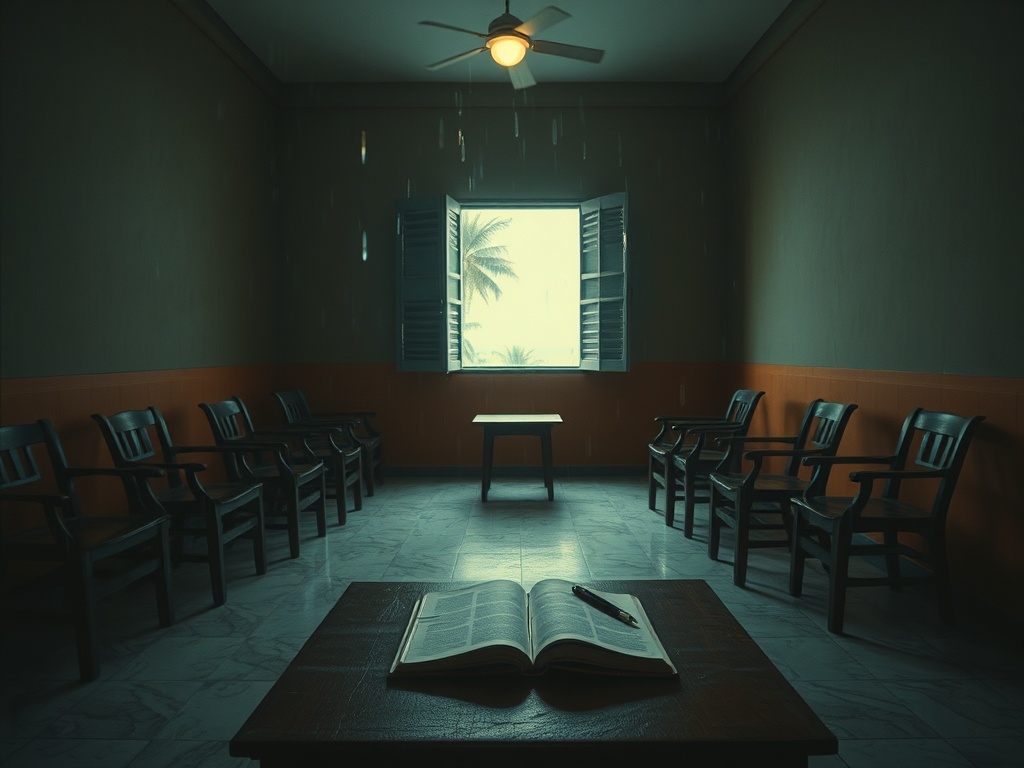
When the Monsoon Shower of Political Hope Evaporated
There was a moment, brief as a monsoon shower, when change felt possible. When the idea that ordinary citizens could have a constructive say in their political future didn't seem like fantasy. That moment has passed, leaving behind the familiar landscape of disillusionment.
The recent turmoil within the Maldives' main opposition party serves as a painful reminder of this cycle. The chaotic interim chairperson vote, the public inconsistencies acknowledged by senior figures, the resignation of party members—these aren't isolated incidents. They're symptoms of a deeper malaise, a leadership disarray that trickles down to every supporter hoping for better.
For too many Maldivians, engaging with the party system has always demanded near-total life sacrifice. The promise of participation came with unspoken costs: the fear of being outed, targeted, or marginalized if one's thoughts strayed from the approved narrative. Politics remained firmly a "wealthy people's" domain, a game played on fields far removed from the daily struggles of the common man.
This perception isn't merely about access—it's about survival. In a nation grappling with soaring living costs, housing crises, and youth unemployment, the political class often feels like a separate species. Their battles for position occur while families in Malé's congested neighborhoods navigate medicine shortages and wonder how they'll afford next month's rent.
The current political trajectory feels like watching a ship slowly list. The rhetoric grows more desperate, the promises more extravagant, yet the fundamental disconnection between power and people remains. When trust erodes this completely, even the most sincere appeals to faith or unity ring hollow.
What emerges from this disillusionment isn't necessarily apathy, but a different kind of political consciousness. One that recognizes the gap between party machinery and public need. That understands how electoral bribery through land distribution or politicized housing projects creates dependency rather than empowerment.
The real tragedy isn't that the system is broken—it's that so many still remember when they believed it could be fixed. That millisecond of hope, however fleeting, created a benchmark against which all current failures are measured. The return to square one feels more definitive each time, the descent more permanent.
Yet within this recognition lies potential. When people stop looking to political saviors and start demanding systemic accountability, change becomes possible through different channels. The energy that once flowed exclusively into party loyalty begins seeking other outlets—community organization, policy advocacy, civic engagement that bypasses the traditional gatekeepers.
The house may be crumbling, but the foundation—the public's understanding of what they deserve from their leaders—is growing stronger. The question is no longer who will lead the party, but what politics must become to deserve the people's trust again.
— Source fragments: Political participation requiring life sacrifice; Fear of being targeted for dissenting views; Politics as wealthy people's domain; Leadership disarray and chaos; Momentary hope followed by return to disillusionment