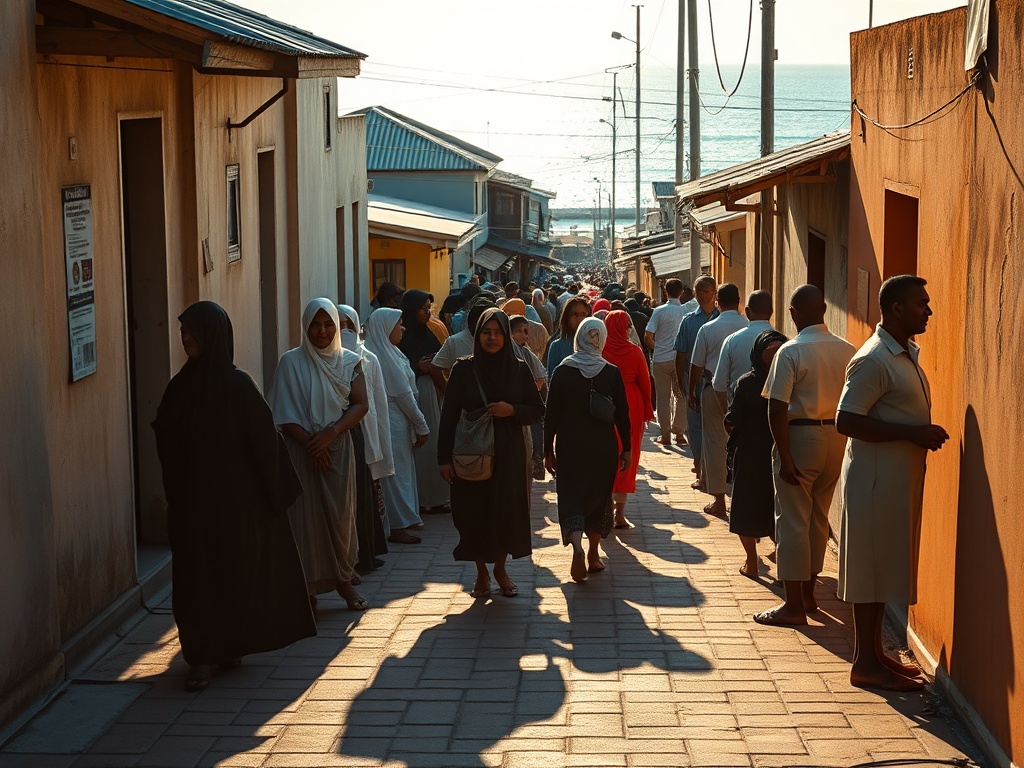
When the Queue Stretches to the Sea
The afternoon sun bakes the tarmac outside the housing ministry, and the queue is a silent, shifting creature. It winds past the old fish market, a line of faces etched with a familiar patience. We are waiting for a piece of paper, a number, a chance at a flat that might one day materialize. It’s the same patience we find in the pharmacy line, where the fan whirs uselessly and the shelves hold more dust than antibiotics. It’s the same look you see on the faces of those crowding the ferry terminal, hoping the boat hasn’t been delayed again by some political announcement.
They tell us on the news about foreign relations and grand infrastructure projects. They speak of bridges and new airports, their voices booming from screens in cafés where men sip sweet tea and shake their heads. A new resort opens on an untouched island, and we read about it in the paper, a world away from the cramped apartment where three families share a single kitchen. The money flows out, they say, parked in foreign accounts by resort owners who live in other time zones. The debt piles up, a mountain we are told we must climb, but we never seem to get any closer to the top.
In the backstreets of Malé, a teacher grades papers by the light of a single bulb, the hum of a generator a constant companion during the nightly power cuts. He remembers when his father could build a house on their island with his own hands. Now, his own children talk of leaving, of jobs in Singapore or the Gulf, their Maldivian passports feeling less like a home and more like a ticket out.
There is a weariness that has settled in our bones, a fatigue that no amount of sleep can cure. We have seen governments come and go, each with its own promises, its own scandals. The names change, but the game remains the same. They fight over power while we fight for a parking space, for a doctor’s appointment, for a classroom that isn’t overflowing.
And yet, the queue keeps moving. Not fast, but it moves. There is a stubbornness here, a resilience written in the set of a fisherman’s shoulders as he mends his net, in the quiet determination of a mother budgeting the last rufiyaa for the week. We endure. We adapt. We find small graces in the shared sigh of a crowded dhoni, in the sudden cool of an evening rain shower that washes the dust from the streets. We are tired, yes. But we are still here. The tide will turn, as it always does. And we will be here, waiting, when it does.