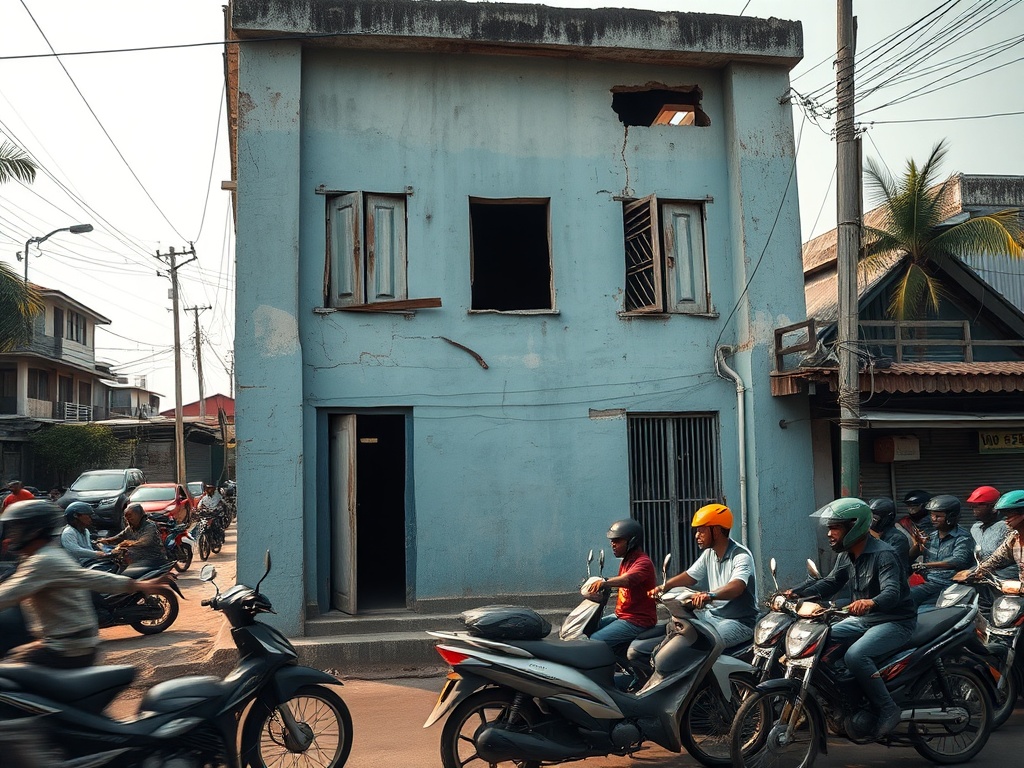
When the Ribbon is Cut and the Cracks Begin to Show
Across the scattered islands of the Maldives, a familiar pattern repeats itself. Grand development announcements are made, budgets are allocated, and timelines are set. Yet when the projects finally materialize, they often bear little resemblance to the ambitious visions presented to the public. The result is a growing chasm between political promises and tangible outcomes that affects everything from housing to transportation to basic utilities.
The neglect of outer islands has become particularly glaring. While political rhetoric emphasizes regional development, the reality tells a different story. Communities in the northern and southern atolls watch as resources continue flowing disproportionately to the capital region, leaving them with inadequate infrastructure and limited economic opportunities. The call for developing proper population hotspots with robust facilities remains unanswered, perpetuating the centralization that has long hampered balanced national growth.
Even within Malé, the quality of implementation frequently disappoints. Construction projects exhibit fundamental flaws—insulation that fails to regulate temperature, wooden doors with significant gaps, systems that waste energy while delivering poor performance. These aren't minor oversights but symptomatic of deeper issues in project planning, oversight, and execution. The compressor working overtime to achieve an impossible temperature speaks volumes about the technical incompetence plaguing public works.
The economic toll of these failures extends beyond wasted budgets. When major infrastructure projects in Malé create week-long traffic disruptions, they strangle the city's economic activity, estimated at approximately 100 million Rufiyaa in daily transactions. What should represent progress instead becomes a burden on businesses and residents alike, raising legitimate questions about whether the disruption serves any meaningful purpose.
Transportation initiatives like cable cars capture public imagination but often remain in perpetual planning stages. Meanwhile, basic maintenance of existing infrastructure falls by the wayside, with some residents describing the capital as increasingly unlivable. The cycle of announcement, delay, and disappointing delivery has eroded public trust to the point where citizens automatically expect projects to be 'half-arsed at sky-high prices.'
The fundamental issue transcends any single administration or project. It reflects systemic problems in governance—inadequate technical capacity, poor project management, and insufficient accountability mechanisms. Until these root causes are addressed, the pattern will continue: grand visions announced, substantial funds spent, and disappointing results delivered to a public growing increasingly skeptical of development rhetoric.
— Source fragments: Developing islands neglected, need proper infrastructure; Insulation leaks making temperature control impossible; Male described as dustbin; Years spent on projects with little progress; Projects always half-arsed at high prices; Traffic disruptions devastating to Male's economy; Need for cable car and other transportation solutions