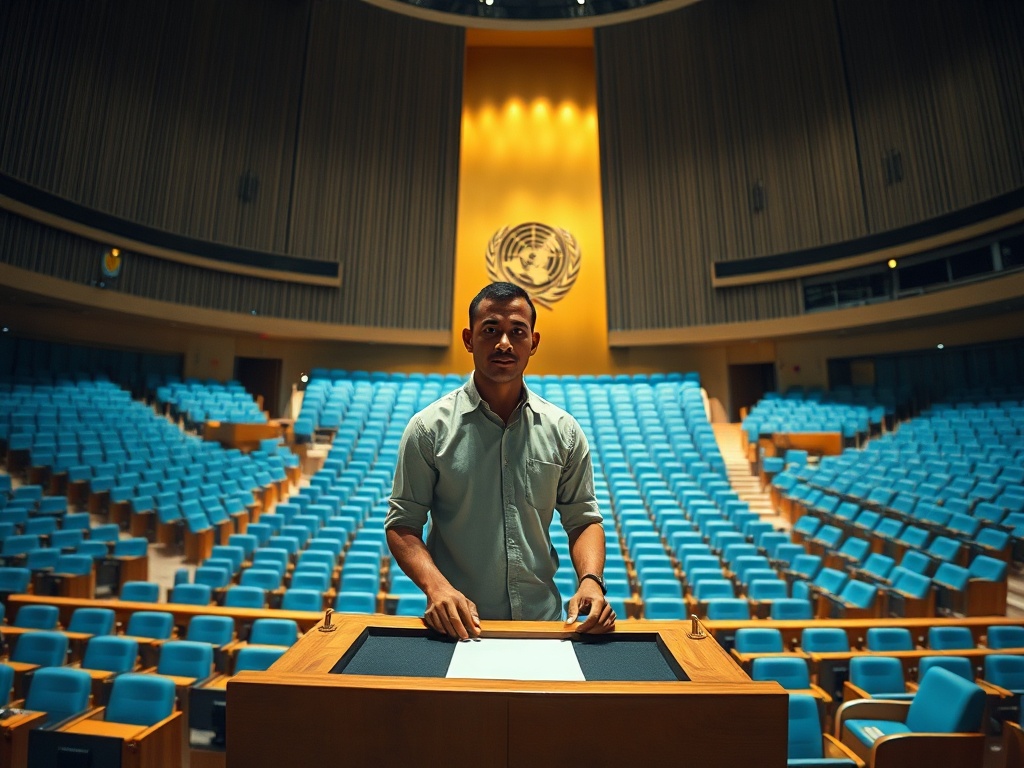
When the UN Halls Empty for a Small Nation's Speech
In the complex theater of international relations, there exists an uncomfortable truth that smaller nations understand all too well: the rules governing global conduct apply differently depending on who's playing the game. The recent global conversations about international law enforcement reveal a stark divide between principle and practice, between what's written in treaties and what happens in reality.
For nations like Maldives, adherence to international law represents both an aspiration and a limitation. We operate within a framework that promises equal standing, yet repeatedly demonstrates that power dictates terms. When major powers engage in actions that would be condemned if undertaken by smaller states, the international legal system reveals its inherent contradictions. The mechanisms designed to uphold global order often falter when confronting the nations that help shape that very order.
This dynamic creates a peculiar position for smaller nations. Our commitment to international norms becomes both a moral stance and a practical constraint. While we navigate complex diplomatic waters, balancing relationships with larger powers, we're often caught between principle and pragmatism. The recent tensions in foreign relations highlight this delicate balancing act—how to maintain sovereignty while engaging with nations that operate by different calculations.
Yet within these constraints lies opportunity. The very act of consistently upholding international law, even when others don't, becomes a form of soft power. It builds credibility and positions smaller nations as reliable international partners. This consistency matters in an increasingly interconnected world where reputation carries weight.
The challenge for Maldives and similar nations is to navigate this landscape without cynicism or resignation. We must engage with the international system as it is, while working to shape it into what it should be. This means building alliances with like-minded states, leveraging multilateral platforms, and using diplomatic channels to advocate for a more equitable global order.
What emerges is not a story of powerlessness, but of strategic positioning. Smaller nations may not dictate global rules, but we can influence how they're applied and interpreted. Our voice matters in shaping international norms, particularly on issues like climate change, maritime law, and sustainable development where our experiences provide crucial perspective.
The conversation about who follows international rules and who doesn't misses a crucial point: the system itself is evolving. As global power dynamics shift, so too does the enforcement and interpretation of international law. For nations like Maldives, the task is to remain engaged, principled, and strategic—recognizing that our commitment to international norms is not a limitation, but a foundation for meaningful global engagement.
— Source fragments: International law application differences between powerful and smaller nations, the position of Maldives in global governance systems