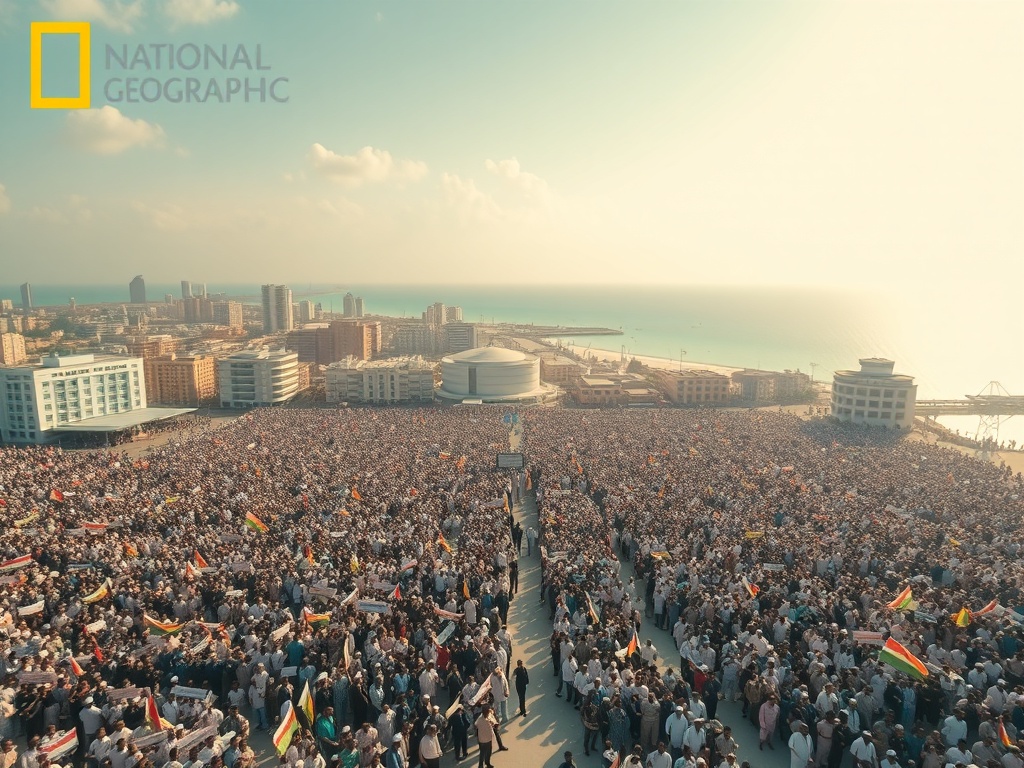
When Thousands Gather, What Do the Numbers Prove?
In the shifting sands of Maldivian politics, the spectacle of mass gatherings has become the dominant currency of legitimacy. When thousands gather under party banners, the immediate narrative becomes one of undeniable public mandate. Yet beneath the surface of these impressive displays lies a more complex conversation about what truly constitutes genuine support and effective governance.
The recent record-breaking rally organized by the ruling PNC party represents more than just numerical superiority. It serves as a powerful symbolic statement in a nation where political theater often overshadows policy substance. Supporters see these gatherings as organic expressions of popular will—proof that the current administration enjoys deep-rooted backing that transcends political obligation.
This emphasis on demonstration size reflects a broader political culture where visible support has become paramount. For decades, Maldivians have watched successive administrations make similar promises with varying degrees of implementation. The frustration with unfulfilled commitments has created a public that increasingly measures credibility through tangible displays of engagement rather than rhetorical assurances.
Yet the very nature of these mass gatherings raises questions about their translation into governance outcomes. While impressive in scale, they represent a single moment in the continuous relationship between citizens and their government. The true test comes not in the ability to mobilize crowds but in the capacity to deliver on the expectations those crowds represent.
Opposition parties point to their own historical records of mass mobilization as evidence that rally size alone doesn't guarantee effective governance. The MDP's past ability to organize significant gatherings while in opposition demonstrates that public support can exist outside government structures. This historical context suggests that political legitimacy in the Maldives has multiple dimensions beyond momentary displays of numerical strength.
The conversation has evolved from simple partisan competition to a deeper examination of what constitutes meaningful public engagement. As one observer noted, giving credit for action represents a shift in public expectations—a desire for movement, however incremental, after years of stagnation on key issues.
In this environment, the largest rally becomes both celebration and burden. It demonstrates current popularity while raising expectations for delivery. The challenge for any administration is to transform the energy of these gatherings into sustained progress on the pressing issues facing Maldivian society—from economic pressures to social development.
As the political landscape continues to evolve, the relationship between public demonstration and governance effectiveness remains complex. The true measure of support may ultimately lie not in the size of the crowd but in the quality of the response to the needs those crowds represent.
— Source fragments: Credit for action, comparison of unfulfilled promises, discussion of public support measurement through rally size, historical context of opposition gatherings