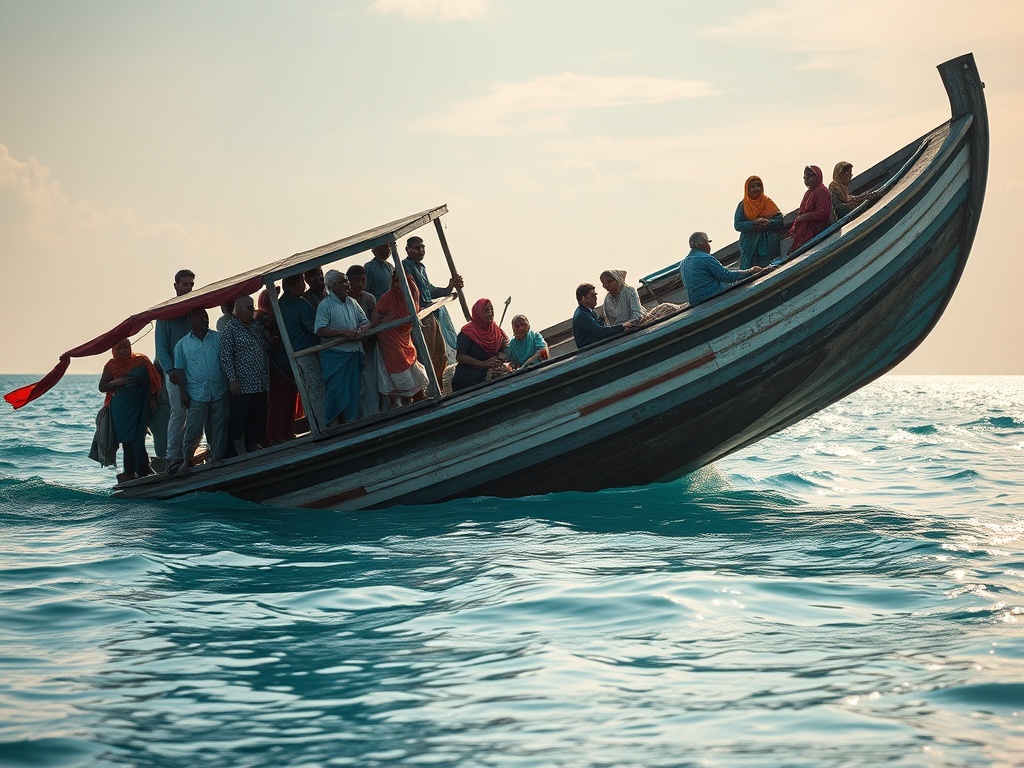
When Too Many Crowd One Side of the Dhoni
The sea around our islands has always taught us about balance—how too much force in one direction creates turbulence that affects everything in its wake. Lately, I've been thinking about how this principle applies to the concentration of power in our own governance. When one person holds too much authority—the ability to pardon tax evaders, appoint commission members, shape the judiciary—the entire system tilts dangerously.
I remember when political movements began with genuine cries against injustice. There was fire in the words, conviction in the actions. But somewhere between the campaign promises and the ministerial appointments, something shifted. The same faces appear in different offices, relatives find themselves in positions they never qualified for, and the machinery of government grows heavier with each political appointment.
On these small islands, we feel the weight of these decisions intimately. The housing crisis in Malé isn't just statistics—it's families living in cramped spaces while subsidized flats stand empty, their leaseholders living comfortably abroad. The medicine shortages aren't abstract problems—they're our elders wondering if their prescriptions will be available next month.
What's most striking is how tribal our politics has become. Mention corruption in one party, and you're immediately labeled a supporter of the other. Question a policy, and you're blocked—not just online, but from opportunities, from consideration, from conversation. We've created an environment where loyalty matters more than integrity, where party colors blind us to common struggles.
The expatriate worker sleeping on a construction site and the Maldivian graduate unable to find work both feel the same economic pressures. The mother worrying about drug use among youth and the fisherman watching foreign vessels drain our seas both understand depletion. Yet our political discourse rarely acknowledges these shared vulnerabilities.
Perhaps what we need isn't just structural reform—though limiting presidential powers and ensuring judicial independence remain crucial. Perhaps we need to rediscover the courage to speak across party lines, to acknowledge that our common challenges require collective solutions. The ocean doesn't care which flag flies over the harbor—it will rise or fall according to its own rhythms. Our governance should serve the people navigating those waters, not just those commanding the ships.
— Source fragments: Major reason for excessive corruption is the unlimited power vested in the President. Powers like pardoning tax evaders & criminals, & nominating members to independent commissions, must be removed; Any Male' supremacist will block you when you go against the establishment; So true, MDP is all abt corruption and laadheeny now. At the start it was more against injustice; If re-elected, he will repeat these same mistakes for sure