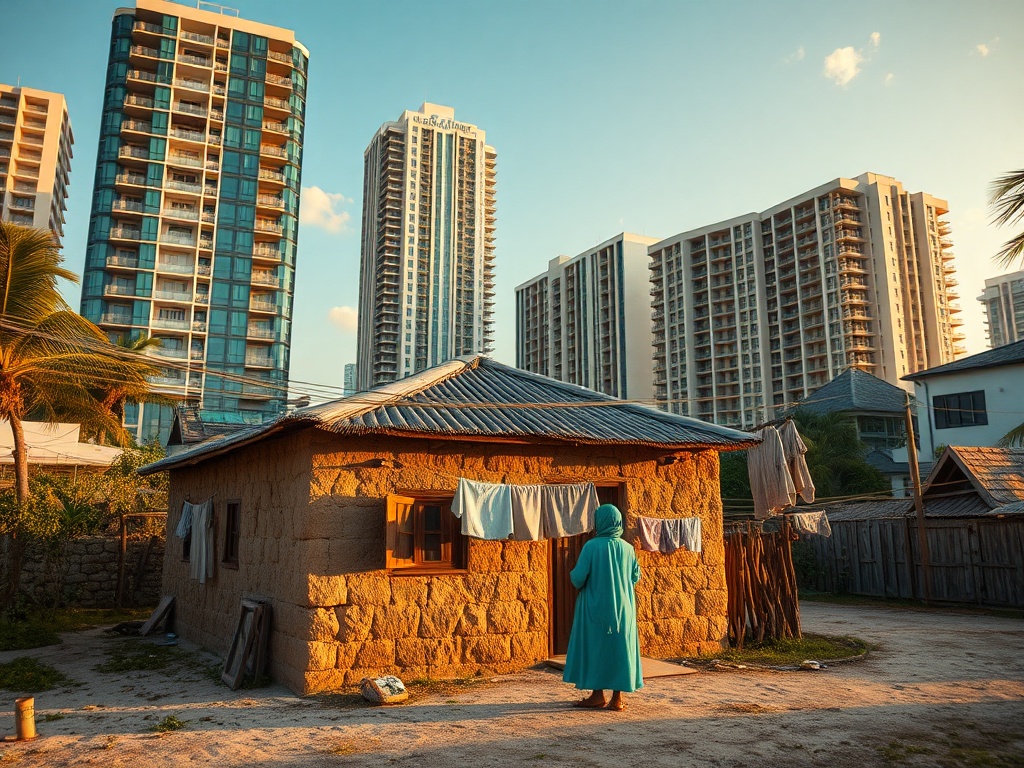
When Your Address Is More Than a Location
In the crowded archipelago where land is both scarce and sacred, the debate over permanent addresses transcends administrative convenience. It touches the very core of Maldivian identity in an era of rapid change. While government initiatives promising land distribution, financial assistance, or even universal basic income generate political momentum, many citizens express a more fundamental need: maintaining cultural continuity through tangible connections to place and lineage.
The concept of a permanent address serves as more than just a location marker in the Maldives. It represents ancestral ties, community belonging, and historical presence in a nation where island identity has defined social structures for generations. As high-rise housing projects reshape the Malé skyline and satellite towns emerge, this anchoring to specific geographic roots provides psychological stability amid urban transformation.
Family names, when present, carry similar weight. They function as living archives of heritage, connecting individuals to their forebears and the collective memory of island communities. In a society experiencing rapid modernization and external influences, these identifiers become bulwarks against cultural dilution.
Recent government housing policies, often criticized as politically motivated distribution of assets, have sparked broader conversations about what truly sustains community cohesion. The question emerges: Can material benefits alone preserve the social fabric that has long defined Maldivian society?
This perspective doesn't oppose economic support mechanisms but rather contextualizes them within a larger framework of cultural preservation. The argument suggests that financial assistance and land distribution can coexist with, rather than replace, these deeper connections. The challenge lies in designing policies that acknowledge both the economic pressures facing Maldivian families and the intangible needs that bind them to their heritage.
As the nation navigates foreign currency shortages, housing congestion, and economic uncertainty, the value of cultural anchors becomes increasingly apparent. They provide continuity when economic conditions fluctuate and political landscapes shift. The permanent address and family name thus transform from mere administrative details into symbols of resilience - reminders of who Maldivians are, not just where they live.
The conversation reflects a sophisticated public understanding that development need not come at the cost of identity. It suggests a path forward where progress and preservation walk together, where government assistance strengthens rather than severs the ties that have sustained Maldivian culture through centuries of change.
— Source fragments: Permanent address shall remain. Its not a problem. If govt want to give land or money or even UBI, they can. We need to keep our cultural ties with the land and family name if present.