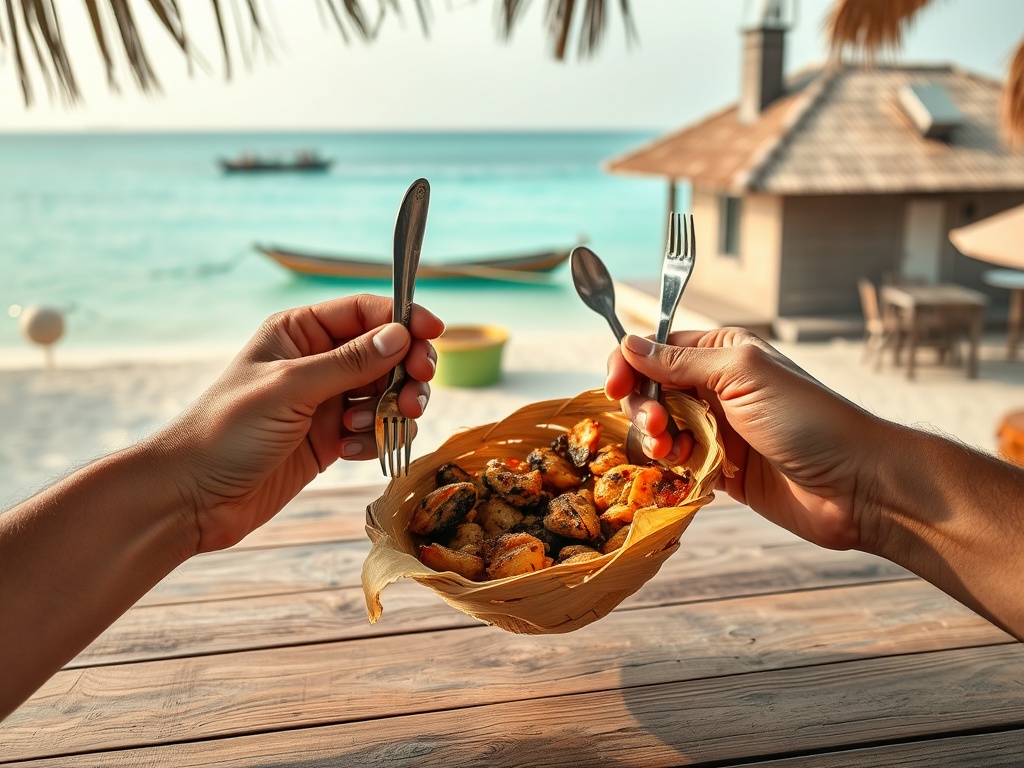
When Your Dining Habits Become Someone Else's Moral Judgment
The digital age has flattened the world, bringing distant cultures into immediate contact—and conflict. A recent online exchange about dining habits illustrates how quickly cultural differences can escalate into moral judgments, with accusations of uncleanliness and backwardness flying across digital borders.
At the heart of this particular confrontation lies a fundamental misunderstanding: the assumption that one's own cultural practices represent universal standards of hygiene and civility. The debate centered on eating with hands versus utensils, with each side claiming superior cleanliness. Yet beneath the surface, this wasn't really about hygiene—it was about identity, dignity, and the unspoken hierarchies that govern cross-cultural perception.
In societies where eating with hands is traditional, the practice comes with elaborate rituals of washing before and after meals. The hands themselves become precise instruments, with specific techniques for handling different foods. What outsiders might perceive as primitive is actually a refined cultural practice requiring skill and discipline.
Similarly, cultures that developed utensil-based dining did so within their own historical contexts. The fork, once considered an unnatural and decadent instrument in some European societies, gradually became standard through centuries of social evolution. Every culture has its own logic of cleanliness, developed in response to local conditions, resources, and philosophical traditions.
The troubling aspect emerges when these differences become ammunition in cultural warfare. The exchange quickly devolved into racial stereotypes and sweeping generalizations, with each side cherry-picking the most unflattering examples from the other's culture. Wine-making traditions involving feet were contrasted with hand-eating practices, as if either represented the totality of a civilization.
This pattern reflects a broader global phenomenon where cultural differences become politicized in an increasingly interconnected world. As migration and digital connectivity bring people into closer contact, the friction points multiply. What begins as a simple observation about dining habits can quickly escalate into accusations of backwardness, racism, or cultural superiority.
The Maldives, with its unique position at the crossroads of global tourism and traditional Islamic culture, understands these tensions well. As thousands of visitors arrive annually from diverse cultural backgrounds, Maldivians navigate these cultural boundaries daily. The challenge lies in maintaining cultural integrity while engaging with global perspectives—without descending into the kind of mutual recrimination witnessed in these online exchanges.
Perhaps the real issue isn't which culture has the "correct" approach to dining, but why we feel compelled to judge others by our own standards. In an ideal world, cultural differences would inspire curiosity rather than contempt, dialogue rather than denigration. The true measure of civilization might not be how we eat, but how we regard those who eat differently.
— Source fragments: debate about eating with hands versus utensils, cultural comparisons of hygiene practices, accusations of cultural superiority